


Business Sectors
Business Sectors
Events
Contents
Register to read more articles.

OSV industry faces digital transformation hurdles amid regulatory and infrastructure challenges
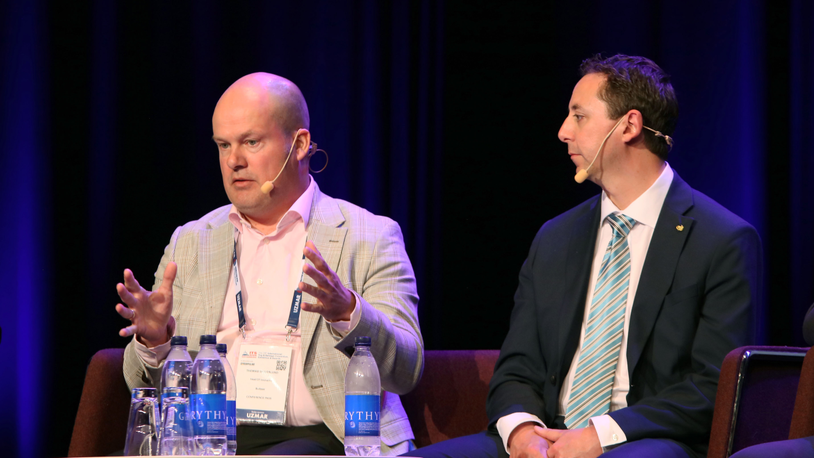
OSV industry leaders discussed the challenges of the digital transformation that is expected to reshape the offshore support sector through 2027 and beyond at an Inmarsat-hosted roundtable in Dubai


The event, organised by Riviera Maritime Media and held under the Chatham House Rule, focused on the obstacles to digitalisation.
A significant challenge identified is systemic data fragmentation. Many OSV companies operate in isolated information silos, particularly in family owned operations managing fleets of three to five vessels. These companies often rely on basic spreadsheets for operational data, with little pressure from charterers to adopt more sophisticated data collection systems.
Infrastructure limitations further complicate these challenges, as many companies depend on a single IT person to manage entire fleet operations. Recent cyber-security breaches have highlighted critical vulnerabilities, leaving companies exposed to sophisticated cyber threats.
Workforce resistance is another hurdle. Generation Z workers prioritise experience and ethical considerations over monetary compensation, expressing concerns about environmental impact, fair treatment of seafarers and work-life balance. The industry struggles to provide flexible working arrangements and maintain structures that appeal to younger workers.
In response, some companies are implementing hybrid vessel technologies and developing digital recognition systems. Training programmes are being modernised to include digital competencies, and more flexible working arrangements are being offered, particularly for shore-based roles.
Looking ahead to 2025-2027, regulatory compliance will be a critical challenge. The implementation of the EU MRV in 2025 will require significant operational changes, while Middle East charterers are expected to introduce new emissions and sustainability regulations. However, many companies lack the integrated data systems necessary for emissions trading verification, creating a potential crisis as deadlines approach.
Operational integration also presents medium-term challenges. Current charter structures do not incentivise fuel efficiency improvements, with vessel utilisation rates indicating significant operational waste. Hull cleaning and maintenance are often delayed due to misaligned incentives between owners and charterers, while the industry lacks standardised metrics for measuring vessel efficiency and environmental performance.
The long-term outlook through 2027 reveals significant technology infrastructure challenges. Current satellite communications systems may be insufficient for bandwidth demands by 2030. The roundtable attendees anticipate the need to integrate multiple communications technologies for adequate coverage, while cyber-security risks are expected to increase with higher bandwidth availability.
The participants shared some of the specific digitalisation performance targets they had for their fleets. These included a 40% reduction in maintenance costs through predictive AI systems and a 50% increase in overall efficiency through AI implementation by 2034.
Participants concluded by identifying priority recommendations for addressing current industry challenges, emphasising technological adoption, environmental compliance and commercial restructuring. The effectiveness of hybrid power systems and batteries in offshore vessel fleets was highlighted, along with calls for new commercial frameworks that reward environmental improvements through performance-based charter agreements.
The development of robust biofuel authentication systems emerged as a critical recommendation to address concerns about greenwashing and ensure regulatory compliance. Participants also advocated for shared carbon cost responsibility across the supply chain to drive effective collective action on emissions reduction.
Additionally, the discussion included the need for standardised vessel sustainability grading systems as essential tools for measuring environmental performance, particularly in preparation for incoming EU MRV requirements in 2025. Operational recommendations focused on practical efficiency measures, with vessel hull cleaning identified as a crucial, but often overlooked, factor in performance optimisation.
Ultimately, while technology solutions exist for many challenges, structural and cultural barriers present significant obstacles to implementation. Without immediate action on data standardisation and integration, many companies risk substantial financial penalties when emissions trading systems activate in 2027. Transforming the sector requires unprecedented levels of collaboration since individual company initiatives cannot address the sectorwide challenges being faced.
Riviera’s Annual Offshore Support Journal Conference, Awards & Exhibition will be held in London 4-5 February 2025. Click here to register for this industry-leading event.

Related to this Story


Events

Maritime Regulations Webinar Week
 16 Dec 2025
 GMT - ONLINE
Floating energy: successfully unlocking stranded gas using FLNGs and FSRUs
24 Feb 2026GMT - ONLINE
© 2026 Riviera Maritime Media Ltd.


