


Business Sectors
Business Sectors
Events
Contents

Register to read more articles.
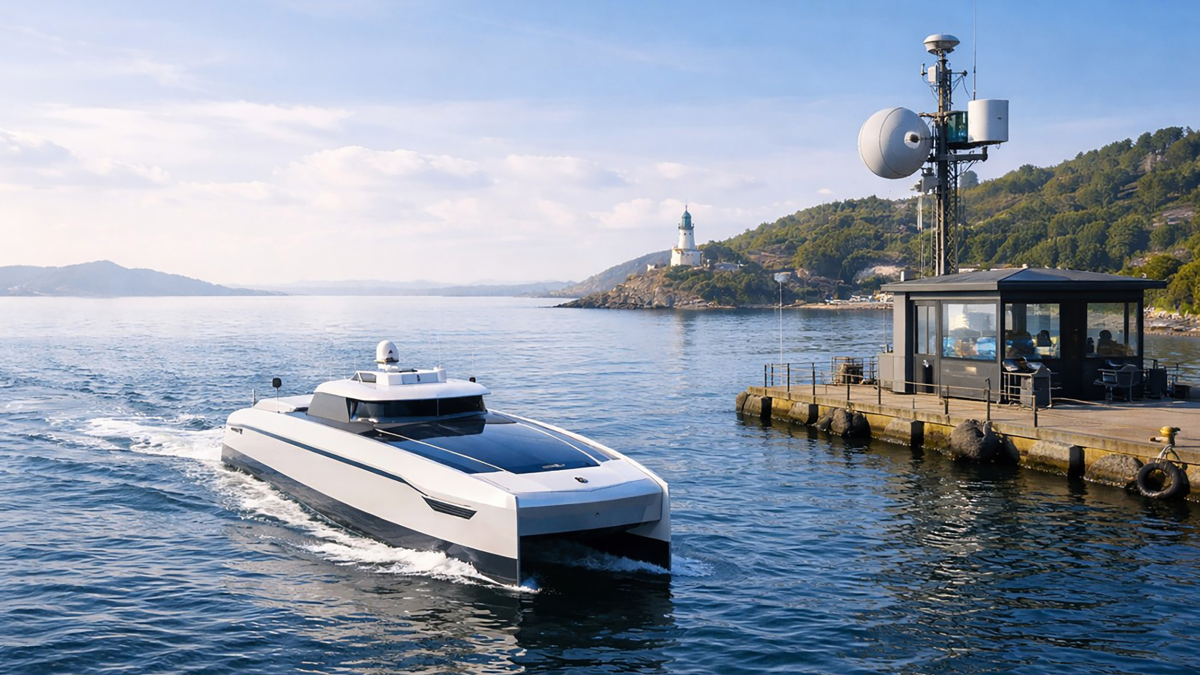
Research project set to develop autonomous intelligence for vessel validation
A new centre in Austria will be part of a European-funded research programme to address the transition towards increasingly software-defined, connected and autonomous vessels


A consortium of 44 partners from industry and academia will start a new €24M (US$28M) research project in January 2027 to develop simulators and autonomous intelligence to validate autonomous vessels.
Under a four-year programme, these partners will create digitally traceable, audit-ready evidence across the lifecycle of software-defined systems to support the transition towards increasingly connected and remotely controlled or managed uncrewed vessels.
This project comes as maritime mobility is undergoing a fundamental transformation towards battery-electric vessels controlled by artificial intelligence (AI) and as software continues to evolve while impacting operations.
Autonomous vessels are also facing varying maritime and dynamic environments, including changing weather, moving hazards, impacting operating environments, disruptions to positioning data and geopolitical tensons, all influencing safety and security.
The software-defined mobility (SDM) research programme intends to generate engineering methods designed to make complex software-defined systems faster to develop, safer to operate and more trustworthy throughout their entire lifecycle.
The partners plan to move beyond the current methods of one-time validation of a vessel, autonomous function or software release.
They anticipate using simulation models, digital twins and AI components for longer-term validation of whole assets, including when software and communications systems are upgraded, and vessels working under new environmental and operational conditions.
Partners will develop a virtual assurance framework (VAF) to create digitally traceable, audit-ready evidence which they consider relevant to autonomous and safety-critical maritime applications,
Virtual Vehicle’s new COMET research centre in Graz, Austria, is at the centre of this SDM research and development programme.
“With COMET SDM, we are taking the decisive step from virtual validation towards virtual assurance,” said Virtual Vehicle chief technical officer, Daniel Watzenig.
“We are creating the foundation for a new generation of safe and trustworthy AI-supported systems in mobility.”
This project has a wide cross-sector remit as it covers automotive, rail, health technology, energy and defence as well as maritime.
“The software-defined decade has begun”
Partners will develop technologies to support the virtual engineering and validation of complex vessel functions and autonomous systems.
“The software-defined decade has begun,” said Virtual Vehicle chief executive Jost Bernasch.
“Europe must combine its strengths in engineering and industrial excellence with software, data, and AI to remain competitive in the future.”
Trustworthy simulation should improve transparency of uncertainties and provide robust evidence for development, validation and certification.
Autonomous intelligence should address safe and verifiable AI for perception, decision-making and unmanned systems, including autonomous navigation modules and uncrewed surface vessels.
There will also be a focus on adaptive, context-aware architectures and the integration of software-defined systems with infrastructure and cloud environments.
A living-innovation laboratory will complement these research areas by transferring research results into demonstrators, prototypes and solutions with practical and commercial potential.




Related to this Story

Events

Maritime Regulations Webinar Week
 16 Dec 2025
 GMT - ONLINE

Floating energy: successfully unlocking stranded gas using FLNGs and FSRUs
24 Feb 2026GMT - ONLINE
© 2026 Riviera Maritime Media Ltd.


