


Business Sectors
Events

Floating energy: successfully unlocking stranded gas using FLNGs and FSRUs
 24 Feb 2026
 GMT - ONLINE
Contents
Register to read more articles.
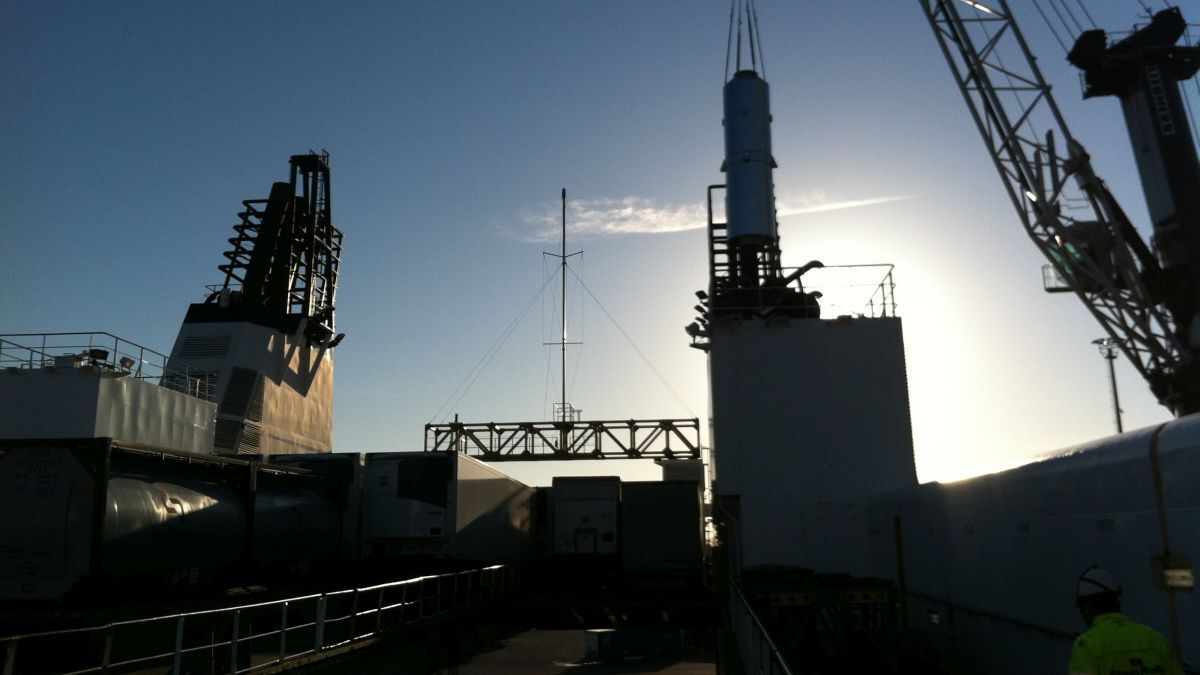
Scrubber-fitted ships' owners face challenges amid emerging carbon capture prospects
As more next-generation vessels enter the market, scrubber-fitted ships may face growing competitiveness challenges


However, a potential ’second life’ could be unlocked through integration with carbon capture technology.
Greece’s Allied Quantumsea Research noted in a recent report that scrubbers are under mounting operational and regulatory pressure. The core challenge lies in their technical complexity.
Analysts highlighted that scrubber systems are prone to corrosion, scaling, residue buildup and component wear – all of which increase maintenance costs and heighten the risk of off-hire if not carefully managed.
From an economic perspective, the viability of scrubbers depends almost entirely on the price spread between high-sulphur and very-low-sulphur fuels. “When the gap was wide, scrubbers paid for themselves quickly, often recovering their cost shortly after installation,” Allied explained.
Since 2023, however, the spread has narrowed significantly, stretching payback periods and reducing the appeal of new installations. By 2024–2025, average spreads had already fallen well below the levels that once made scrubbers so attractive. With a narrower spread, owners had to contend with much longer payback timelines, which eroded their appeal, Allied said.
Regulatory pressures
On the regulatory front, Allied noted IMO’s guidelines on scrubber discharges remain voluntary and limited, covering only a few pollutants while leaving many harmful substances unregulated.
As a result, action is increasingly shifting to the regional level. The Mediterranean was recently designated a Sulphur Emission Control Area, joining the North and Baltic Seas, with new limits taking effect in May 2025. At the same time, the EU is advancing broader marine pollution initiatives, signalling a willingness to go beyond IMO standards.
Restrictions on open-loop scrubbers are also tightening. Several coastal states in Europe, Asia and North America have already banned or restricted their use, forcing vessels to switch fuels or adopt alternative scrubber technologies. By mid-2025, more than 120 ports worldwide will enforce discharge restrictions, and some regions are moving toward outright bans.
Carbon capture opportunity
Despite these headwinds, Allied believes scrubbers could gain a new lease on life if paired with onboard carbon capture systems (OCCS). Ships burning conventional fuels release exhaust gases containing sulphur oxides, carbon dioxide and other impurities. While scrubbers already remove sulphur oxides, many designs also reduce particulates and cool the exhaust – creating the cleaner, cooler gas stream necessary for stable CO2 capture.
Not all scrubbers are suitable, however. Analysts stressed only hybrid, closed-loop, or dry scrubbers are compatible with OCCS integration. Open-loop scrubbers not only face widespread restrictions but also introduce excess moisture and impurities, undermining the conditions required for efficient CO2 capture. This reduces reliability and increases costs. In short, open-loop scrubbers are becoming a dead end for owners seeking future carbon capture integration, Allied warned.
Shipowners’ dilemma
The combined technical, economic and regulatory pressures create a dilemma for shipowners with scrubber-fitted vessels: how to maximise the value of current assets while preparing for a stricter, more carbon-conscious future.
One option is to convert open-loop units into hybrid or closed-loop systems, which are more adaptable and remain compliant where discharges are banned. “Although this requires additional space and handling facilities, it extends a vessel’s commercial life and preserves the carbon capture option,” analysts explained.
Another potential pathway lies in dry scrubbers, which rely on solid materials rather than water and produce no discharges at sea. “While still at an early stage, they are considered more ‘future-proof’ under tightening regulations,” Allied concluded.
Riviera’s Maritime Decarbonisation Conference, Europe will be held in Amsterdam Schipol Airport, 30 September to 1 October 2025. Click here to register your interest in this industry-leading event.
Related to this Story

Events

Maritime Regulations Webinar Week
16 Dec 2025GMT - ONLINEFloating energy: successfully unlocking stranded gas using FLNGs and FSRUs
24 Feb 2026GMT - ONLINE
© 2024 Riviera Maritime Media Ltd.


