


Business Sectors
Business Sectors
Events
Contents
Register to read more articles.
Sinokor emerges as 'super' VLCC operator with 16% market share
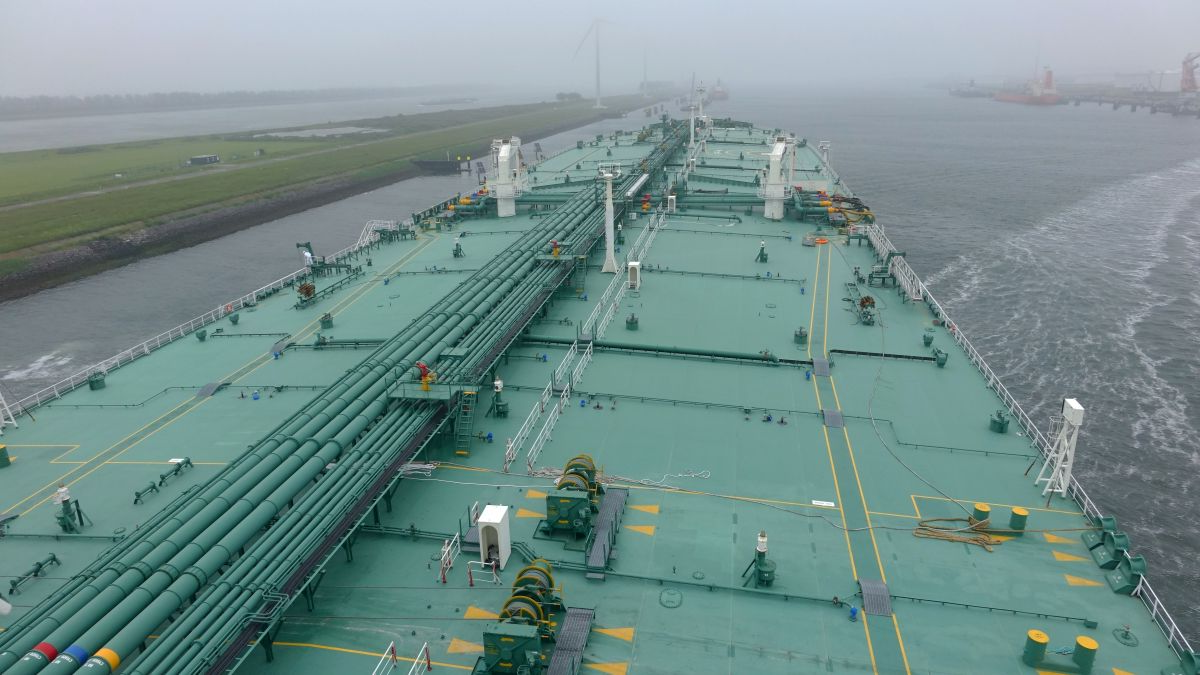
South Korean shipowner Sinokor has emerged as a ’super’ VLCC operator, with newly published data suggesting its buying spree has surpassed 50 vessels, giving the company control of close to 16% of the mainstream VLCC market


Riviera reported last month that shipbroking sources were pointing to an initial buying frenzy involving around 25 VLCCs, although figures appear to have increased significantly in recent weeks.
In its latest monthly report, BRS Shipbrokers said Sinokor has potentially acquired more than 50 secondhand VLCCs, while also securing a substantial volume of additional tonnage under time charter arrangements.
“While the exact details of Sinokor’s acquisitions and time charter deals remain incomplete – with some estimates suggesting its fleet could reach as many as 130 VLCCs – it is evident that the company undertook an unprecedented spending spree around the turn of the year,” BRS Shipbrokers said.
The brokerage estimates that, once all vessels are delivered, Sinokor will control 118 VLCCs, either owned or chartered in. This would represent around 13% of the current active VLCC fleet. Excluding the 179 vessels classified as part of the grey fleet, Sinokor’s share rises to approximately 16% of the mainstream VLCC fleet.
Sinokor’s rapid expansion has taken the market by surprise, and even accounting for the increased use of pooling structures during difficult VLCC market conditions, there has never previously been a single operator with such a dominant share of the active fleet, BRS Shipbrokers commented.
Based on BRS estimates, Sinokor now ranks as the world’s largest VLCC operator, ahead of Saudi Arabia’s Bahri, which controls around 50 vessels.
“Perhaps the most significant implication of Sinokor’s spree is the emergence of it as a super operator with the tonnage under its control dwarfing that of its competitors,” BRS noted.
Is consolidation accelerating?
Sinokor’s swift expansion has sparked market speculation that consolidation may be accelerating. In its latest Q4 earnings report, US-listed DHT Holdings noted that private players are gaining increasing traction, driving a structural shift in fleet ownership.
Without naming Sinokor, DHT referred to these players as ‘aggregators’ and said they are on track to control at least 25% of the compliant tramping VLCC fleet – a development that could reshape pricing dynamics and tighten vessel availability.
BRS Shipbrokers echoed these concerns, suggesting Sinokor’s expansion may be accelerating consolidation in the tanker sector.
The broker noted that nine years ago, the top 10 VLCC operators controlled a combined 268 vessels, representing 38% of the active fleet. At that time, the largest operator controlled 55 VLCCs, and only seven owners operated fleets of 20 vessels or more.
Today, the top 10 VLCC owners collectively control 392 vessels, accounting for 53% of the existing fleet, excluding grey-tonnage units, and 59% of the mainstream fleet under 20 years of age.
At the same time, barriers to survival and market entry are rising. Smaller mainstream owners with one or two vessels are increasingly challenged by tighter environmental regulations, while new entrants face prohibitively high newbuilding and secondhand prices.
As a result, entering the VLCC market with multiple, modern units – necessary to achieve economies of scale – is increasingly limited to players with extremely deep pockets, BRS Shipbrokers concluded.
Riviera’s Tankers 2030 Conference will be held in Singapore, 19-20 November 2026. Use this link for more information and to register for the event.


Related to this Story

Events
Maritime Regulations Webinar Week
 16 Dec 2025
 GMT - ONLINE
Floating energy: successfully unlocking stranded gas using FLNGs and FSRUs
24 Feb 2026GMT - ONLINE
© 2026 Riviera Maritime Media Ltd.


