


Business Sectors
Events
Contents

Register to read more articles.
2025 in tanker shipping and trade: market recalibrates under war and regulation
A year of strong earnings, ageing fleets and tightening climate rules left tanker owners cautious as they weighed 2026 delivery and sanctions risks


The tanker market in 2025 was characterised less by exuberance than by cautious repositioning.
Tanker companies concentrated on fleet renewal, exposure to sanctions and the emerging emissions rulebook rather than chasing short-lived rate spikes.
Fleet development had already slowed in 2024 and, at the start of 2025, global orderbooks remained “historically low,” with limited yard availability until 2028 reinforcing expectations that supply-side discipline would persist.
Scorpio Tankers reported, “The orderbook for MR tankers stands at just 7.2% of the existing fleet,” describing it as “the lowest in recent history.”
Teekay Tankers added the global fleet “is ageing, and replacement levels are well below trend,” while SFL Corp warned, “As vessels age, they become less efficient and more costly to insure and maintain,” and charterers increasingly avoided older ships under tighter environmental standards.
For crude tankers, Drewry underlined how thin near-term supply looked in comparison with what lay beyond the horizon, with Drewry senior research analyst Anshika Prajapati noting, “The outlook for VLCCs this year is supported by only a handful of VLCC deliveries and a rise in longhaul rates from the Americas to Asia due to surging refined product demand.”
“Oil demand growth will continue decelerating due to increased fuel efficiency and a shift towards cleaner fuels and EVs”
Only five VLCCs were scheduled for delivery in 2025, against 30 in 2026 and 46 in 2027, while crude oil trade was forecast to rise by just 0.9% and clean petroleum products by 0.4%.
Drewry senior research analyst Carolyne Rosangliani added, “Oil demand growth will continue decelerating due to increased fuel efficiency and a shift towards cleaner fuels and EVs.”
That early-year picture was complicated by the VLCC contracting cycle that followed, with no fewer than 49 VLCCs contracted in 2025, bringing the global VLCC orderbook to 155 vessels totalling 48M dwt.
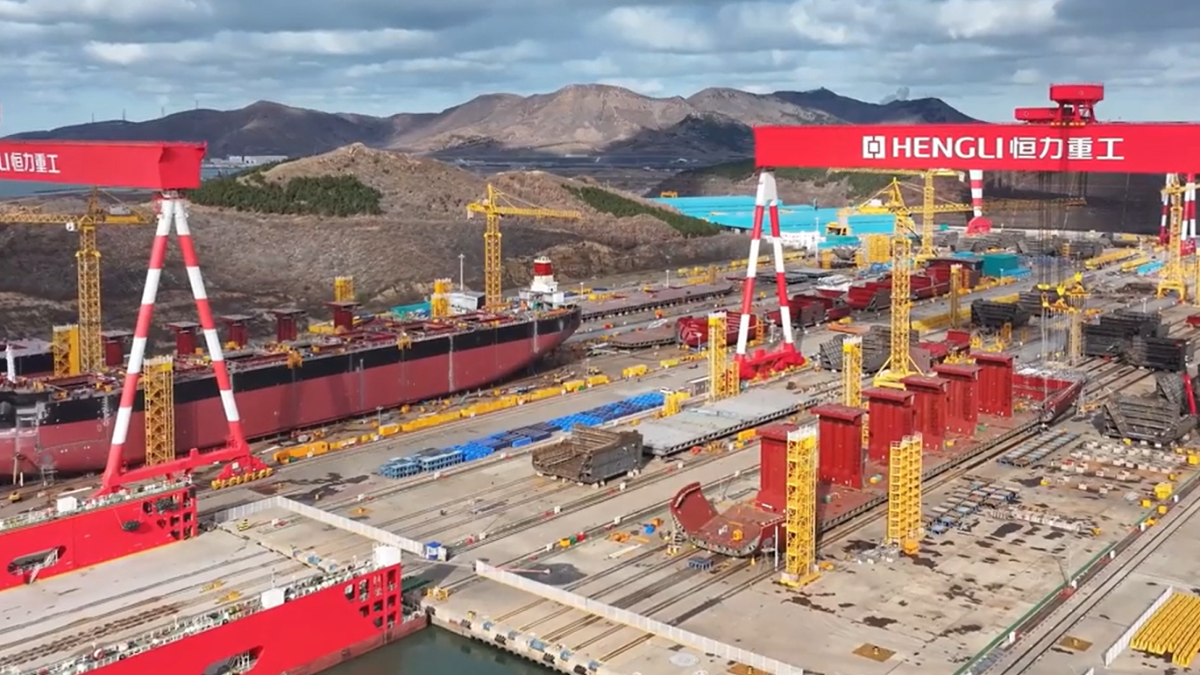
Hengli Heavy in China alone secured commitments for 20 VLCCs, the shipyard’s batch-pricing strategy seen as the driver of the order boom.
This ordering concentrated delivery risk into the second half of the decade and stood in contrast to the “historically low” orderbooks that had underpinned owners’ optimism at the start of the year.
Trade flows in 2025 reflected geopolitical flashpoints as much as underlying fundamentals.
In the Middle East, security risks in the Strait of Hormuz and Red Sea led a substantial share of VLCC traffic to reroute via the Cape of Good Hope.
Ms Prajapati stated, “Almost 60% of tanker traffic is still passing via the Cape of Good Hope,” inflating tonne-miles temporarily. She warned if the Strait of Hormuz were effectively closed, crude prices would likely move into the US$100–150/bbl range because regional pipelines could not absorb the displacement of 11M barrels per day.
Maritime Strategies International reported VLCC spot earnings nearly tripled to US$64,000 per day in June 2025, up from US$24,000 per day in May, following Israeli and US strikes on Iranian targets, underlining the market’s exposure to events in the region.
"Approximately 11% of tanker transactions involved buyers whose identities remained opaque"
Other theatres added further complexity, as Russia’s invasion of Ukraine seemed to be approaching a Trump-inspired peace agreement, it was reported three tankers linked to Russian oil and product transport were damaged in explosions in the Black Sea and off Senegal, illustrating how risks now extended along multiple routes used by Russia-linked cargoes
Against this backdrop, the war-distorted tanker boom entered an uncertain reset, with Tankers International head of research and insight Mette Frederiksen observing VLCC tonne-mile demand was being redirected towards Brazil as sanctions tightened on dark fleet tonnage and China imposed retaliatory tariffs on US crude.
The product tanker picture looked less favourable by late 2025, and BIMCO chief shipping analyst Niels Rasmussen noted geopolitics, Russian sanctions and Red Sea disruptions continued to shape the tanker landscape as product tanker owners faced oversupply pressure.
Geopolitically driven tonne-miles could not fully offset the drag from new capacity and slowing demand in some trades, leading BIMCO to caution product tanker earnings were vulnerable as 2025 drew to a close.
Shadow fleet developments included Veson data that showed tankers more than 15 years old accounted for roughly 78% of tanker sale-and-purchase transactions between January and October 2025, with 337 tanker deals recorded over that period.
Within that total, more than 260 vessels older than 15 years changed hands, and the number of tankers trading in the so-called grey fleet was reported to have risen by about 22% year-on-year.
The same analysis noted around 130 ships operated by sanctioned entities switched to new ownership during the period, while approximately 11% of tanker transactions involved buyers whose identities remained opaque.
Chinese interests were using preferential finance to accumulate older tonnage, while Japanese and South Korean buyers concentrated on younger, more-efficient ships aligned with environmental regulations.
The result, it argued, was the emergence of “parallel risk–reward frameworks” across mainstream and dark trades, with public companies constrained by sanctions and disclosure requirements even as private and state-linked fleets expanded their presence in more opaque segments.
From 2026, the regulatory line between these segments will sharpen further as all EU imports of petroleum products will be banned if they were refined from Russian-origin crude, closing a loophole that had allowed Russia to sell crude to third countries such as India and Turkey for refining into products exported back to Europe.
This change forces owners trading refined products from those hubs to reassess compliance risk and contract structures ahead of the 2026 deadline.
In the shuttle tanker market, 2025 was described as a year when technology, takeovers and contract structures reshaped a niche segment with high exposure to decarbonisation rules.
Maritime Strategies International director Tim Smith told a Tanker Shipping & Trade webinar Brazilian production rebounded strongly in 2025 to 3.7M barrels per day, driven by FPSO ramp-up at the Lara and Mero fields. “The Brazilian side of the market is doing the heavy lifting in terms of growth over the next two to three years,” he said.
He highlighted a recent Tsakos order for nine Suezmax shuttle tankers for Petrobras and Maran’s acquisition of the Altera fleet, noting once delivered, these vessels would “effectively triple TEN’s all-Suezmax shuttle tanker fleet.” MSI projected shuttle tanker fleet utilisation rising from 84% in 2025 to 87% by 2027.
LPG shipping moved through its own cycle in parallel with crude and product tankers, as Vortexa head of analysis for the Americas Samantha Hartke noted the global LPG shipping market entered 2025 “in a state of flux,” with uneven supply growth, fragile petrochemical demand and a complex geopolitical backdrop.
She highlighted early-year weather disruptions that curtailed US Gulf export loadings and noted while OPEC+ production adjustments and Middle Eastern exports would add some supply, the near-term uplift equated to only about one additional VLGC per month.
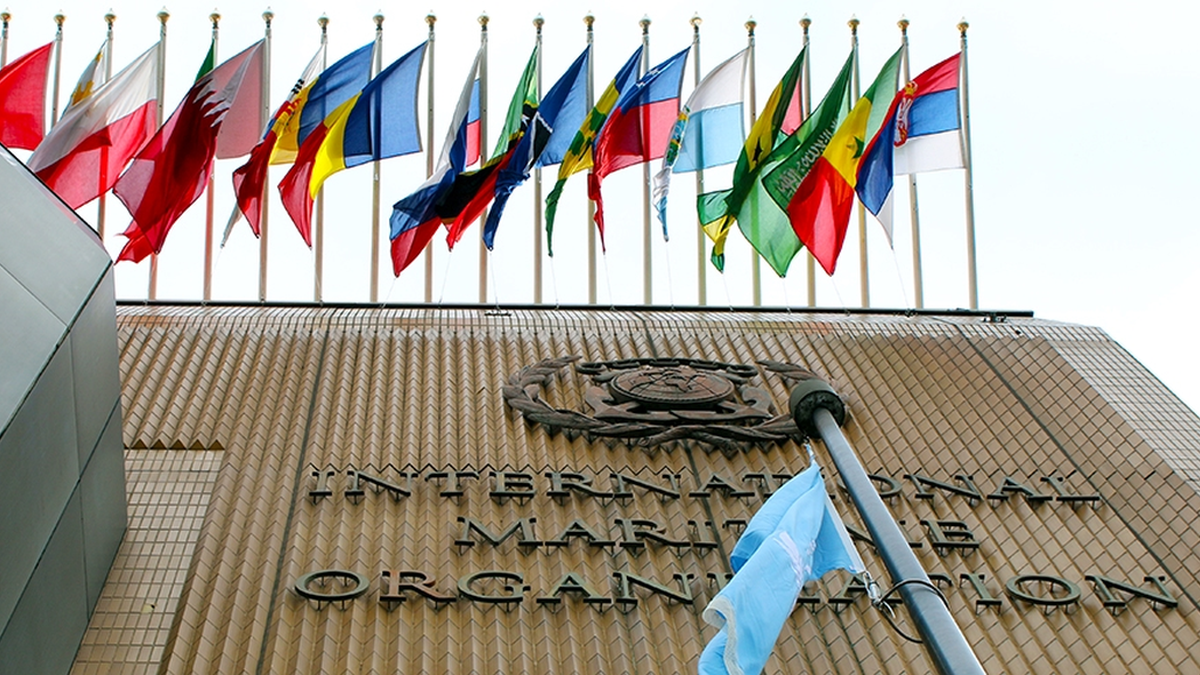
While the final MEPC meeting in 2025 ended on a sour note with a failure to agree, the tanker year ended on a positive with awards distributed at the Tanker 2030 Conference in Singapore.
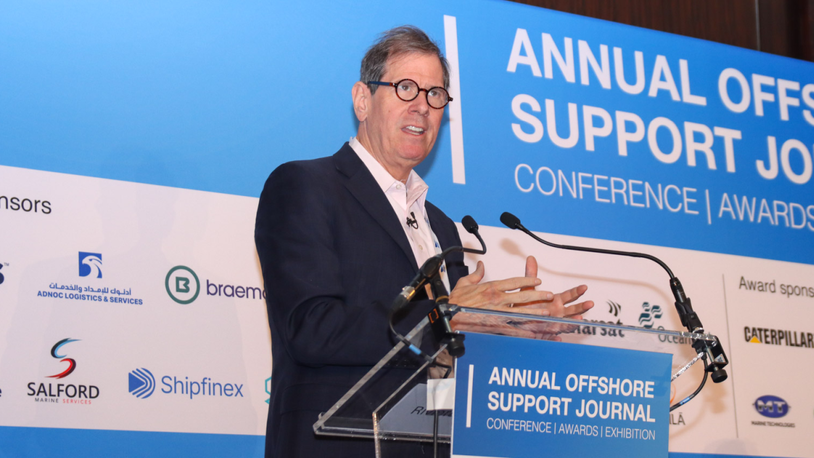
The Global Centre for Maritime Decarbonisation was recognised as “the beating heart of maritime decarbonisation,” and Tanker Shipping & Trade presented its leadership award to GCMD chief executive Professor Lynn Loo, citing her role in piloting projects that linked technical decarbonisation pathways with finance, including a US$35M retrofit fund based on a pay-as-you-save model.
Another award went to Eastern Pacific Shipping for its use of digital tools and alternative fuels within a clear fleet renewal and decarbonisation strategy, reflecting how commercial performance and environmental positioning are increasingly judged together.
Overall, 2025 developments left the tanker sector with a constrained but ageing fleet, a trading system shaped by sanctions and war-related rerouteing, a shadow fleet that continues to complicate compliance risk, and a regulatory framework defined in outline but not yet settled in detail.
Sign up for Riviera’s series of technical and operational webinars and conferences:
- Register to attend by visiting our events page.
- Watch recordings from all of our webinars in the webinar library.
Related to this Story
Events

Maritime Regulations Webinar Week
 16 Dec 2025
 GMT - ONLINE
Floating energy: successfully unlocking stranded gas using FLNGs and FSRUs
24 Feb 2026GMT - ONLINE
© 2024 Riviera Maritime Media Ltd.


