


Business Sectors
Business Sectors
Events
Contents

Register to read more articles.
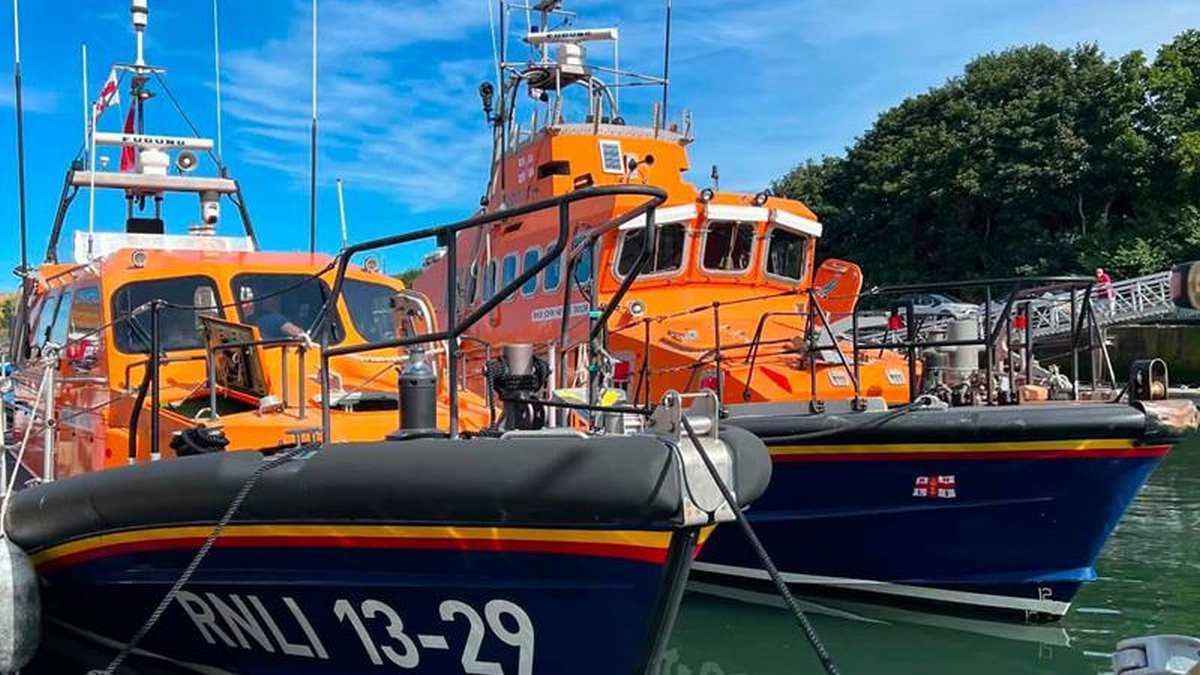
UK marine emergency response organisation updates security procedures
The Royal National Lifeboat Institution has reacted to abuse and intimidation of personnel after lifeboats rescued migrants in the Channel, by reviewing its security advice to its personnel


Volunteer personnel of the Royal National Lifeboat Institution (RNLI), which saves hundreds of mariner lives each year off the UK coast, have been advised to increase their security for their own safety.
One of the world’s largest owners of search and rescue (SAR) vessels updated security advice after as some of its personnel were subject to intimidation and abuse following their assistance of illegal migrants sailing across the Channel on an inflatable craft from France to England in early September.
Lifeboat crews and other charity volunteers have been advised “to make decisions to keep yourself, your team or crew safe”, to close lifeboat stations and stores if they do not feel safe.
Several of RNLI’s volunteers was subject to online abuse over social media platforms after several lifeboats responded to a request from His Majesty (HM) Coastguard on 6 September to assist around 120 migrants that had sailed from Normandy, France, in an inflatable boat, which was intercepted off the Isle of Wight. Migrants were rescued onto lifeboats and taken to Eastney, in Langstone Harbour, where roads were blocked by protesters.
RNLI chief executive Peter Sparkes condemned the abuse volunteers, including lifeboat crews, have received and reminded the UK that the RNLI was a charity that was apolitical and “completely independent of government”.
As a charity, the RNLI relies on donations from the public to fund its work and goodwill of its volunteers and staff that “have selflessly dedicated themselves to rescuing people they have never met before, without judgment, fear or favour,” said Mr Sparkes.
“When HM Coastguard tasks an RNLI lifeboat crew to launch to a vessel or people in distress, whenever and wherever they need us, we will. We will always answer the call, whoever needs our help.”
Mr Sparkes said it is “the legal and moral obligation that the UK has, under the United Nations Convention of the Law of the Sea and SOLAS.”
RNLI personnel selflessly give up their time to keep others safe, said Mr Sparkes, “but some of our volunteers and staff have been the subject of online and, in the worst cases, physical abuse.
“Their families are being threatened by those who would hide behind a balaclava or a keyboard.”
He reiterated the RNLI would take whatever steps to care for and protect its people and their families.
RNLI lifeboats were tasked by the coastguard and launched 9,058 times in 2025, of which just 109 (1.2%) of launches were to those in distress in the Channel.
Nearly 95 per cent, of those who crossed the Channel in small boats in 2025, one of the busiest shipping lanes in the world, were picked up by the UK Border Force.
“Our mission, and our tasking is to rescue those women, children and men in danger of drowning,” said Mr Sparkes.
Anyone rescued from a small boat in the Channel by the RNLI is immediately handed over to the UK’s immigration authorities.
“Illegal immigration is a political issue; the RNLI exists to save lives at sea,” said Mr Sparkes.
RNLI volunteers provide a 24-hour search and rescue service around the United Kingdom and Republic of Ireland coasts with more than 240 lifeguard units around the UK and Channel Islands.
Since the RNLI was founded in 1824, its lifeboat crews and lifeguards have saved over 146,700 lives, including 389 in 2025.





Related to this Story

Events

Maritime Regulations Webinar Week
 16 Dec 2025
 GMT - ONLINE

Floating energy: successfully unlocking stranded gas using FLNGs and FSRUs
24 Feb 2026GMT - ONLINE
© 2026 Riviera Maritime Media Ltd.


