


Business Sectors
Business Sectors
Events
Contents

Register to read more articles.
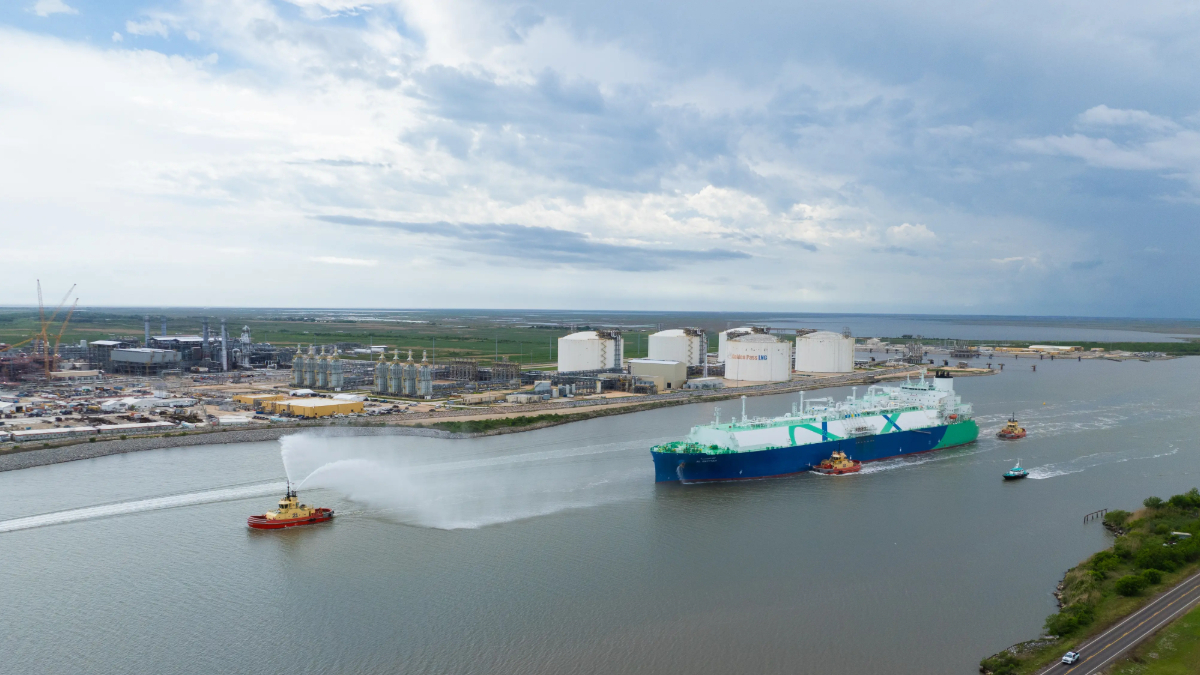
US LNG growth offsets losses as global exports withstand Hormuz disruption
LNG continues to flow despite the disruption in the Strait of Hormuz and the slowdown in Middle Eastern supplies, with rising exports, mainly from the US, offsetting some of the lost volumes


Global seaborne LNG exports reached 344.3M tonnes from January to October 2026, down around 2.5% year-on-year, according to data from shipbroker Banchero Costa.
US exports accounted for just over 30% of the total, with volumes reaching 106.2M tonnes, up almost 20% compared with the same period last year. Almost half (48%) of these volumes were destined for the European Union.
Australia followed, with exports exceeding 68M tonnes, an increase of 3.5% year-on-year, representing almost 20% of global shipments.
Southeast Asia recorded a slight annual decline of 0.5%, accounting for a 10.5% market share. Meanwhile, Russian exports grew significantly, rising by more than 12% and giving Moscow an 8% share of global exports.
Conversely, Qatari exports dropped by 67% from January to October 2026 compared with the same period last year, with volumes falling to just 22.5M tonnes. Qatar’s market share consequently declined to 6.5%.
EU absorbs US and Russian LNG volumes
On the import side, the Banchero Costa report showed that global LNG shipments declined by almost 3% year-on-year.
The EU remained the world’s largest importer, receiving 82M tonnes, down approximately 5% year-on-year and accounting for a 24% share of global imports.
More than 60% of LNG shipments arriving in the EU originated in the US, while Russia contributed around 14.5%. Volumes from both suppliers increased year-on-year, by approximately 2% and 5%, respectively.
Notably, the EU accounted for more than 42% of total Russian LNG exports, with the remainder largely going to China, Japan, and South Korea.
These figures come amid a recently published report by environmental campaign group Urgewald, which estimated that the EU spent €8.7Bn on LNG from Russia’s Yamal project between January and October 2026.
With 50 days remaining until the EU’s full ban on Russian LNG imports takes effect, the estimated bill has already exceeded the €7.2Bn recorded for the whole of 2025 by approximately 21%, the report showed, citing Kpler data.
By contrast, Qatari LNG volumes delivered to the EU declined by almost 74%, accounting for just over 2% of the bloc’s import mix.
Chinese LNG imports reached 52M tonnes, down 4% year-on-year, while Japan, the world’s third-largest LNG importer, received 51.5M tonnes, a decline of around 7% compared with 2025.





Related to this Story

Events

Maritime Regulations Webinar Week
 16 Dec 2025
 GMT - ONLINE

Floating energy: successfully unlocking stranded gas using FLNGs and FSRUs
24 Feb 2026GMT - ONLINE
© 2026 Riviera Maritime Media Ltd.


