


Business Sectors
Business Sectors
Events
Contents

Register to read more articles.
US resumes sanctions on Iran-linked shipping network, targeting VLCCs and LPG carriers
The US has reinstated sanctions on a network of Iran-linked shipping companies and vessels, representing the first enforcement move since the recent de-escalation of Middle East tensions


In a statement issued on 3 July, the US Department of the Treasury’s Office of Foreign Assets Control (OFAC) designated 12 vessels involved in the covert transport of Iranian oil. The targeted fleet includes six VLCCs, four LPG carriers, one Suezmax, and one Aframax tanker.
BRS Shipbrokers noted in its latest monthly report that, as of early July, approximately 18% of the global VLCC fleet is classified as part of the “grey” fleet. Of these, 80% are sanctioned either directly or indirectly, implying that around 14% of all active VLCCs are under sanctions.
Iraqi-linked network at the center of latest sanctions
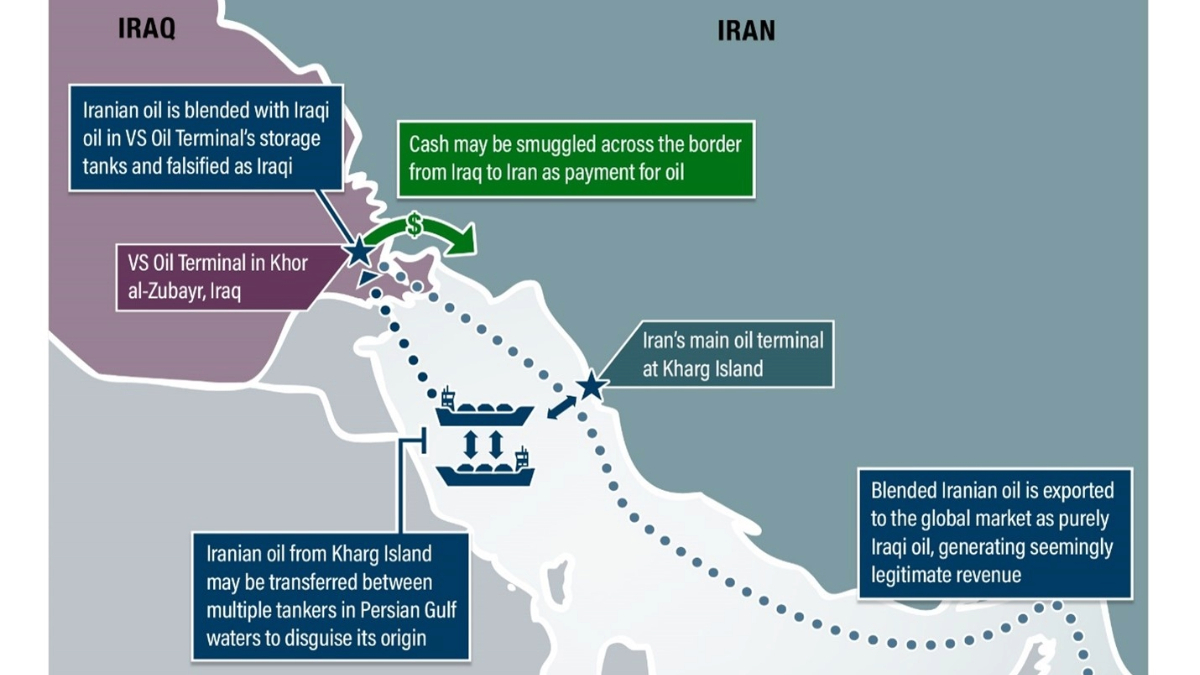
Among the entities sanctioned is a network of companies reportedly controlled by Iraqi businessman Salim Ahmed Said. According to OFAC, Said has profited from smuggling Iranian oil disguised as or blended with Iraqi oil, which is then marketed to Western buyers through Iraq and the UAE.
Said is said to control VS Tankers, a UAE-based company formerly known as Al-Iraqia Shipping Services & Oil Trading FZE (AISSOT). According to Equasis, VS Tankers is linked to at least two vessels – one of which, VLCC Dijilah, has now been sanctioned. This company appears to have chartered VLCCs from prominent Western shipowners.
The US has also designated VS Oil Terminal FZE (VS Oil), a UAE-registered entity with physical operations in Iraq. VS Oil reportedly manages six storage tanks used to offload Iranian oil before it is blended with Iraqi crude for onward sale.
Vessels and trade routes under scrutiny
Focusing on individual ships, OFAC highlighted that four vessels – Vizuri, Fotis, Themis, and Bianca Joysel – have collectively transported tens of millions of barrels of Iranian oil and petroleum products, worth billions of dollars. Notably, Themis was also sanctioned by the UK in May for its involvement in transporting Russian oil.
Another designated vessel, Elizabet, appears to have impersonated a separate ship, S Tinos, when loading a cargo of Iranian oil via ship-to-ship (STS) transfer off the coast of Malaysia in August 2024. The cargo had originally been loaded at Iran’s Kharg Island by Romina, a vessel previously identified for its role in transporting Iranian petroleum on behalf of the Al-Qatirji Company.
The Al-Qatirji Company has also been linked to the transport of approximately 2M barrels of Iranian oil using Atila, and to the operation of Gas Maryam for moving Iranian petroleum products in support of the Islamic Revolutionary Guard Corps-Qods Force (IRGC-QF).
“The Treasury will continue to target Tehran’s revenue sources and intensify economic pressure to disrupt the regime’s access to the financial resources that fuel its destabilising activities,” said US Secretary of the Treasury Scott Bessent.
Dark fleet activity persists
In a MarineTraffic report published in late June, Kpler senior risk and compliance analyst Dimitris Ampatzidis noted that, over the past two years, 739 vessels and 930 companies have been directly linked to the transport of Iranian cargo. Of these, 403 vessels and 160 companies have already been sanctioned.
However, Mr Ampatzidis added that half of the 337 recorded dark ship-to-ship (STS) transfers involved vessels not currently under sanctions, highlighting ongoing vulnerabilities in enforcement.
The Middle East Gulf alone recorded 962 AIS spoofing incidents, with 215 involving unsanctioned vessels, “a clear indication that deceptive maritime practices remain prevalent,” Mr Ampatzidis explained.
In a related development, Chinese imports of Iranian crude surged to over 1.8M barrels per day in June, reaching a new record, according to MB Shipbrokers.
“This increase was driven by independent refineries, known as ‘teapots,’ capitalising on discounted Iranian crude,” analysts noted. “The rise in shipments occurred despite the geopolitical tensions in the Middle East, indicating robust demand and the effectiveness of alternative supply routes.”
Sign up for Riviera’s series of technical and operational webinars and conferences:
- Register to attend by visiting our events page.
- Watch recordings from all of our webinars in the webinar library.



Related to this Story
Events
Maritime Regulations Webinar Week
 16 Dec 2025
 GMT - ONLINE
Floating energy: successfully unlocking stranded gas using FLNGs and FSRUs
24 Feb 2026GMT - ONLINE
© 2026 Riviera Maritime Media Ltd.


