


Business Sectors
Business Sectors
Events
Contents

Register to read more articles.

Biofuels: the answer for tug owners
As we enter 2022 with a positive outlook, the tug and towage sector will be under increasing pressure to do its part to reduce climate change


The maritime industry is expected to reduce its environmental footprint while maintaining, and in many cases increasing, trade volumes.
Shipping companies will need to reduce emissions across all their businesses, including Scope 1 emissions from their own assets and Scope 2 and 3 from service providers, especially from port towage.
This was demonstrated by DP World in January 2022 when it partnered with Mærsk Mc-Kinney Møller Center for Zero Carbon Shipping which is finding practical ways to decarbonise the maritime industry through global initiatives.
A list of who’s who in maritime, from engine manufacturers to tug owners, shipping lines, class societies, traders and shipbuilders, are already partners of the Copenhagen, Denmark-based centre.
It is helping the industry meet IMO’s aims to reduce greenhouse gas emissions by at least 50% by 2050, compared with 2008 levels. In the short term, shipping will be pressured to reduce industry-average carbon intensity by at least 40% by 2030. These are huge challenges for all, but especially marine service providers.
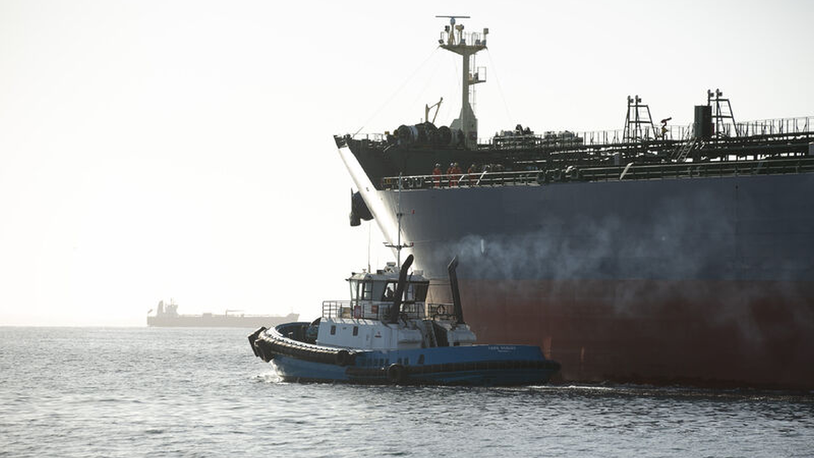
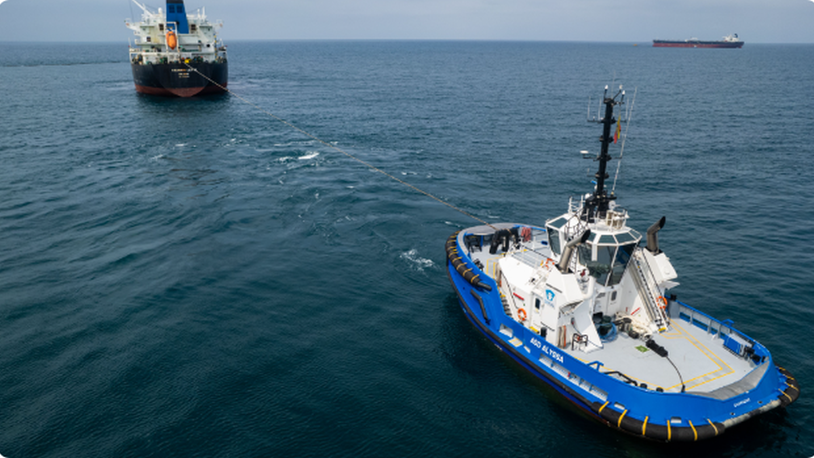
Shipping companies reluctant to invest in fleet decarbonisation will pressurise their subcontractors. In respect to this, subsidiaries of DP World and Maersk have developed plans for sustainable towage. Svitzer converted its 10 tugs operating in the Port of London, UK to operate sustainable biofuel and is offering EcoTow to shipping lines.
DP World’s Unifeeder is the first announced customer and London Gateway container terminal one of the beneficiaries. All can claim sustainable reductions in their carbon footprints from Scope 3 emissions from this initiative.
The tug and towage leader has shown the way that others should follow. Another example is in the US, where Crowley is using biofuel for some tug operations.
There are considerable benefits from using biodiesel from sustainable resources. It needs very little investment on tugboats, or inside enginerooms. The conversion is swift and easy to undertake, and it does not need investment in new tugs.
While many in the towage sector question the feasibility of gas-based fuels such as LNG and LPG and future fuels, such as methanol, ammonia and hydrogen, biofuels are far easier to adopt.
Tug owners have experience with LNG and have found it a challenging fuel to use on small vessels. There will be trials using methanol, ammonia and hydrogen fuel cells in the medium to long term, but these will take time.
What about batteries, some will ask? There are questions on the viability of using batteries for tug operations outside ports, or where there are no charging stations.
Therefore, tug owners need to act now to fill their vessels with sustainable biofuels and lead the rest of the shipping industry to reduce the environmental footprint.
The International Tug & Salvage Webinar Week will be held from 14 March 2022. Register your interest and access more information here



Related to this Story
Events

© 2026 Riviera Maritime Media Ltd.


