


Business Sectors
Business Sectors
Events
Contents

Register to read more articles.
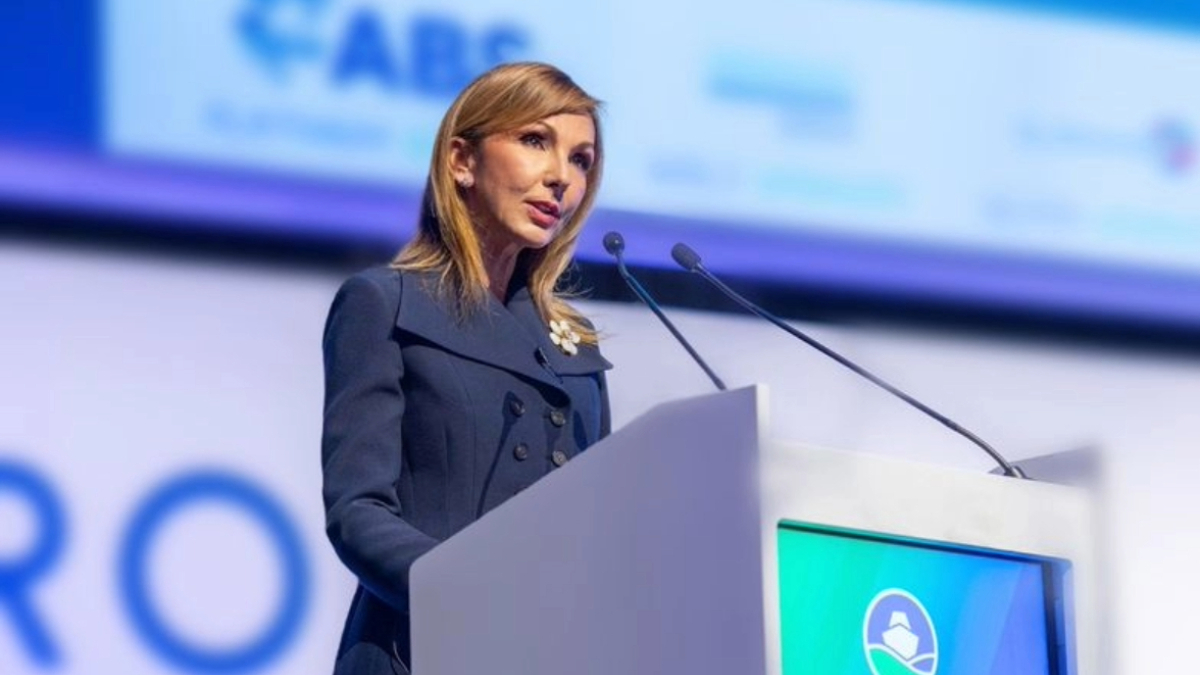
EU steering IMO towards a 'dead-end', 'torpedoing' negotiations, Greek shipowners say
Greek shipowners have once again criticised the European Union’s position on shipping decarbonisation, accusing Brussels of inflexibility that threatens to “torpedo” the upcoming International Maritime Organization (IMO) negotiations


IMO member states are heading towards a busy end to the year, with an intersessional working group set to discuss the reduction of GHG emissions from ships on 23-27 November, followed by the Marine Environment Protection Committee (MEPC) meeting from 30 November to 3 December.
Ahead of these critical discussions, Union of Greek Shipowners (UGS) president Melina Travlos has expressed pessimism about the prospects for “positive tangible progress”, placing the EU’s position at the centre of her criticism.
Ms Travlos said that, during negotiations at EU level in recent weeks, Greece, together with three other EU member states collectively accounting for 70% of the EU-controlled fleet, had consistently stressed the need for Europe to approach the IMO meetings with a genuine willingness to negotiate.
“Regrettably, these calls went unheeded,” Ms Travlos said.
“It is dismaying to witness such a striking degree of political inconsistency on the part of the European Union on this critical issue,” she added.
The UGS president further argued that the “EU’s uncompromising position is steering the IMO process towards yet another deadlock, effectively torpedoing the negotiations by depriving them of the flexibility necessary for any chance of success.”
“Does the European Union ultimately place greater value on preserving its own regional measures, and the revenues they generate, than on reaching a balanced global agreement?” Ms Travlos asked.
She accused the bloc of allowing, through its approach, “other interests to take precedence over the pursuit of an internationally acceptable solution for the decarbonisation of international shipping, placing additional burdens on European citizens, who are already struggling with the rising cost of living.”
This is not the first time Greece has taken a firm stance against the EU over shipping decarbonisation. The UGS has repeatedly called for greater flexibility and for the industry’s concerns to be taken into account, while in August, Greek Minister of Maritime Affairs and Insular Policy Vassilis Kikilias also accused the bloc of a “lack of understanding”.
Both have been highly critical of the IMO’s proposed Net-Zero Framework, with the UGS recently voicing support for the Panama-Liberia proposal.
What the framework should look like
Ms Travlos has also called on IMO member states to “listen this time” to the voice of the shipping industry, recognising that “for a regulation to be effective, it must be pragmatic, proportionate and implementable, while reflecting the commercial and operational realities and constraints of the industry.”
She called for alignment between “long-term ambition, market realities and technological readiness”.
“This means taking into account the availability, scalability and affordability of alternative fuels, technologies and supporting infrastructure, as well as competing demand from other sectors,” Ms Travlos explained.
According to Ms Travlos, the regulatory framework “must also recognise the diversity of solutions available to the shipping industry, rather than focusing exclusively on alternative fuels.”
“It should support all effective pathways to emissions reduction, including technical and operational efficiency measures.”
Any mid-term measure, she continued, should be viewed as part of an evolving regulatory framework, rather than as a standalone instrument expected to deliver the entire energy transition.
“It is, therefore, crucial that member states engage openly with all viable solutions, including those that are responsive to market conditions,” Ms Travlos said, adding that they “should draw on the most effective elements of these solutions to deliver a global, balanced, effective and durable framework that achieves meaningful reductions in GHG emissions without undermining trade, food security or economic development.”





Related to this Story

Events

Maritime Regulations Webinar Week
 16 Dec 2025
 GMT - ONLINE

Floating energy: successfully unlocking stranded gas using FLNGs and FSRUs
24 Feb 2026GMT - ONLINE
© 2026 Riviera Maritime Media Ltd.


