


Business Sectors
Business Sectors
Events
Contents
Register to read more articles.
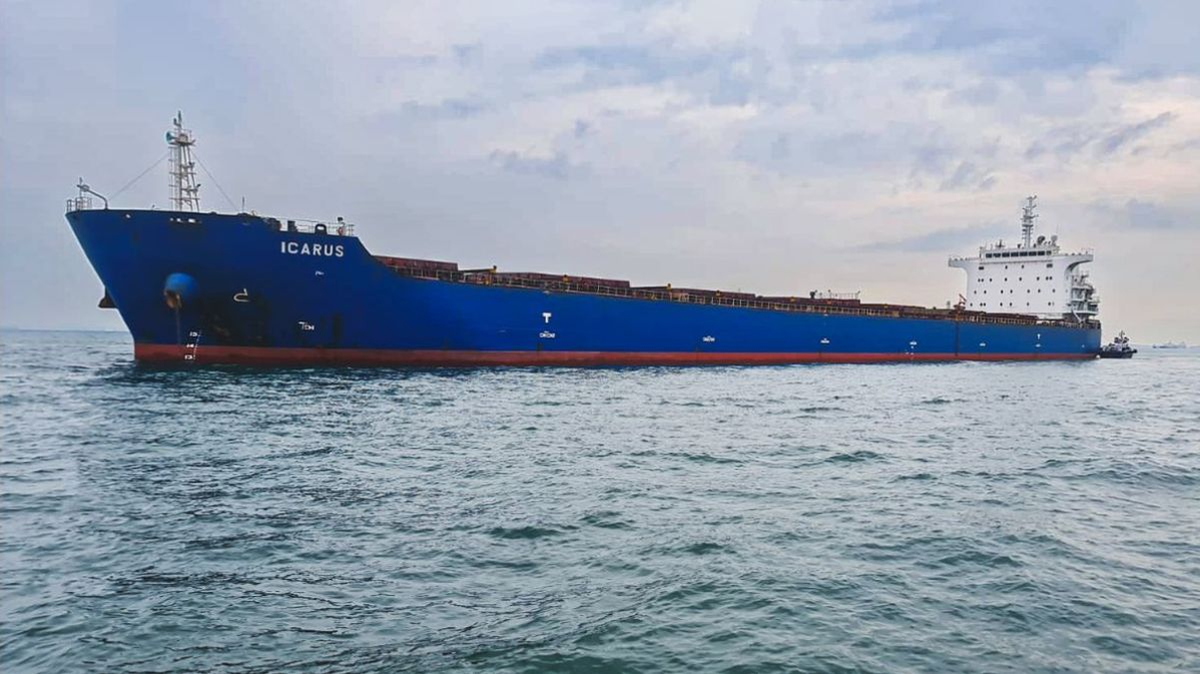
2026 in dry bulk: more ships, lower average earnings
Fleet growth, modest cargo demand and stricter safety, vetting and data expectations will test dry bulk owners’ discipline through 2026 and beyond


Dry bulk shipping closed 2025 with stronger spot earnings than many market participants had expected, yet the data points towards a more demanding period of adjustment in 2026.
Fleet expansion already locked in at the yard, fragile cargo growth and an intensifying overlay of safety, documentation and decarbonisation requirements will frame commercial decisions well beyond next year.
On the supply side, Maritime Strategies International (MSI) projected 35M dwt of bulk carrier capacity would be delivered in 2025, followed by a further 42M dwt scheduled for 2026 in its November HORIZON Monthly Dry Bulk analysis.
"Stockpiling of iron ore and bauxite remains the dominant support for Capesize demand"
The research highlighted the exposure of the Panamax segment, with around 16M dwt of new capacity entering a market where coal trade fundamentals are described as weak.
Handymax bulk carriers also face an oversupply risk, with an orderbook of 12M dwt.
MSI argued stronger fleet growth, combined with softer cargo volumes once current stockpiling unwinds, would place pressure on earnings and asset prices.
That conclusion was reflected in its rate outlook with an expectation of rates to come under sustained downward pressure from the first half of 2026, even as forward market sentiment for Capesize vessels improved during the second half of 2025.
The Q2 2026 Capesize forward contract was noted as having strengthened from mid-year into November, yet MSI maintained what it characterised as a cautious earnings view in light of the supply profile.
In the near term, Capesize dynamics remain closely tied to Chinese demand for iron ore and bauxite.
MSI noted the late-2025 freight rally was driven by Guinean bauxite exports that were up 35% year-on-year for January to August, alongside a recovery in Chinese iron ore imports from a weak first half.
The first loading of Simandou ore in November was an event that attracted wide interest, but made clear that a disruptive effect on established trade flows was unlikely before late 2026.
For now, MSI judges China’s ongoing stockpiling of iron ore and bauxite remains the dominant support for Capesize demand.

Owner investment behaviour in 2025 provides further clues to how the fleet may evolve.
At the Slide2Open shipping finance conference, DryDel Shipping president and chief executive Costas Delaportas stated, “The only viable investment opportunity under the upcoming regulations is to build new ships” and criticised the strategy of buying 10- to 15-year-old vessels with older engine designs, arguing that such ships would not remain competitive over time.
"2026 is unlikely to deliver a straightforward continuation of the late-2025 freight rally"
He highlighted the higher cost of dual-fuel engines, estimating an additional US$10M to US$12M per vessel compared with conventional propulsion, and noted that DryDel’s newbuilds consume 40% less fuel than older vessels, which he said made them more attractive to charterers.
He also called for increased scrapping and said trading vessels older than 20 years should stop.
The International Bulk Shipping Conference in November 2025 reinforced the point that dry bulk will sit at the intersection of safety, decarbonisation and data in the coming years.
The conference highlighted tightening safety rules, costly decarbonisation choices and the growing role of validated data and wind assistance.
Taken together with MSI’s projections and the Intermodal and Marine Benchmark analysis, this suggests 2026 is unlikely to deliver a straightforward continuation of the late-2025 freight rally.
Instead, it is set to be a year in which lower average earnings coincide with high tactical volatility, while structural trends in cargo composition, regulatory expectations and investment preference become more visible.
Sign up for Riviera’s series of technical and operational webinars and conferences:
- Register to attend by visiting our events page.
- Watch recordings from all of our webinars in the webinar library.



Related to this Story


Events

© 2026 Riviera Maritime Media Ltd.


