


Business Sectors
Business Sectors
Events
Contents
Register to read more articles.

If you cannot beat them – join them
The contrast between the tanker sector and the container ship sector is stark, but preparing for the shipping cycle to swing back in favour of tankers will be beneficial


The first two months of 2022 have been particularly difficult for tanker owners and operators. At a fundamental level, crude oil trade flows are not supporting the tonnage available for employment. This is evident from the statistics; according to Clarkson Research Services, the crude oil and oil products trades fell by 8.9% and 6.8%, respectively, when comparing 2021 against 2019 (it was necessary to ignore 2020 due the extraordinary nature of the first year of the Covid-19 pandemic). Demand for oil and tonne-mile demand tumbled, but conversely, total global seaborne trade picked up by 3.4% compared with 2019 pre-Covid levels.
Given this disconnect, tanker operators can only hope that there is a lag taking place between the pick-up in global trade, following the relaxation of pandemic measures, and a subsequent increase in demand for oil, as travel and commuting return to pre-pandemic levels.
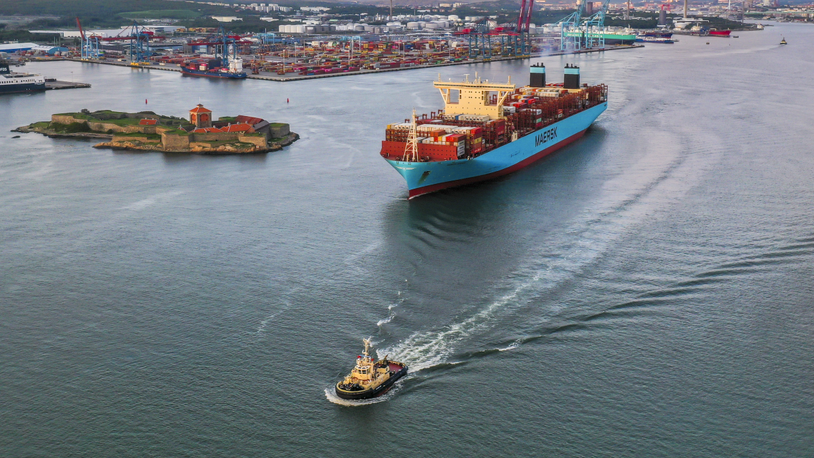
Until this trend emerges, tanker owners and operators can only look on with envy at the astonishing earnings and values being generated in the container ship sector. To many, peak astonishment was achieved in January 2022 with the sale of the 2009-built, 4,300-TEU container ship Ionikos, which was sold for a reported US$96M. It is a sale that mirrors the tales of VLCCs sold during the various war/OPEC-generated oil crisis of the last 50 years.
“Tanker owners and operators can only look on with envy at the astonishing earnings and values being generated in the containership sector”
In this case, the vessel was sold off-the-blocks for an estimated US$50M-plus in 2006, during the German KG container ship financing boom. Vessel delivery took place in 2009 in the dire financial crisis that commenced with the collapse of Lehman Brothers and by March 2017, a 2009-built, 4,300-TEU container ship like Ionikos was so unloved that values had fallen to around that of scrap (US$7M). Fast-forward to 2022, a significant portion of the container ship fleet is stranded, waiting to discharge off California, and the subsequent shortage of vessels available to load has sent container ship values to the extraordinary levels of the reported US$96M paid for Ionikos.
Some tanker operators are now looking to join the container ship party; Concordia Maritime has announced a feasibility study to convert P-Max tankers to carry up to 2000-TEU. This is reminiscent of the birth of the ocean container trades, when Malcolm McClean converted two WWII-built T2 tankers to carry containers.
No one saw the container ship boom coming, and if anything, the tanker sector has a better track record of benefitting from extraordinary external circumstances, such as war or invasion leading to sanctions. This is when tanker investors become tanker tycoons, and now is the time to prepare. We are already seeing the rate of consolidation increase, as those with access to capital acquire tonnage – in the space of a few months, Hafnia Tankers has added 44 tankers, lifting its fleet to 152 vessels.
- In the second week of March we will be hosting the first Tanker Shipping & Trade Webinar Week of 2022, in which we will explore developments in the shuttle tanker sector, forthcoming regulations and future-proofing tankers to charterer requirements, plus the operational issues surrounding coatings, biofouling and cargo emissions.


Related to this Story



Events

© 2026 Riviera Maritime Media Ltd.


