


Business Sectors
Business Sectors
Events
Contents

Register to read more articles.
North Sea and Baltic states highlight spoofing and jamming in warning over Russian interference
Governments around the Baltic Sea and North Sea want action to prevent GNSS interference and AIS manipulation threatening maritime safety and security


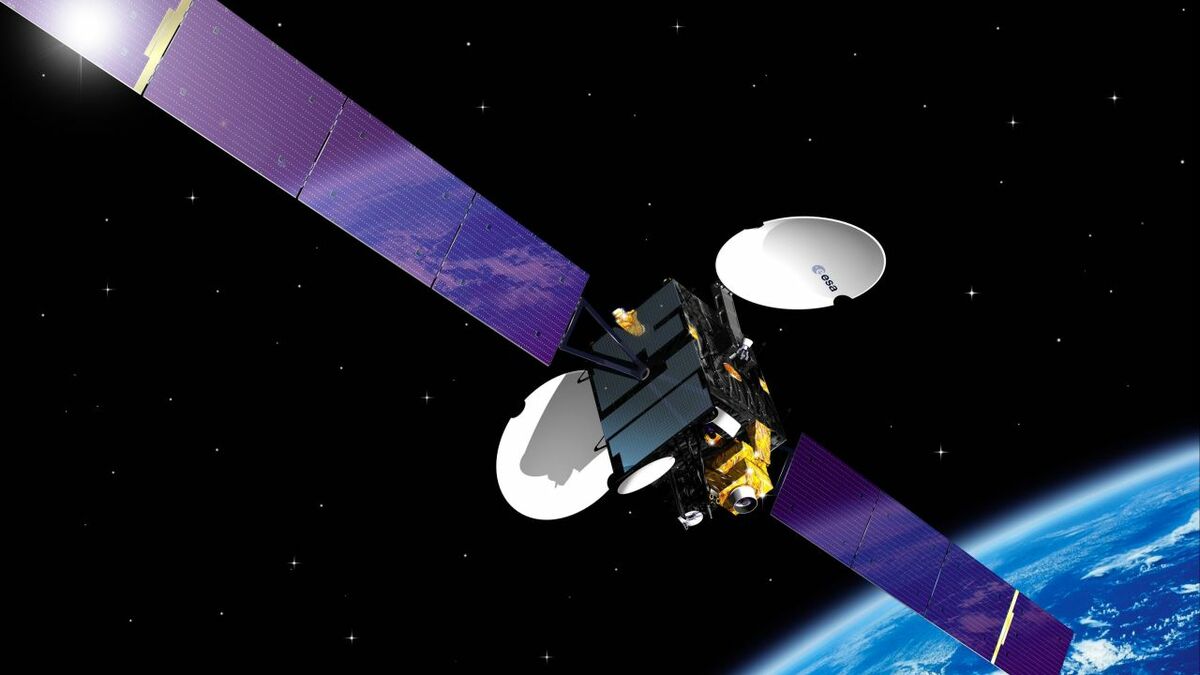
Baltic Sea and North Sea states are calling for the joint development of terrestrial radionavigation systems that can be used instead of satellite-based information for safe ship navigation.
They are concerned about the disruption and spoofing of Global Navigation Satellite Systems (GNSS) such as GPS, Galileo and Glonass, used by bridge electronics such as ECDIS, satellite compasses and autopilots, for vessel navigation.
States are also concerned about the rising level of spoofing and falsifying data for the automatic identification system (AIS), which undermines maritime safety and security. They have written to the international maritime community and national authorities calling for action to mitigate disruptions to GNSS and AIS signals, and for all vessels to abide by international maritime laws covering safety, pollution and collision risk mitigation, such as SOLAS, Marpol and COLREGS.
Belgium, Denmark, Estonia, Finland, France, Germany, Iceland, Latvia, Lithuania, the Netherlands, Norway, Poland, Sweden and the United Kingdom have highlighted the safety issues and demanded action.
This letter has been sent to flag and port states, national authorities, flag registries, classification societies, shipping companies, managers and operators, and seafarers.
Disrupted GNSS and AIS increases accident risks, reduces reliability and severely hampers rescue operations.
Incidents involving a loss of signal or interference of GNSS have risen in the Baltic Sea, with coastal states saying these disturbances are “originating from the Russian Federation, degrade the safety of international shipping,” and that “all vessels are at risk.”
With the increased use of GNSS, vessels are dependent on the position, timing, and navigation data provided by satellites.
“The accurate and uninterrupted functioning of GNSS is not a technical luxury; it is a critical safety requirement,” the coastal states said in a joint letter. “GNSS signals support not only ship navigation, but also precise time synchronisation vital for systems such as the Global Maritime Distress and Safety System [GMDSS].”
The letter makes three demands for the international maritime community and national authorities to act upon.
“We must ensure that our seas remain safe, including when systems fail or face disturbances”
The nations ask that GNSS interference and AIS manipulation are recognised as threats to maritime safety and security; that vessels have adequate capabilities and properly trained crew as required by international conventions to operate safely during navigation system outages; and for co-operation on the development of alternative terrestrial radionavigation systems for use in place of GNSS in the event of disruption, loss of signal or interference.
“Maintaining trust in maritime navigation requires more than technology – it demands responsibility, transparency and decisive action,” said the coastal states in the letter. “We must ensure that our seas remain safe, including when systems fail or face disturbances.”
This letter could lead to alternative terrestrial radionavigation systems, such as Loran, being developed for European coastlines, which would need radiocommunications masts to be installed and technology to be developed.
Past Loran developments
Long-wave radiocommunications for vessel navigation were used before GNSS was developed in the 1970s, and over the decades since, there have been attempts to implement similar systems.
In the 2010s, UK authorities and parts of the European Union were considering investing in differential enhanced Loran (eLoran).
In 2013, the General Lighthouse Authorities (GLA) of the UK and Ireland were at the forefront of research and practical action in this field, and were considering installing eLoran stations on the south and east coasts of England.
In Q2 2013, GLA demonstrated how vulnerable GPS is to spoofing and jamming on a vessel in the North Sea, and planned for multiple eLoran stations to be installed from Aberdeen to Dover by working with UrsaNav, which has also worked with authorities in Denmark, France, Germany, the Netherlands and Norway on implementing similar technologies.
In 2014, the Port of Rotterdam installed its own eLoran to determine a ship’s position with an accuracy of better than 5 m and to help pilots guide vessels precisely along narrow channels to their berths.
In the letter, coastal states also called on shipowners, operators and managers to ensure AIS is always switched on and transmitting the correct information, and that increasethey uphold international standards and IMO conventions.
“To uphold and strengthen maritime safety in the Baltic Sea and North Sea region, we require that all vessels exercising freedom of navigation strictly comply with applicable international law, whether customary international law or as contracting parties to international conventions.”
Riviera’s International Chemical and Product Tanker Conference will be held in London on 21-22 April 2026. Use this link for more information and to register for the event.


Related to this Story




Events

© 2026 Riviera Maritime Media Ltd.


