


Business Sectors
Business Sectors
Events
Contents

Register to read more articles.
Why ballast water rules approve systems, but do not police discharges
Dr Wei Chen and co-authors argue that the IMO Ballast Water Management Convention alongside US rules set performance standards but have left regulators enforcing certificates rather than discharge quality


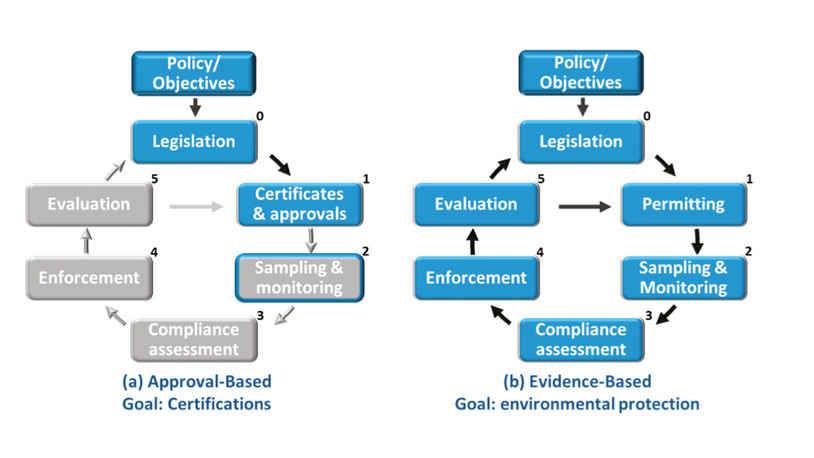
The global shipping industry has committed to controlling the transfer of harmful aquatic species and pathogens via ballast water, driven by IMO’s Ballast Water Management Convention (BWMC) and the United States’ 33 CFR 151. Both regulations contain ballast water management system (BWMS) performance standards. But they have no compulsory provisions to enforce compliant discharges. They enforce approvals instead (Figure 1-a).
Such approval-based regulations were implemented on land long ago, but they proved ineffective. It was when authorities approved the wastewater treatment facilities after they were constructed and commissioned, and granted them discharge licences without ongoing discharge monitoring or sampling.
Over time, it became evident that pollution persisted because the qualities of treated wastewater were poor. These discharge licences did not stop pollution; instead, they legalised pollution. To correct the situation, society developed evidence-based regulations featuring a closed regulatory cycle (Figure 1-b, boxes in blue), in which: a discharge was permitted (Box 1) only when its flows and concentrations were monitored and sampled on an on-going basis (Box 2), and assessed (Box 3), enforced (Box 4), and evaluated (Box 5), so that its discharge permit can be renewal based on evidence (Box 1).
Such a regulatory cycle enables evidence-based review of discharge standards to ensure they can be effectively enforced using the best available technologies without entailing excess costs (Box 0). Such development started in the 1970s, exemplified by the USA’s EPA’s National Pollutant Discharge Elimination System (NPDES) [1]. The huge commitment paid off. Since then, evidence-based regulations have been successfully implemented across various industry sectors in society [1].
Ships’ discharges are dominated by approval-based regulations [1]. Without tangible or compulsory provisions for verifying and enforcing compliant discharges (Boxes 2-5), the regulatory cycle halts abruptly at Box 1 (Figure 1-a). Inside Box 1, a mini-cycle is at play: the aspirational discharge standards are assumed under test conditions.
The technologies are merited based on their certificates rather than discharge performances. Their inevitable inadequacies and poor performances are periodically grandfathered, marking the end of one mini-cycle and the start of a new one, with newer aspirations, newer inadequacies, and the same poor performances. Faced with aspirations beyond its reach and inadequacies beyond its help, the shipping industry has not complained, knowing the approvals and grandfather clauses will keep it in compliance within the mini-cycle (Figure 1-a).
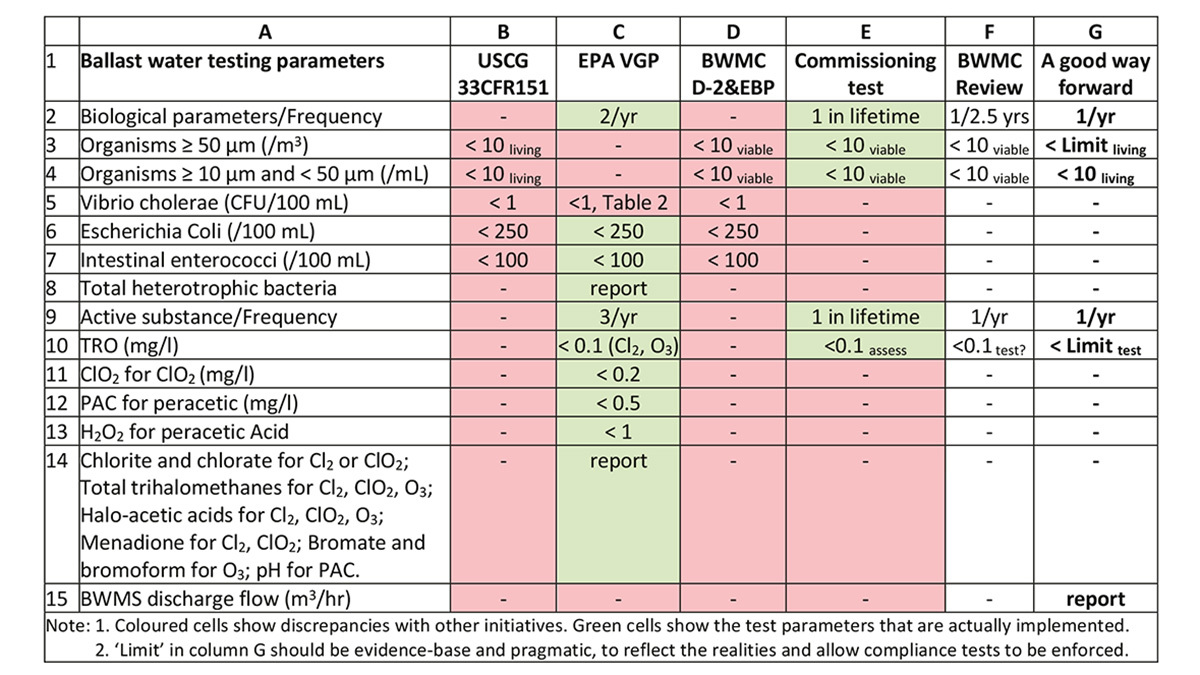
The reputational and environmental damage has not gone unnoticed [2]. Various sampling initiatives have been proposed or implemented (Table 1). This article reviews BWMS test parameters and sampling frequencies, the progress of various sampling initiatives, and advocates a universal, effective, and pragmatic approach for closing the regulatory cycle (Table 1).
The USCG and IMO rules (Table 1, columns B and D)
Without the compulsory provisions in Boxes 2-5 (Figure 1-a, in grey), these approval-based regulations incentivise the development, testing, and approval of BWMS to achieve the goal of obtaining approval certificates. To date, there is no published evidence suggesting these BWMS discharge standards have been consistently enforced during operations [3].
What has become evident instead are the discrepancies and inadequacies among the type-approved BWMS (a topic worthy of a separate review). Regarding the test parameters:
a) ‘Living’ or ‘viable’ organisms (Table 1, Rows 3 and 4). The significance of this analytical discrepancy has not been evidenced by BWMS discharge performances. By now, the detailed analysis methods and the compliance monitoring device (CMD) approved in accordance with IMO and ISO test protocols (MEPC 83/INF.23) support ‘living’.
b) The total residual oxidants (TRO) limit (Table 1, B10, D10) needs to be made explicit and compulsory under the BWMC to address the related inadequacies [4], exceedances (MEPC 75/INF.11), and environmental harms. It also needs to be evidence-based and pragmatic for effective enforcement (Table 1, G10), a topic worthy of a separate review.
1.Vessel General Permit (VGP) (Table 1, column C)
Following a legal case [5], the USEPA developed the VGP under its NPDES program, demanding discharge monitoring reports (DMRs) and annual reports obtained through self-sampling and self-reporting. Unfortunately, the widespread inconsistencies and discrepancies in the annual reports have rendered the DMR findings unenforceable.
The VGP has not enforced compliant discharge performance; it has enforced approvals instead [6]. The VGP has moved away from evidence-based NPDES, leaving Box 2 with only a tinge of blue (Figure 1-a). The outcome of VGP has demonstrated the importance of having independent sampling by accredited service providers.
[Image here: Table 1 BWMS discharge test parameters and sampling frequency]
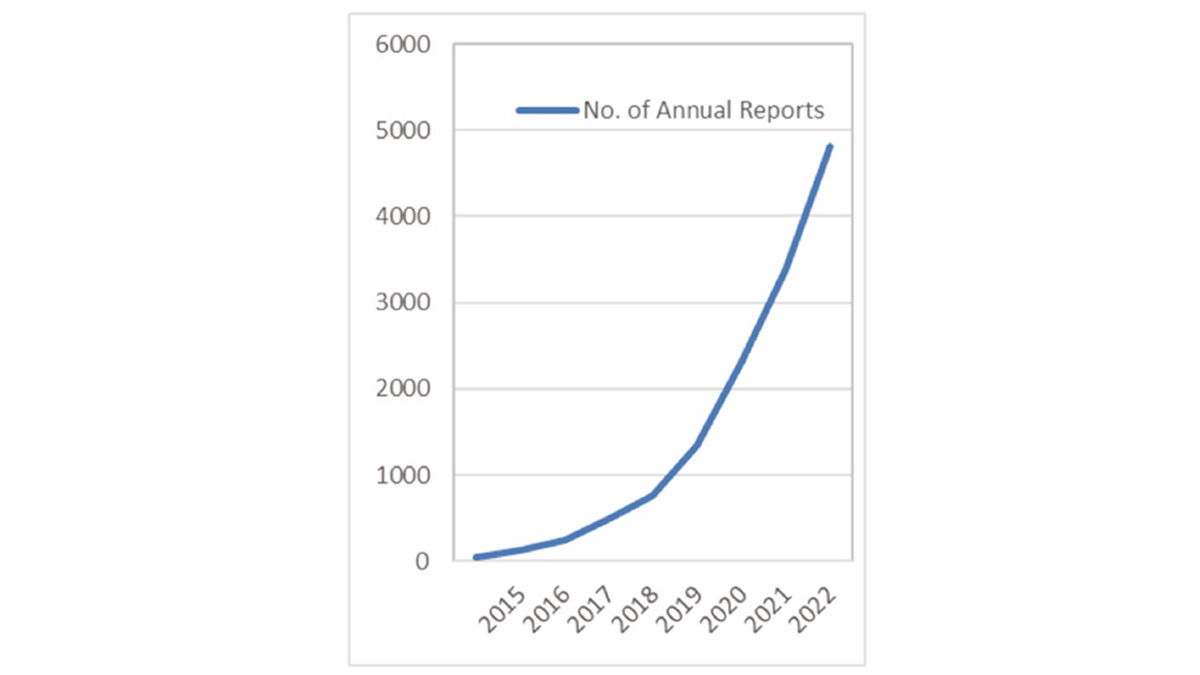
Despite the constraints, the VGP has played a pioneering and constructive role. It has demonstrated the commercial viability of its sampling frequencies (Table 1, C5, C9) and their acceptance among shipowners (Figure 2). This episode speaks volumes to maritime authorities, and to VGP’s successor—the ‘permit-less’ Vessel Incidental Discharge Act (VIDA) [7]:
a) The larger organisms need to be included (Table 1, C3:C4). The NPDES is designed to eliminate pollution, not to address biosecurity risks. Such an inherent discrepancy means that these crucial biosecurity parameters cannot be readily incorporated into the NPDES for ballast water discharged to the sea or ashore. As a result, VIDA performance standards were assessed using BWMS type-test data rather than operational data [8], leaving the practicability of these standards unanswered. This inherent discrepancy has also caught other national authorities off guard. Their national regulations do not readily recognise D-2 standards when dealing with unmanaged ballast water in ports (a topic that warrants a separate review).
b) Other parameters may be justified or simplified (Table 1, C8:C14). They introduced complexity. Without explanation or rationale, VIDA removes the report-only parameters (C8, C14) and retains the VGP’s numeric limits (C11:C13) that were proposed by GESAMP (Group of Experts on the Scientific Aspects of Marine Environmental Protection) but excluded by D-2 [5].
c) The biological and biocidal parameters and flow rates are interrelated and need to be assessed together. Applying different frequencies (Table 1, C2, C9; F2, F9) creates incomplete datasets, rendering a compliant performance assessment impossible.
2. Commissioning tests (Table 1, column E)
Belonging to Box 1, commissioning tests must pass. Preparation work that is not repeated during operation has been advocated to ‘help ships pass the test’. And pass they did, at a mere 1.2 log reduction (MEPC 82/INF.5), which is a few magnitudes below the BWMS type-test targets and BWMS efficacies observed a decade ago (MEPC 72/INF.7). There are important lessons: 1) obtaining BWMS log reduction is feasible for comparing their efficacies on a level playing field; 2) unannounced tests can help gauge discharge performance rather than prepping; 3) TRO needs to be ‘assessed’ (BWM.2/Circ.70/Rev.1) by testing; and 4) the presence of TRO in UV-BWMS discharges [9] demands TRO test to all BWMS discharges.
3. The voluntary and non-penalising Experience Building Phase (EBP) (Table 1, column D)
Never before has an approval-based regulation initiated a reality check (MEPC 78/4/1). The outcome has been telling. It indicates that 50% of sampling events found exceedances [10], whereas only 1% of 170,000 inspections found deficiencies. This wide gap repeats the brutal realities of other maritime environmental initiatives [2]. Regarding the test parameters and sampling frequency:
a) Larger organisms are harder to kill. Most D-2 exceedances are with organisms ≥ 50 µm. This has justified the removal of bacterial parameters (Table 1, E5:F7) to reduce burdens. But it has not prevented the removal of filters in recent years, exposing BWMS to the challenge of millimetre-sized organisms that are beyond their designed and tested capabilities (another topic that warrants a separate review).
b) Organisms ≥ 10 µm and <50 µm. As with bacteria, this parameter has exhibited a low failure rate to date. Its analytical methods and CMDs are being evaluated [11]. However, its importance may grow under evidence-based regulations, as the need to establish uptake water quality thresholds and verify BWMS efficacy increases.
c) Sampling frequency. It is said that a blue moon rises every 2.5 years. Sampling a discharge once in a blue moon has not been proven effective. Our society has successfully adopted sampling frequencies ranging from once per day for high-flow effluent discharges to once per year for safe recycling of low-quantity sewage sludge [12], but not any less. BWMS discharges, with their high flows and variable quality, require higher sampling frequencies. A minimum frequency of once per year can be an evidence-based and pragmatic starting point (Table 1, G2 and G9), especially when, one day, BWMS’s efficacies and consistencies can be secured by well-researched and developed Hazard Analysis and Critical Control Points (HACCP): a proven management system for dealing with complex biosecurity and biosafety challenges under evidence-based regulations [12].
4. Summary
The shipping industry faces once again the challenge of poor discharge performance, ‘even when the type-approved equipment was properly installed, maintained and operated correctly’ (MEPC 82/INF.33). Fifty years ago, our society developed evidence-based regulations with a closed regulatory cycle, which have been shown to be effective (Figure 1-b). With increased awareness, the shipping industry may one day align with the rest of society by making its approvals a valuable tool rather than a regulatory goal.
The journey towards a closed regulatory cycle can have challenges. Introducing universal, compulsory, effective, frequent and independent compliance sampling to enforce evidence-based and pragmatic discharge standards (Table 1, column G) can be the first step in this journey to turn shipping’s biosecurity aspirations into reality.
Co-authored by:
Dr Wei Chen, consultant, EN Decision Ltd, UK.
Erik Köster, managing director, Ankron Water Services GmbH, Germany
Rudolf Mes, sr. vice president, SciencoFAST/InTank, U.S.A.
Maartje Folbert, MSc, PhD candidate, Open Universiteit, The Netherlands
Dr Pia Haecky, CEO, MicroWISE, Denmark
Mark Chiverton, Managing Director, OEMA, UK
Pandelis Kiriakis, CEO, Saron Marine Group, Greece
Oliver Jost, Maritime Environmental Affairs, Wasserschutzpolizei (Water Police) Hamburg, Germany
Dr Cees van Slooten, program manager, Vessel Performance Centre, the Netherlands
Keith Soh, operations manager, Maritec Naias, Singapore
For further information and the references given in the article, please contact weichen@en-decision.com
Sign up for Riviera’s April 2026 International Chemical and Product Tanker Conference:
- Register to attend here: The International Chemical and Product Tanker Conference 2026, London.
- View the latest issue of Tanker Shipping & Trade here: Tanker Shipping & Trade.

Related to this Story



Events

© 2026 Riviera Maritime Media Ltd.


