


Business Sectors
Business Sectors
Events
Contents
Mooring lines made to fight abrasion at their core
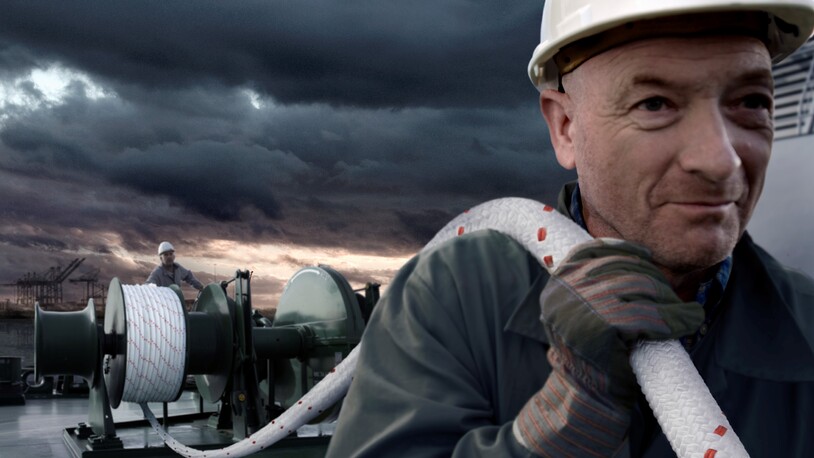
Given the high pressures imposed on mooring ropes, it is inevitable that abrasion occurs over time. As lines rub on fairleads as they take the ceaseless movement of wind, tide and current, they gradually degrade. The results are visible in the form of flattened yarns, broken filaments and other external evidence.


The good news is that while abrasion cannot be avoided, it can be delayed. Some load-bearing fibers are by design more abrasion-resistant than others. Dyneema® SK78 fiber fights abrasion up to four times more effectively than generic alternatives because of its ultra-durable, lab-tested composition.
This is not an empty claim. Not only has the superiority of Dyneema® SK78 fiber been proved in specially designed equipment, it’s also been tested in the best laboratory of all. Namely, the world’s ports.
Making mooring operations safer for ships and crews is the focus on new IMO regulations and industry guidelines following serious and even fatal accidents involving seafarers and terminal operators. These accidents typically involve the manual handling of equipment or mooring line breakage.
According to the European Harbour Masters’ Committee 95% of injuries are caused by failures of ropes or wires, and 60% of those incidents happen during mooring operations. Additionally, movements of a badly moored vessel can cause property damage or environmental harm, and a ship breaking lose from its moorings can result in catastrophic damage in port.
Starting 1 January 2024, all ships will be required to have a Line Management Plan (LMP) under the new IMO Safety of Life at Sea (SOLAS) MSC.1/Circ. 1620 regulation. The health of lines including hours of use, and how they are stowed, tested, inspected, retired and certified should be recorded in the LMP.
When the fourth edition of the Mooring Equipment Guidelines, known as MEG4, was published by OCIMF in 2018, it, too, set new and higher safety standards. In publishing MEG4, OCIMF recognised that lines had to rise to the challenge of faster port turnarounds, ever-larger vessels and widely varying conditions including the effect of extreme heat and cold on lines.
Avient (the former DSM Dyneema), which was closely involved in the development of the guidelines, welcomes these higher standards. Their Dyneema® SK78 fiber is purpose built to meet head-on the challenges of this new era in mooring.
Mooring ropes should be made to last and provide comfort to ship operators, not least the crew. The challenge is, of course, that no ship, port, or crew is the same. So, in partnership with manufacturers of premium mooring ropes, ropes made with Dyneema® SK78 fiber are designed to handle the endless stresses and strains imposed during mooring operations. Strains from Fatigue, Abrasion, Creep and Temperature (FACTs) can lead to failures.
The mooring experts at Dyneema® have put together a video series about the FACTs to consider when selecting mooring lines. Their Abrasion video explains how and why they have engineered Dyneema® SK78 fiber so that it offers up to four times the resistance to abrasion compared to generic alternatives.
Ropes made with Dyneema® SK78 fiber fight abrasion at their very core.
Want more information? Talk to Dyneema’s experts by clicking this link.

Related to this Story

Events

© 2026 Riviera Maritime Media Ltd.


