


Business Sectors
Business Sectors
Events
Contents

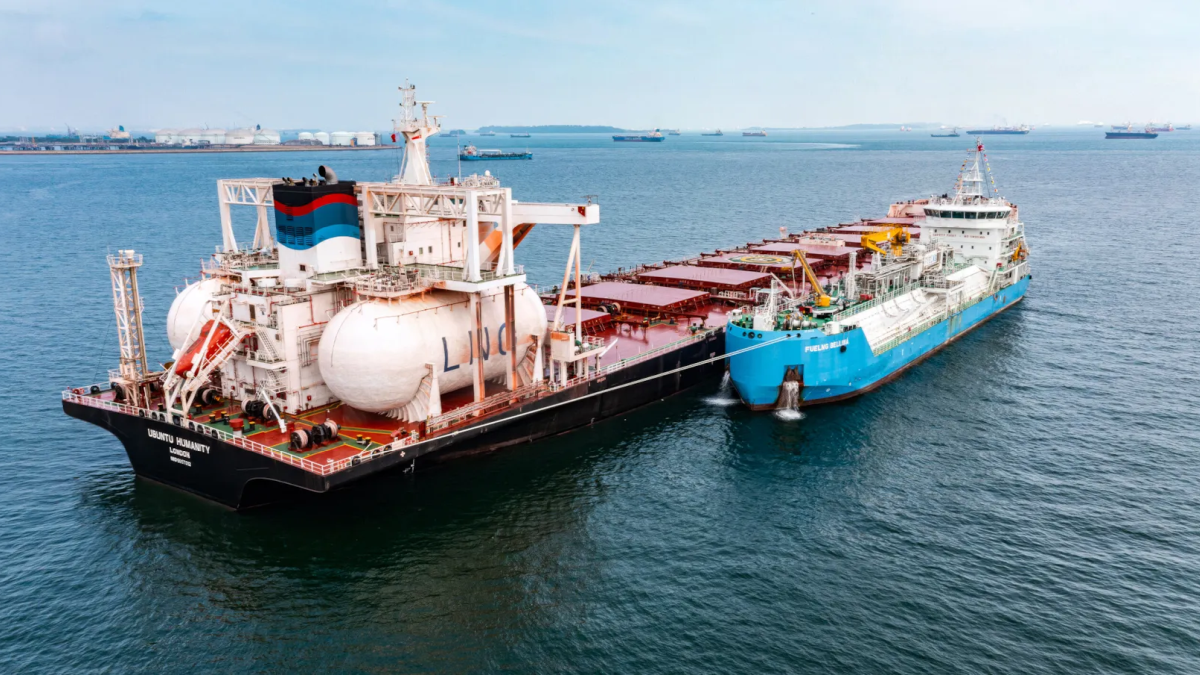
DNV sets out case for shipping's transition from LNG to 'low-GHG methane' fuels
Norwegian classification society presents its take on the pros and cons of using existing and soon-to-be-built LNG assets with lower-carbon versions of the molecule


DNV has published a report that it says is aimed at evaluating ’the potential’ of using liquefied natural gas (LNG) as a so-called ’bridging fuel toward low-GHG methane’.
The new white paper from DNV, Methane in shipping, LNG-fuelled ships and the switch to low-GHG methane, posits that the rapidly expanding fleet of LNG-fuelled vessels and LNG carriers in the global shipping fleet offer an opportunity, or as DNV terms it an ’industrial platform for scaling’, to further shipping’s transition to lower greenhouse gas (GHG) emissions.
The report lists several caveats to this positioning of a fleet of vessels currently operating on fossil LNG as a decarbonisation opportunity. Among the key caveats is that the industry needs clear and supportive regulatory frameworks that recognise and incentivise the use of low-GHG fuels. Without policy certainty, investment in production and supply chains could be slowed, DNV acknowledges.
Supply itself is another major hurdle that could impede a transition away from fossil LNG. Current availability of bio-methane and e-methane remains limited, the report notes, and scaling production to meet future demand will require significant investment.
And, as the report points out, shipping is not the only sector looking to use bio-methane and e-methane to lower carbon emissions. Shipowners looking to travel the methane-based decarbonisation pathway laid out in DNV’s report will need to compete with other sectors for access to ’low-GHG methane’ fuels, adding pressure to those aiming to expand their current limited production.
Looking past these significant challenges, DNV’s report concludes that LNG can still serve as a bridge between today’s fuel mix and a lower-emission future, although that outcome is not a certainty, and depends on the industry’s ability to transition away from fossil LNG and toward low-GHG methane variants.
In DNV’s report’s telling, the existing fossil LNG infrastructure and engine fuel flexibility and compatibility with cleaner alternatives offer an opportunity for incremental decarbonisation rather than a barrier to a shift to new carbon-free fuels or alternative technologies. While DNV says in the report that it remains agnostic and sees ’a multi-fuel future emerging for the maritime sector’, the report makes the assessment that "Overall, LNG’s role as a bridging fuel toward low-GHG methane appears promising" to make progress on decarbonising a hard-to-abate economic sector that produces large quantities of GHGs globally.
Technological lock-in of LNG as a potential drag on shipping’s decarbonisaton
One counterargument that the report addresses only briefly is the risk of using LNG to decarbonise that has been raised by, among others, researchers at UCL’s Energy Institute.
A primary risk to shipping’s methane-based decarbonisation timeline would be that continued use of LNG carries the implicit threat of furthering a fossil fuel-based status quo that does too little to decarbonise the sector, or moves too slowly to meet the decarbonisation targets set by the International Maritime Organization (IMO) and agreed by its member states.
The term for that continued use is ’lock in’ and DNV’s report addresses the risk in a single sentence in its report, noting "Other concerns are the risk of potential technology lock-in and investment diversion which could delay progress toward full decarbonization for the global shipping fleet".
In UCL’s academic paper When is a stepping stone a dead-end? Insights into ‘stepping stone’ pathways from the maritime shipping transition, the authors say the industry risks taking costly detours in using LNG and methanol as marine fuels, unless work is done to design and build assets, skills or policies to genuinely support a future shift to ammonia.
In their research, UCL Energy Institute’s Pinar Langer, Will McDowall, Marie Fricaudet, Nishatabbas Rehmatulla and Tristan Smith examined whether LNG and methanol can act as ’stepping stones’ to ammonia as a fuel in shipping.
In its look at LNG as a stepping stone, the paper notes that the fuel can create useful knowledge and design links for ammonia, around cryogenic handling, fuel preparation, tank design and regulatory learning.
Patent analysis cited in the paper also points to a technology overlap between LNG and ammonia, including gas storage, propulsion systems and boil-off management.
Still, the study authors argue that the crossover advantages for LNG and ammonia systems depend heavily on what “ammonia ready” means in practice.
Many LNG assets, the authors note, are marketed as a bridge while not being designed in ways that make later conversion straightforward.
The authors also warn that use of transition fuels comes with a risk of narratives that could slow any transition to lower-carbon and zero-carbon fuels, as well as the threat of investment lock-in for assets.
LNG, while a departure from conventional diesel, comes with greater risk of entrenching higher-carbon fossil fuel use, according to the research. While LNG may show that fuel switching is possible, it could also entrench infrastructure and commercial expectations that delay ammonia.
In other words, while continued use of LNG offers one potential decarbonisation pathway for the sector, it also carries multiple risks: that the fuel markets for ’low-GHG methane’ alternatives to LNG never mature, that the regulatory support and incentives that DNV highlights do not materialise or that shipowners do not make the necessary investments to spur the transition.
Methane slip and its potential to worsen the climate impact of methane-based fuels
Chemically, LNG is the same molecule as what DNV’s report calls ’low-GHG methane’, or specifically bio-methane and e-methane.
Burning any methane molecule produces carbon dioxide (CO2) emissions and carries the implicit global warming multiplier threat of methane slip.
Methane slip happens in combustion when unburned methane enters an engine’s exhaust gas stream, escaping into the atmosphere with other pollutants. Methane can also escape upstream from combustion. Methane has a global warming impact over 20-year and 100-year periods that is many times greater than the impact during the same timeframe for CO2.
Sign up for Riviera’s series of technical and operational webinars and conferences:
- Register to attend by visiting our events page.
- Watch recordings from all of our webinars in the webinar library.
Related to this Story

Events

Maritime Regulations Webinar Week
 16 Dec 2025
 GMT - ONLINE
Floating energy: successfully unlocking stranded gas using FLNGs and FSRUs
24 Feb 2026GMT - ONLINE
© 2026 Riviera Maritime Media Ltd.


