


Business Sectors
Business Sectors
Events
Contents
How storage hubs, terminals and contracts will drive CO2 shipping growth in 2026
From Northern Lights to Ravenna and Prinos, storage hubs, terminals and contracts will determine CO2 shipping growth through the late 2020s and early 2030s


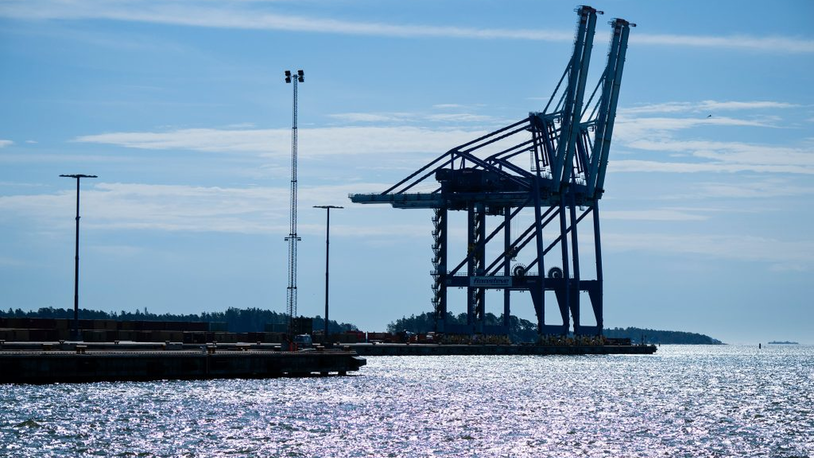
The agreement between Vantaan Energia and the Port of Helsinki to plan a large-scale CO2 terminal at Vuosaari underlined how ports in northern Europe are starting to position themselves as active nodes in carbon value chains rather than simple transit points, a trend that is likely to lead to similar announcements from other ports in 2026.
The Vuosaari Carbon Hub is intended to provide liquefaction, intermediate storage and ship loading for CO2 captured at Vantaan Energia’s waste-to-energy plant, with the terminal sized for both the company’s own project and potential third-party emitters.
Northern Europe: from pilots to cross-border chains
In the Nordic region, the combination of Stockholm Exergi’s bioenergy with carbon capture and storage (BECCS) project and the Northern Lights transport and storage network in Norway is set to define much of the cross-border seaborne trade in captured CO2 late in the 2020s.
Stockholm Exergi has taken a final investment decision on a BECCS facility at Värtan that is expected to start up in 2028 and capture about 800,000 tonnes of CO2 per year, more than the current annual emissions from Stockholm’s road traffic.
"By the end of the decade, the Mediterranean will host at least two operational offshore storage hubs and one floating liquefaction unit"
In a separate announcement, Höegh Evi highlighted its role in the Stockholm Norvik CO₂ hub project.
Northern Lights, which is part of Norway’s Longship programme, has already built the first phase of its transport and storage system and is now proceeding with an expansion in which project partners Equinor, Shell and TotalEnergies have committed to increase total injection capacity from 1.5M tonnes per year to at least 5.0M tonnes per year, with the second phase expected to be ready for operation in the second half of 2028.
North Sea and UK: cluster projects enter their build phase
Around the North Sea, several cluster-based projects are due to become operational during 2026–2029.
In the Rotterdam industrial area, the Porthos system is under construction to move captured CO2 from refineries and chemical plants to depleted gas fields under the North Sea. The project company reports that onshore pipeline construction has started and the system is expected to be operational in 2026.
In the United Kingdom, the HyNet cluster centred on Liverpool Bay is moving into its construction phase: CO2 from industrial sources in northwest England and north Wales will be transported to Eni-operated depleted gas fields in Liverpool Bay for storage, supported by long-term public funding commitments for transport and storage infrastructure.
In parallel, the Poseidon project, led by Perenco and Carbon Catalyst with Wintershall Dea as a partner, plans to use the Leman gas field and adjacent structures in the southern North Sea for CO2 injection from 2029, with an initial rate of about 1.5M tonnes per year (mta) and a long-term target of up to 40M tonnes per year.
These cluster projects rely mainly on pipelines for primary transport, yet they also establish storage hubs that could in future accept shipped CO2, particularly from emitters outside the immediate catchment area.
The emergence of open-access storage hubs with defined capacity and regulatory frameworks is a central backdrop for any outlook on North Sea and UK CO2 shipping after 2025.
Mediterranean: storage hubs and floating liquefaction
Further south, the Ravenna CCS project on Italy’s Adriatic coast has started CO2 injection from a gas treatment plant near Casalborsetti. Eni and Snam describe this as Italy’s first carbon capture and storage project, using repurposed gas pipelines to transfer captured CO2 to offshore platforms and then inject it into depleted gas fields about 3,000 m below the seabed.
The partners have indicated that the scheme is designed to scale up from an initial capture rate of around 25,000 tonnes per year to several million tonnes per year by 2030, offering a storage service for hard-to-abate industries beyond Eni’s own facilities.
Off Greece, the Prinos CO₂ Storage project is being developed by EnEarth, an Energean subsidiary, as a two-phase offshore storage hub in a depleted oil field near the island of Thasos. Phase 1 is intended to inject up to 1M tonnes of CO2 per year, with Phase 2 targeting around 3M tonnes per year, and operations are expected to start in the second half of the decade.
Alongside Prinos, the APOLLOCO₂ project in Greece has received support from the EU Innovation Fund for the development of an open-access CO2 transport and export network.
DESFA and ECOLOG describe plans for a dedicated pipeline system to bring captured CO2 to a liquefaction terminal in Attica, with the liquefied CO2 stored temporarily and then loaded onto specialised carriers for shipment to Prinos or other storage sites.
"Capture and storage of all types could reach 1.3Bn tonnes of CO2 per year by 2050, equivalent to around 6% of projected global emissions at that time and equivalent to 260 Northern Lights projects"
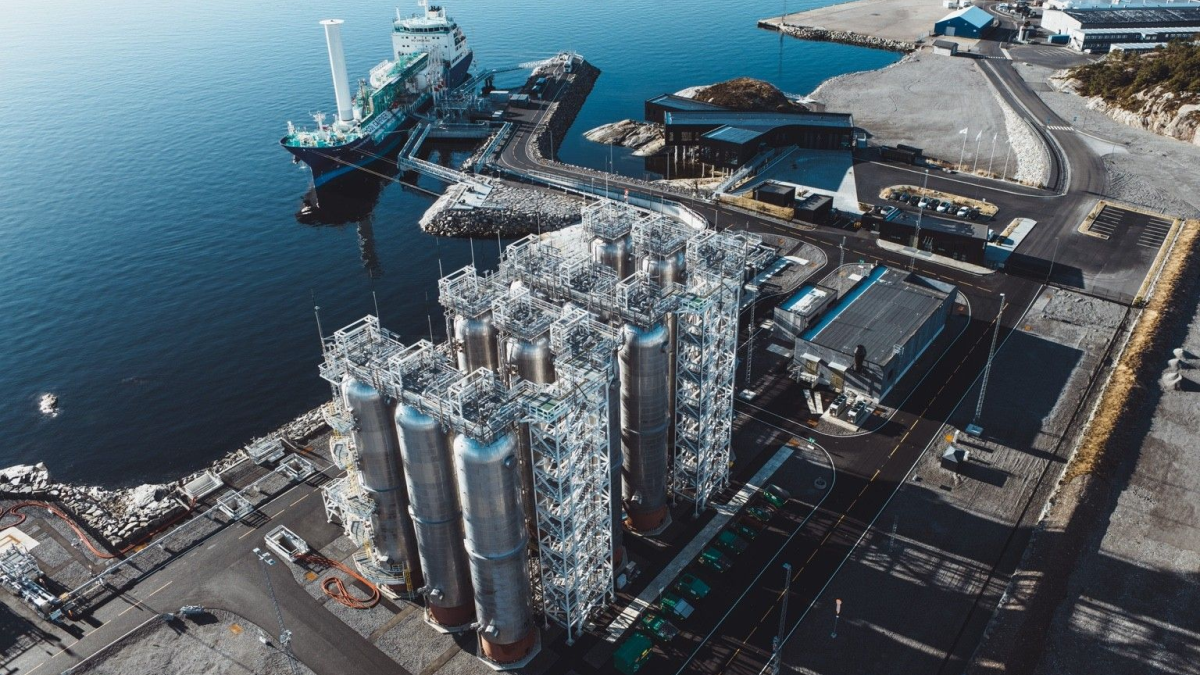
The floating liquefaction and storage unit is designed for an initial capacity of about 3 mta, expandable to about 5 mta.
Taken together, Ravenna, Prinos and APOLLOCO₂ suggest that by the end of the decade, the Mediterranean will host at least two operational offshore storage hubs and one floating liquefaction unit, all of which can interface with CO2 shipping, and underpins the emergence of a southern European CO2 transport corridor that complements North Sea routes.
Longer-term scale: from clusters to a global network
Global forecasts for carbon capture and storage point to rapid growth but also to a gap between current trajectories and climate targets.
DNV’s 2025 Energy Transition Outlook for CCS suggests worldwide capture and storage capacity could increase roughly fourfold by 2030, and that capture and storage of all types, including removal, could reach about 1.3Bn tonnes of CO2 per year by 2050, equivalent to around 6% of projected global emissions at that time and equivalent to 260 Northern Lights projects.
Within that aggregate, bioenergy with CCS and industrial capture are expected to dominate early deployment, with direct air capture growing more slowly because of higher costs.
These projections imply a steady increase in the number of capture projects and storage hubs worldwide over the next 25 years.
For shipping, this creates a structural question: whether to develop specialised regional CO2 carrier fleets tied closely to particular hubs, or to move towards more flexible trading patterns in which ships shift between basins as contracts change.
Most policy and investment attention will still be on domestic clusters and early cross-border links.
As projects such as Northern Lights, Porthos, Ravenna, Prinos, Vuosaari and Poseidon reach operations towards the end of this decade, the preconditions for a broader network will begin to emerge.
The balance between pipeline and shipped CO2, and the degree of openness of national storage hubs to foreign cargoes, will then determine how far CO2 shipping grows beyond its initial anchor projects.
Expected timeline of selected CO2 capture and storage developments
(Expected date; name; country; companies)
2024 (operations started); Ravenna CCS Phase 1; Italy; Eni/Snam.
Q4 2025–Q4 2027 Prinos CO₂ Storage Phase 1 ramp-up; Greece; EnEarth (Energean) and partners.
Early 2026 COREu-linked pilot activities at Prinos storage site; Greece; COREu consortium/EnEarth.
Late 2025–early 2026 Prinos facilities ready to receive compressed CO2; Greece; EnEarth (Energean).
Mid 2027 Prinos facilities expanded to accept liquefied CO2; Greece; EnEarth (Energean).
2026 Porthos CO₂ transport and storage system operational; Netherlands; Porthos JV (EBN/Gasunie/Port of Rotterdam Authority).
2026–2027 Mediterranean CCS network early operational phase, including increased Ravenna throughput; Italy/regional; Eni/Snam and industrial users.
2026–2028 APOLLOCO₂ floating liquefaction and export hub development; Greece; ECOLOG/DESFA and partners.
2027 Completion of Prinos CO₂ Storage Phase 1 (about 1 mta injection capacity); Greece; EnEarth (Energean).
2027 onwards Prinos CO₂ Storage Phase 2 commercial phase (around 3 mta); Greece; EnEarth (Energean).
2028 Stockholm Exergi BECCS plant operational and exporting CO2; Sweden; Stockholm Exergi.
Second half 2028; Northern Lights Phase 2 storage capacity online (total at least 5 mta); Norway; Northern Lights JV (Equinor/Shell/TotalEnergies).
2028–2030 Stockholm Exergi–Northern Lights shipping contract active (about 900,000 tonnes per annum, biogenic CO2); Sweden–Norway; Stockholm Exergi/Northern Lights JV.
2030 (earliest planned capture start under current schedule) Vantaa Carbon Capture linked to Vuosaari Carbon Hub; Finland; Vantaan Energia/Port of Helsinki.
2029 (planned operations) Poseidon CO2 Storage Project; United Kingdom; Carbon Catalyst/Perenco UK/Wintershall Dea.
2050 (indicative global capture and storage outlook) global CO2 capture and storage capacity (all CCS and CDR) around 1.3Bn tonnes per year; global; multiple operators (DNV forecast).
Riviera’s CO2 Shipping, Terminals and CCS Conference, APAC, will be held in Kuala Lumpur, Malaysia, 30 March 2026. Click here for more information on this industry-leading event.


Related to this Story

Events

Maritime Regulations Webinar Week
 16 Dec 2025
 GMT - ONLINE
Floating energy: successfully unlocking stranded gas using FLNGs and FSRUs
24 Feb 2026GMT - ONLINE
© 2026 Riviera Maritime Media Ltd.


