


Business Sectors
Business Sectors
Events
Contents
Register to read more articles.

€400Bn investment in offshore wind grids required to meet European plans
A new report detailing the investment in grid infrastructure required to support European plans for offshore wind suggests huge investments will be required


ENTSO-E’s report, Offshore Network Development Plans: European offshore network transmission infrastructure needs, Pan-European summary, suggests the size of the task required to build grid capacity to support offshore wind, and the speed at which it will need to be executed, is huge.
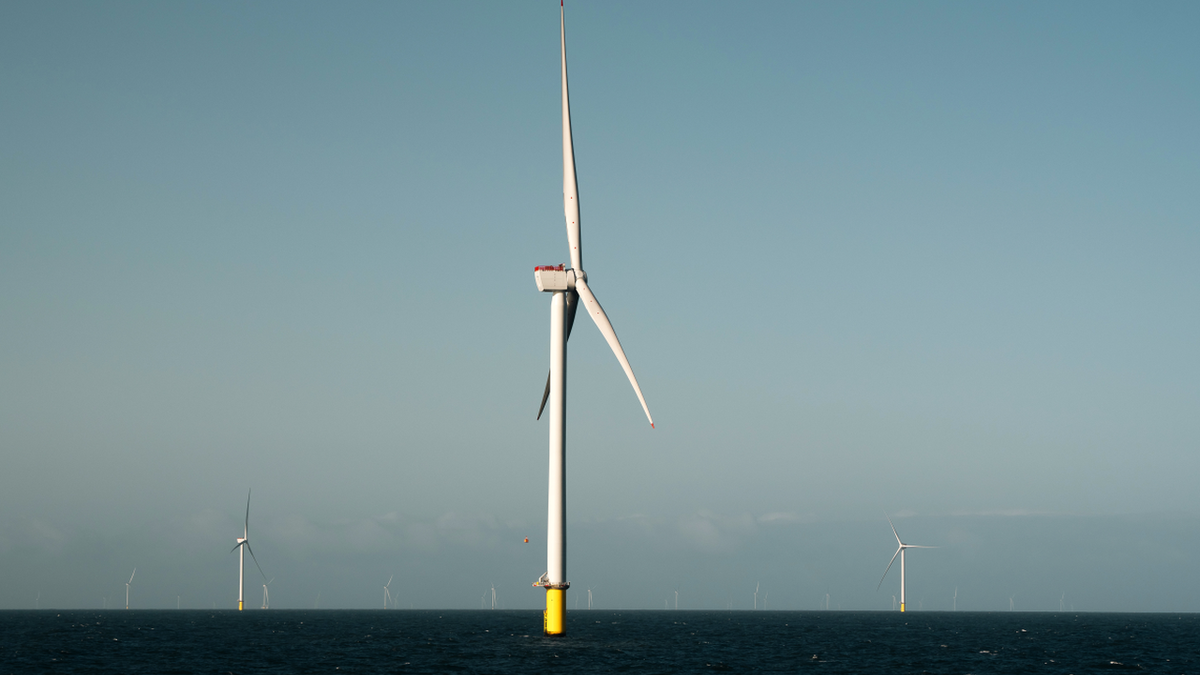
Offshore renewables are set to become the third most important energy source in the European power system. The EU currently has just under 20 GW of offshore wind, but by 2050 it wants at least 300 GW. The ONDPs even see a potential figure of 384 GW of offshore renewables in the EU by 2050 – and 496 GW in Europe as a whole. Reaching these goals will require massive investment.
“As of today, just a small fraction of the envisaged offshore renewable energy capacity has been installed,” said ENTSO-E. “To reach 2030 ambitions, annual installations of around 25.5 GW of offshore wind will be required annually, with EU countries needing to deliver 15 GW annually. The same challenge applies to transmission system operators (TSOs) and third-party infrastructure project promoters having to connect offshore renewables,” said ENTSO-E.
The ONDPs identify a route length in the range of 48,000–54,000 km for offshore transmission systems, a distance equivalent to spanning nearly 1.5 times around the equator.
“Massive capital expenditure for offshore transmission infrastructure is necessary,” said ENTSO-E. “The ONDPs find that, to optimally integrate offshore renewable energy capacities in the EU, Norway and UK by 2050, investment of around €400Bn is needed.”
The ONDPs are the first comprehensive cross-border review of existing offshore grid capacity and future offshore grid requirements at sea basin level. They will help to accelerate the expansion of offshore wind and facilitate the deployment of innovative grid solutions to integrate offshore wind power into Europe’s energy system.
The ONDPs translate the EU’s Offshore Renewable Energy Strategy and the national commitments at the Marienborg and Ostend Summits into offshore transmission equipment needs and related costs. The plans give visibility to offshore wind developers, investors and the grid equipment supply chain on what offshore grids to expect for each European sea basin by 2030, 2040 and 2050.
Commenting on the release of the ONDPs, ENTSO-E president Zbyněk Boldiš said, “Connecting offshore wind generation to the grid is a challenge for all of the TSOs in Europe, as well as for generators, manufacturers, national governments and all other interested parties.
“The ONDPs presented today emphasise the need for close co-ordination and involvement of all European stakeholders. Only by acting together will be able to successfully meet this tremendous challenge.”
ENTSO-E chair Damian Cortinas said the deployment of fit-for-purpose offshore grids “is a necessary condition to achieving the European energy transition to carbon neutrality.”
European Commissioner for Energy Kadri Simson said, “Offshore wind is set to become a crucial energy source in the European power system, which mirrors the direction set by the EU – and is made even more ambitious by the member states.
“I would like to congratulate ENTSO-E for delivering these important plans, which will help us draft strategies for offshore grids, provide a wealth of information and data, and show the true potential and benefits of co-ordination and cross-border projects.”
Make your plans now to attend Offshore Wind Journal Conference 2024 in London 6 February 2024, click here to purchase tickets and attend this industry-leading event



Related to this Story
Events

Maritime Regulations Webinar Week
 16 Dec 2025
 GMT - ONLINE
Floating energy: successfully unlocking stranded gas using FLNGs and FSRUs
24 Feb 2026GMT - ONLINE
© 2026 Riviera Maritime Media Ltd.


