


Business Sectors
Business Sectors
Events
Contents

Adaptation is the essence of a successful tug delivery voyage
More harbour tugs are being built with energy storage systems and propulsion units that can accommodate alternative fuels, which bring various challenges to companies that specialise in sailing these vessels on their delivery voyages from shipyards to their main operating port
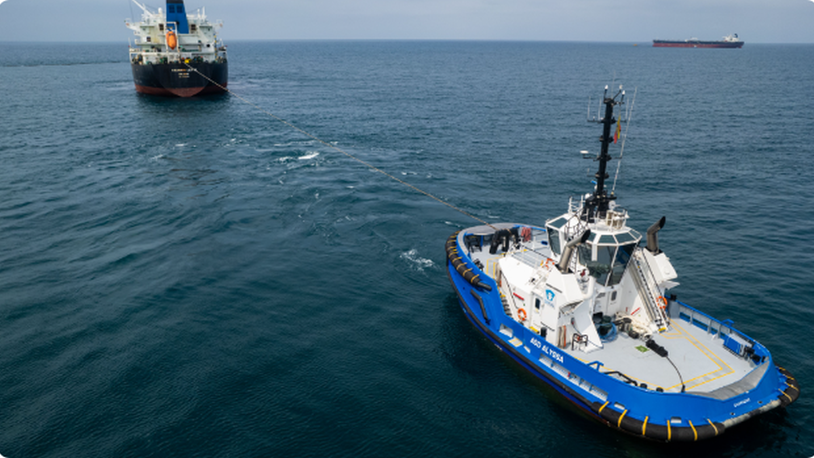
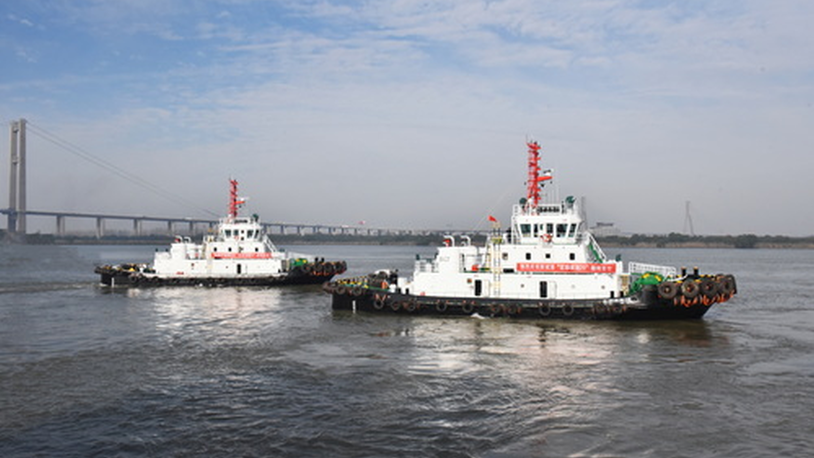
Tugboat delivery voyages come with multiple technical, operational, geopolitical and legislative challenges, depending on the type of vessel, fuel, energy source, route, logistics stops and destination.
These challenges are increasing as more tugs are built with energy storage systems and propulsion prepared for alternative fuels, and as a result of trends in naval architecture that mean more boats are constructed with wider and shorter hulls and less fuel storage capacity.
Delivery voyages can also be challenged by changing geopolitics and regulations, making them harder to complete without incident and on schedule.
Redwise Maritime Services has encountered all of these challenges and many others in its 120 years of service.
In the past two years, it has completed almost 50 tugboat deliveries and a similar number of voyages with other vessel types, including ferries, dredgers, offshore support and cargo ships.
Redwise has delivered tugs with different propulsion configurations, such as azimuth stern drive (ASD), reverse stern drive, TRAnsverse, Voith Schneider and tractor tugs and those with conventional propulsion.
It has also sailed tugs with propulsion running fully or partially on diesel, hydrogen, LNG and biofuels, or in a hybrid configuration with battery modules and with engines connected to aftertreatment systems for IMO Tier III compliance.
According to Redwise managing director, Willem-Jan Hamers, challenges include having to call into countries that lack the internal resources to cope with the latest technologies, such as those lacking facilities for bunkering new fuels and companies and contractors that are unable to assist with repair and maintenance.
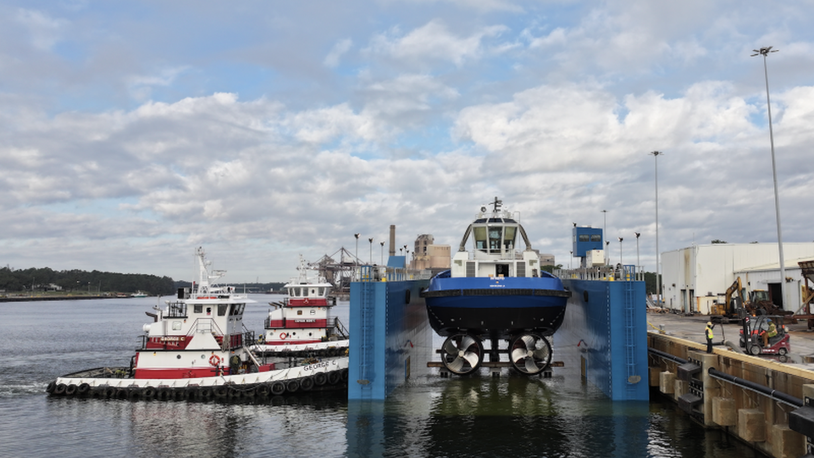
“Another significant change is in dimensions. Traditional European harbour and coastal tugboat design had a full body with ample fuel capacity and draughts as deep as the thrusters. The advent of the shallower swept Robert Allen-design tugs with the propeller blades around 50% below the hull has significantly reduced fuel consumption, but also fuel capacity,” Mr Hamers explained.
Tugs with higher length-to-beam ratios, like the Japanese type with medium-speed diesel engines, are very fuel efficient, but more tugs are being built with lower ratios.
“We are seeing an increase in ‘small is beautiful’ with very beamy ASD tugs that prove to be fuel efficient,” said Mr Hamers. “But, fuel range may be a challenge, necessitating different route planning and often extending the fuel capacity for the delivery voyage.”
Often these voyages begin at shipyards where tugboats are built in China, Turkey and Vietnam and finish in their operating ports in Latin America, Europe, Australia and Asia.
“Regulations add a significant layer of bureaucracy and overhead costs”
“Going forward, the main challenges will be adaptability to new legislation, seafarer shortages, new technologies, economic cycles and disruption due to conflicts,” he said.
“The ever-increasing burden of legislation and regulations adds a significant layer of bureaucracy and overhead costs, but it is something we simply cannot ignore and have to deal with,” he added.
“Alternative-fuelled tugs require different, additional skillsets compared with traditional diesel-powered mechanical vessels for, which engineers also become rarer,” said Mr Hamers.
Some of the technologies used on tugs are first encountered on other vessel types, such as LNG and other low flashpoint fuels and energy storage systems on ferries or roro vessels.
This is also the case for digitalisation and autonomous technologies, including self-docking and unmanned navigation.
“This is a direction we will be seeing in a significant part of harbour tugs going forward, with fewer people to man the tugs and fewer mechanical propulsion parts.”
You have viewed your 10 articles for this month.
To continue reading this article please register or login below.





Related to this Story

Events

Maritime Regulations Webinar Week
 16 Dec 2025
 GMT - ONLINE

Floating energy: successfully unlocking stranded gas using FLNGs and FSRUs
24 Feb 2026GMT - ONLINE
© 2026 Riviera Maritime Media Ltd.


