


Business Sectors
Business Sectors
Events
Contents
Register to read more articles.
An insider’s view of bound4blue’s eSAIL technology
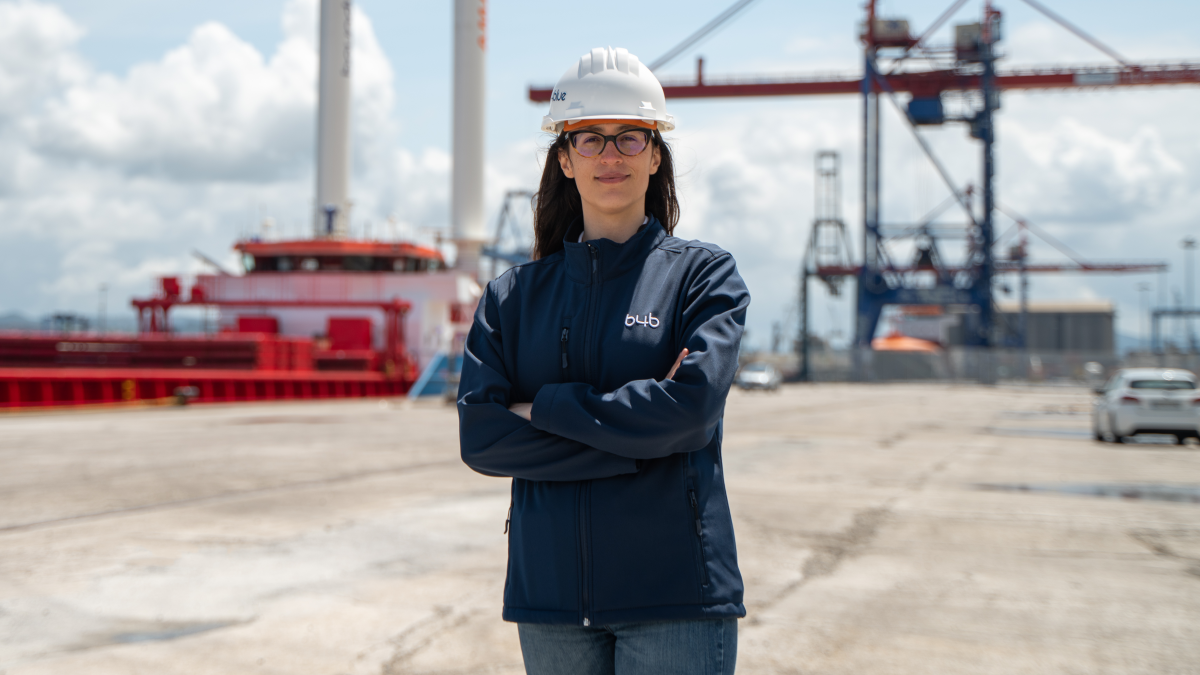
bound4blue co-founder and chief executive, Cristina Aleixendri, discusses the evolution of the firm’s wind-assisted propulsion technology


With 2026 shaping up to be a record year for wind-assisted propulsion technology, Marine Propulsion contributor Selwyn Parker asked bound4blue co-founder and chief executive, Cristina Aleixendri, to describe the company’s development path to its eSAIL suction sail technology. The Barcelona-based propulsion technology firm has installed 18 eSAILS on seven ships and has orders for 36 additional units for another 12 vessels.
“We originally began with a rigid wingsail,” explained Ms Aleixendri. “At a certain point, we started working on the suction sail concept and quickly realised it was far more efficient than the original system. In fact, the energy savings per square metre are up to seven times higher than with a rigid wingsail. This means that the same propulsive force can be achieved with much less surface area, which brings clear benefits in terms of stability, bridge visibility, weight and maintenance costs.”
Said Ms Aleixendri, “Another key advantage of suction sails is how they operate. They work similarly to a traditional sail: they are oriented in a given direction and do not rotate continuously. This allows us to control and direct the thrust, making the system effective even in upwind conditions, like wingsails, and unlike rotor sails, which do not offer this capability.
“As with any new technology, this innovation must make sense from a business case perspective. That’s why we started developing our own designs, a process that was strongly supported by the arrival of Bertrand Charrier, one of the three inventors of the suction sail concept. From there, we have continued to refine and improve the system.
“We have since achieved significant gains in aerodynamic performance, through improvements in suction efficiency, sail shape and flap design, as well as advances in automation and mechanical systems. Altogether, these developments have led to an improvement of more than 20% in aerodynamic efficiency.
“Finally, we have also made important progress in adapting the technology for tanker vessels, which have particularly strict safety requirements. In simple terms, we have developed solutions that allow the system to be installed and operated safely without requiring every component to be ATEX-certified, while fully respecting the safety standards of these vessels. This greatly expands the range of ships that can benefit from the technology.”
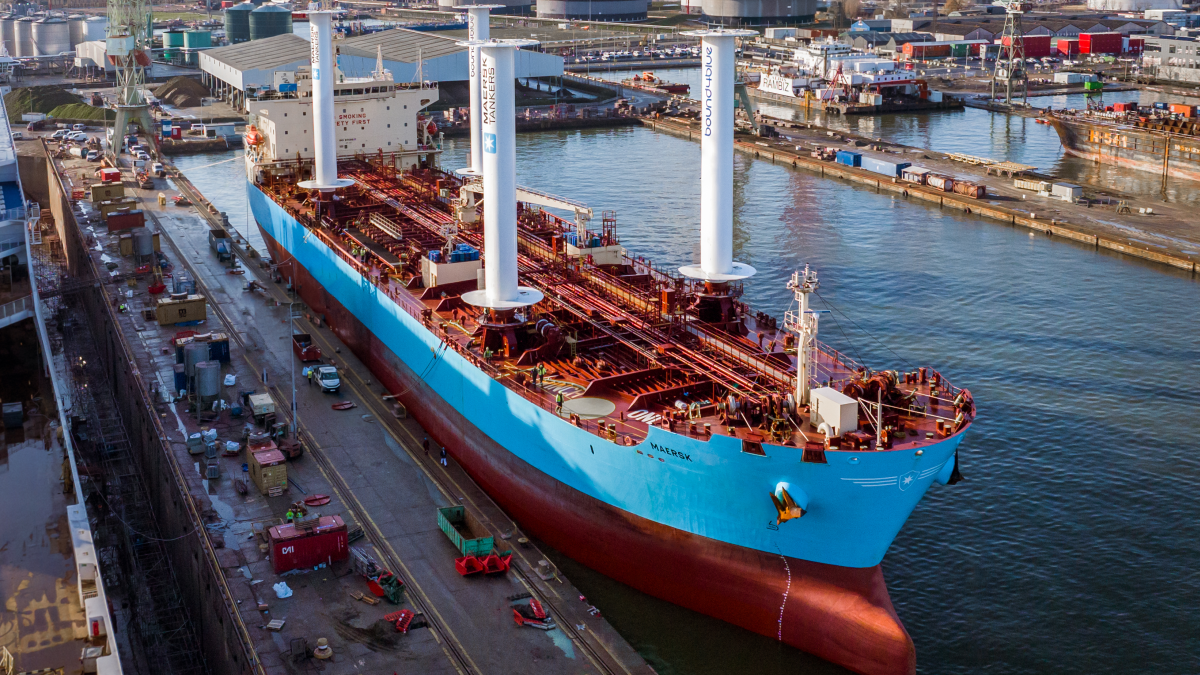
In 2024, bound4blue signed its largest contract to date: a deal with Maersk Tankers for the installation of 20 units on five MR tankers. The first of those vessels, Maersk Trieste, has been fitted with four 24-m suction sails as of January this year.
Sign up for Riviera’s series of technical and operational webinars and conferences:
- Register to attend by visiting our events page.
- Watch recordings from all of our webinars in the webinar library.
Related to this Story

Events

Maritime Regulations Webinar Week
 16 Dec 2025
 GMT - ONLINE
Floating energy: successfully unlocking stranded gas using FLNGs and FSRUs
24 Feb 2026GMT - ONLINE
© 2026 Riviera Maritime Media Ltd.


