


Business Sectors
Business Sectors
Events
Contents
Register to read more articles.
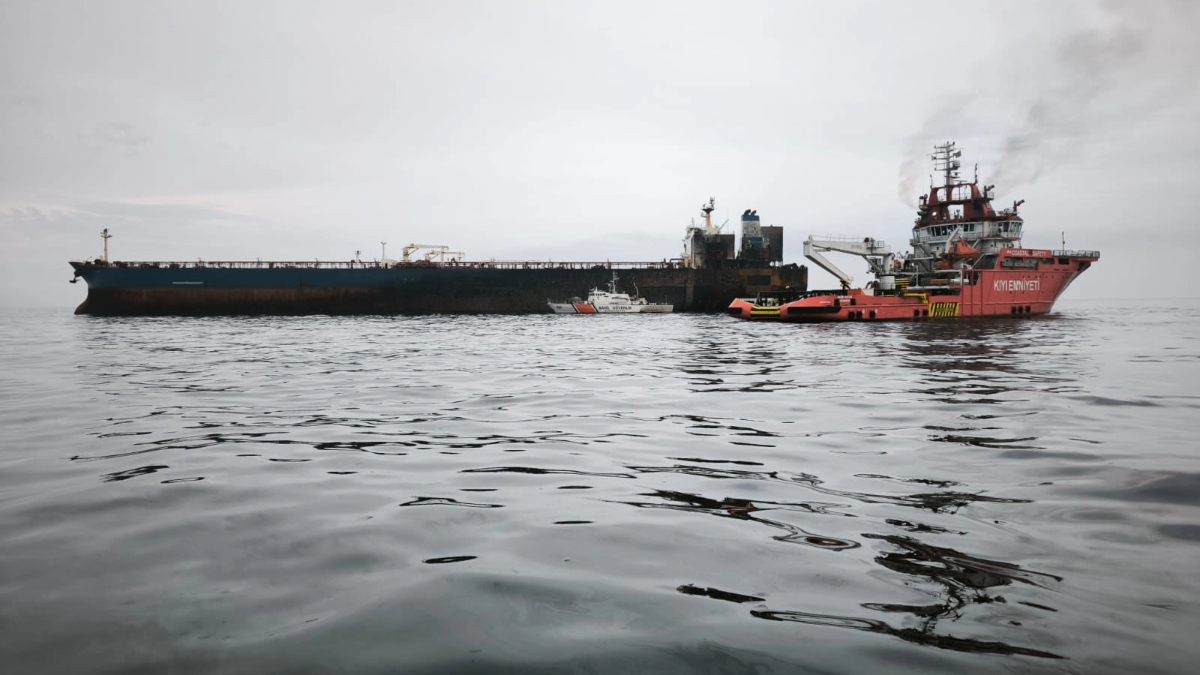
Black Sea war risk rates climb as third Russia-linked tanker attacked
A third tanker linked to Russian trade has been struck in the Black Sea since the end of last week, pushing war-risk rates for the region higher and raising concerns about possible retaliation


Turkey’s maritime authority reported on 2 December that 2014-built, Russia-flagged small tanker Midvolga-2 came under attack about 129 km off the Turkish coast while carrying sunflower oil from Russia to Georgia. All 13 crew members were unharmed and the vessel did not request assistance. The tanker was sailing toward the Turkish port of Sinop.
The incident follows Ukraine’s claim of responsibility for strikes on tankers Kairos and Virat on 28 November in the Black Sea. Reuters cited a Ukrainian Security Service official saying naval drones hit both vessels as they sailed empty toward Novorossiysk, a major Russian Black Sea oil terminal. Both tankers are under Western sanctions for transporting Russian oil.
Insurance rates rising
War-risk insurance premiums have climbed in response. Marine underwriting sources told Riviera rates for calls at Russian ports in the Black Sea have risen to around 0.65% of hull value, up from about 0.50% before last week’s attacks. Other market commentators are citing levels of 0.70% to 0.80%, noting that conditions remain fluid and each vessel is being individually underwritten.
Premiums for calls at Ukrainian ports remain near 0.50%, having held firm as conflict-related exposure was largely priced in earlier. Sources noted that insured values in Ukrainian trades tend to be lower than those for Russia-linked oil shipments.
Disruptions to CPC exports
BRS Shipbrokers described Ukraine’s confirmed twin attack as “the most significant attack on commercial vessels in the Black Sea since the start of the conflict.” Analysts added that in the same wave of strikes, a drone hit the Caspian Pipeline Consortium (CPC) offshore terminal at Novorossiysk, which handles more than 1% of global oil supply and nearly 80% of Kazakhstan’s exports.
As BRS explained, the terminal operates three single-point moorings: SPM2, which was disabled in the strike and may be out of service for up to a year; SPM3, the backup unit that has been offline for maintenance since 12 November and is expected to return in about two months; and SPM1, the only mooring point currently operational.
As a result, export capacity is expected to remain constrained until early 2026, when SPM3 is due to resume operations. “The disruptions come as CPC shipments were expected to rise from around 1.4M barrels per day in November to 1.7M barrels per day in December,” BRS noted.
Analysts added the attacks could increase regional risk premiums and temporarily shift Europe’s light-crude sourcing toward alternatives such as the US and North Africa.
Escalating strikes raise retaliation risks
“Recent Ukrainian operations in the Black Sea, along with the public confirmation of responsibility, mark a noticeable step-change,” marine war risk and insurance specialist Vessel Protect head of operations Munro Anderson told Riviera. “Kyiv appears to be signalling both capability and intent in restricting Russian maritime trade, especially oil exports.”
Mr Anderson said the immediate impact is on vessels calling at Russian ports, where risk profiles have risen. The current target set “appears linked to Russia’s energy supply chain,” he added.
“As strikes escalate, so does the probability of Russian retaliation against ships connected to Ukraine. That means vessels calling Ukrainian ports also face rising exposure, even though the dynamics differ,” he said.
Exposure widening beyond the conflict zone
In a separate incident, MR tanker Mersin – not sanctioned but known to have previously loaded cargo in Russia – suffered four external explosions on 27 November while anchored off Dakar, Senegal.
“The incident off Senegal highlights that vessels carrying Russian-origin cargoes or with recent Russian port calls may face risks outside the traditional conflict zone,” Mr Anderson said. “The geographical spread of exposure is widening, and underwriters are adjusting accordingly.”
Sign up for Riviera’s series of technical and operational webinars and conferences:
- Register to attend by visiting our events page.
- Watch recordings from all of our webinars in the webinar library.


Related to this Story
Events

Maritime Regulations Webinar Week
 16 Dec 2025
 GMT - ONLINE
Floating energy: successfully unlocking stranded gas using FLNGs and FSRUs
24 Feb 2026GMT - ONLINE
© 2026 Riviera Maritime Media Ltd.


