


Business Sectors
Business Sectors
Events
Contents

Register to read more articles.
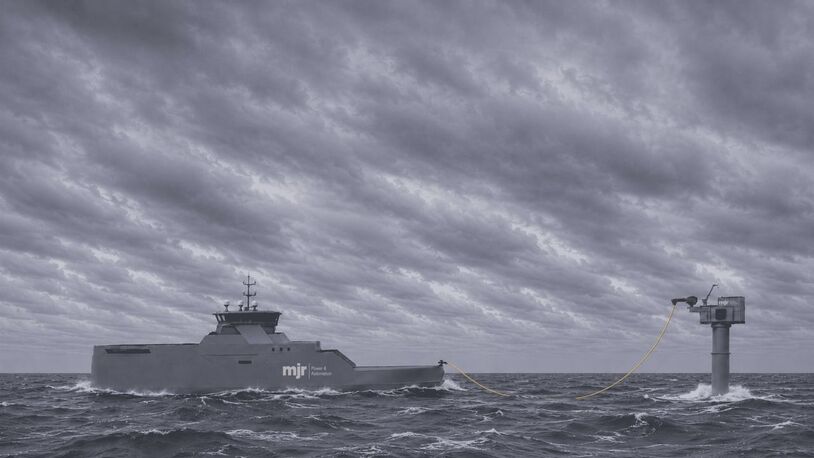
Charge Offshore developing monopile charging system for Power2Tow tender
Charge Offshore is supporting Smit Terminals Europe and Smit Salvage with a dedicated monopile offshore charging solution as the consortium advances through the preliminary design phase of the ‘Power2Tow’ project tender


Led by Dutch government agency Rijkswaterstaat, Power2Tow will support development of three electric emergency response towing vessels (ERTVs), together with the required offshore and onshore infrastructure.
The vessels will primarily operate on electric power, with sustainable methanol used for emergency towing operations and range extension, and are designed to help protect North Sea traffic by responding to ships in distress. The project involves the development of three ERTVs that can charge their batteries at sea – using electricity from wind energy – and among other things, protect windfarms from collisions with vessels in distress.
The Rijkswaterstaat, part of the Dutch Ministry of Infrastructure and Water Management, gave the go-ahead for next phase of the Power2Tow earlier this year. In that phase, three consortia are developing solutions for near-emissions-free emergency response tugs and charging infrastructure at sea and ashore.
Agreements were signed with the three consortia on 30 June 2026. The consortia selected to participate in the new phase of the project include: Kustkracht, formed by Kotug International, IHC Defense and Bluewater Energy Services BV; Multraship Ocean Towage, Damen Shipbuilding & Cooperation and Stillstrom; and Smit Terminals Europe and Smit Salvage.
During the research and development phase, proposals from the consortia will be elaborated, tested, and evaluated. Ultimately, one consortium will be selected that will realize the project and the Rijkswaterstaat will proceed directly to a contract for construction and operation, without going through a new tendering procedure. Apart from designing and building new vessels, the winning consortia will also develop charging infrastructure at sea and onshore.
Charge Offshore’s dedicated monopile system will provide the vessels with access to electricity at sea, allowing them to recharge and maintain offshore standby with drastically reduced emissions, while remaining close to the areas where they are needed most.
The monopile is a specialised charging point connected to existing grid infrastructure by a protected undersea cable, installed at an optimal location to provide closer access to energy while minimising collision risk in high-traffic areas.
Vessels requiring charge approach the monopile and are connected via an innovative system which offers the greatest levels of safety for crew in challenging North Sea conditions.
Charge Offshore chief executive Paul Cairns said, “Emergency response vessels always need to be ready to respond to crises. Usually patrolling or idling far from shore, safe and reliable access to offshore electricity will be essential for supporting their crucial ongoing operations whilst limiting emissions.
“Power2Tow provides a perfect opportunity to accelerate the transition to vessel electrification, and we are pleased to bring our offshore power and charging expertise to the SMIT consortium. Our dedicated monopile charging solution will provide safe and dependable charging to the ERTVs in demanding North Sea conditions, improving access to critical charging capabilities right where they’re needed most.”




Related to this Story

Events

Maritime Regulations Webinar Week
 16 Dec 2025
 GMT - ONLINE

Floating energy: successfully unlocking stranded gas using FLNGs and FSRUs
24 Feb 2026GMT - ONLINE
© 2026 Riviera Maritime Media Ltd.


