


Business Sectors
Business Sectors
Events
Contents

Register to read more articles.
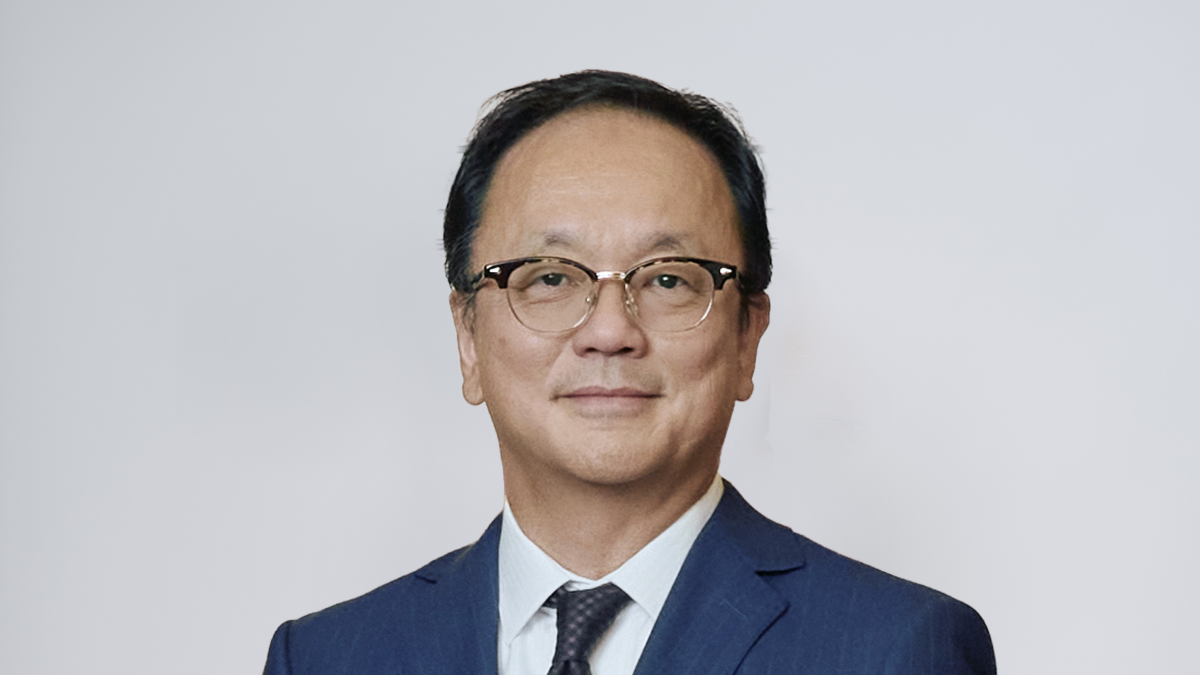
ClassNK has a singular view on diversification
While European classification societies have spent two decades building diversified assurance businesses, ClassNK has kept its core focus on the maritime sector


How can class best respond to the challenges of a consolidating market? For ClassNK’s president and CEO, Hayato Suga, a non-profit structure focused on maritime customers is “a natural model”
"Classification, including statutory work on behalf of flag states, requires a sustained contribution to the industry over the long term."
For that reason, Mr Suga regards continuity, stability, neutrality and fairness as essential attributes of a classification society, and believes that a non-profit structure is well aligned with these responsibilities. With no shareholders, resources are reinvested in people, technology, systems and the organisation itself, supporting long-term sustainability. He added that a private company structure may be better suited to an organisation seeking to expand widely across many certification sectors, particularly for raising capital and growing quickly.
Where ClassNK does diversify, it does so from its existing customers outward to match their plans for growth in new markets. ISO management-system certification is provided mostly to maritime customers that already know the society. In 2024 ClassNK’s sustainable aviation fuel certification scheme, ClassNK SCS, became the first in Asia to be approved by ICAO for CORSIA. Mr Suga said the SAF work was also preparation for marine fuel certification, where ClassNK expects large demand. His formulation for the principle is simple: for ClassNK, client-first is more suitable than business-first.
ClassNK maintains long-term employment as a fundamental principle, and trust in Japanese business culture rests on relationships between people. At the same time, ClassNK’s technical work is global and the use of AI is unavoidable. Mr Suga noted that while clients welcome easier and more efficient services, the right balance between convenience and safety remains essential. Personnel reforms begun in 2025 aim to move staff from executing certification know-how to proposing and creating, on the basis that digital tools will absorb routine work.
AI: reliance and responsibility
Mr Suga noted that the responsibilities expected of certification bodies will not change, even as AI becomes more widely adopted in practice. Looking ahead, the use of video technologies and AI in surveys and inspections is expected to expand. However, as automation increases, assessment processes may become less transparent, raising questions about the extent to which reliance can be placed on AI and how responsibility should be addressed when AI-based assessments lead to problems. ClassNK established a Digital Solutions Division in April 2026, and is working both to improve the efficiency of its own operations through the use of AI and to support the wider adoption of emerging technologies by developing certification methodologies for AI.
Regulation and the fuel question
IMO’s Net-Zero Framework remains unadopted. The vote postponed in October 2025 is due to resume on 4 December, subject to confirmation at MEPC 85. Where the direction of regulation is not yet clear, Mr Suga said, it is natural for owners to take a cautious approach. That is where ClassNK believes it can contribute, by providing information and supporting decision-making. ClassNK Alternative Fuel Insight provides information to support fuel selection, while ClassNK Fleet Cost Simulation allows owners to see how different fuel and regulatory options may affect costs.
On fuels he declined to name a winner, while emphasising that the position is not one of fence-sitting. Owners would in fact be better served by a single fuel: one product, available everywhere, in the way oil is today. But the conditions for this scenario do not exist, said Mr Suga. Investment cost, regional restrictions and the limits of worldwide supply all cut the other way.
Recent history provides his evidence. LNG is available now, though the GHG reduction it delivers is limited unless it is bio- or e-LNG. Methanol was then widely treated as the answer, ran into a shortage of green molecules, and ordering swung back towards LNG. Ammonia avoids the carbon-capture step in production and could be cheaper at scale, but the technology is not mature. His expectation is that several fuels will continue to coexist, with the mix likely to narrow over time, depending on production cost and technology development.
On onboard carbon capture, Mr Suga said the technology is one of the promising options for significantly reducing a ship’s CO2 emissions, though other reduction or removal measures may be needed for the emissions that are hard to capture on the way to net zero. The challenge, he noted, lies not only in the capture equipment itself but also in establishing the entire value chain, including the transport and storage of captured CO2 once it is discharged ashore. While shipowners appear willing to invest in the capture systems, uncertainty remains regarding the downstream costs and the allocation of responsibilities.
Shadow fleet and fake certificates
ClassNK’s shadow-fleet answer stayed within its remit: cargo and trading patterns are outside class scope, while the authenticity of certificates falls within it. ClassNK issues its certificates electronically with digital signatures, and provides an official verification site where the validity of a certificate can be confirmed. Mr Suga noted that forged certificates and fraudulent websites imitating ClassNK have been identified.
Judging the plan
ClassNK’s 2022 to 2026 mid-term plan ends this year. Mr Suga’s measure of success has been quality and efficiency delivered to clients. For the next plan, from 2027, the focus changes.
The target is not only registered tonnage but also reputation. A class certificate only functions when the charterer, the insurer, the bank and the port state accept it, so his measure is recognition among those parties, rather than among ClassNK’s own customers. A certificate the client believes and nobody else does, in his words, “has no meaning”. His three messages for owners follow from it: the society stays focused on maritime customers; services will be timely; and ClassNK intends to support owners’ decision-making with third-party information, rather than certificates alone.
Even as AI and other emerging technologies continue to evolve at a rapid pace, ClassNK intends to support their wider adoption by serving as an independent body that evaluates their reliability and safety. The next plan will test how well that evaluation can keep pace with the technologies it is meant to assess.




Related to this Story
Events

Maritime Regulations Webinar Week
 16 Dec 2025
 GMT - ONLINE

Floating energy: successfully unlocking stranded gas using FLNGs and FSRUs
24 Feb 2026GMT - ONLINE
© 2026 Riviera Maritime Media Ltd.


