


Business Sectors
Events

Floating energy: successfully unlocking stranded gas using FLNGs and FSRUs
 24 Feb 2026
 GMT - ONLINE
Contents
Collaborative venture offers independent STS assurance
Lloyd’s Register and DYNAMARINe have established a system to audit ship-to-ship providers against OCIMF guidance, with centralised reviews and shared reporting


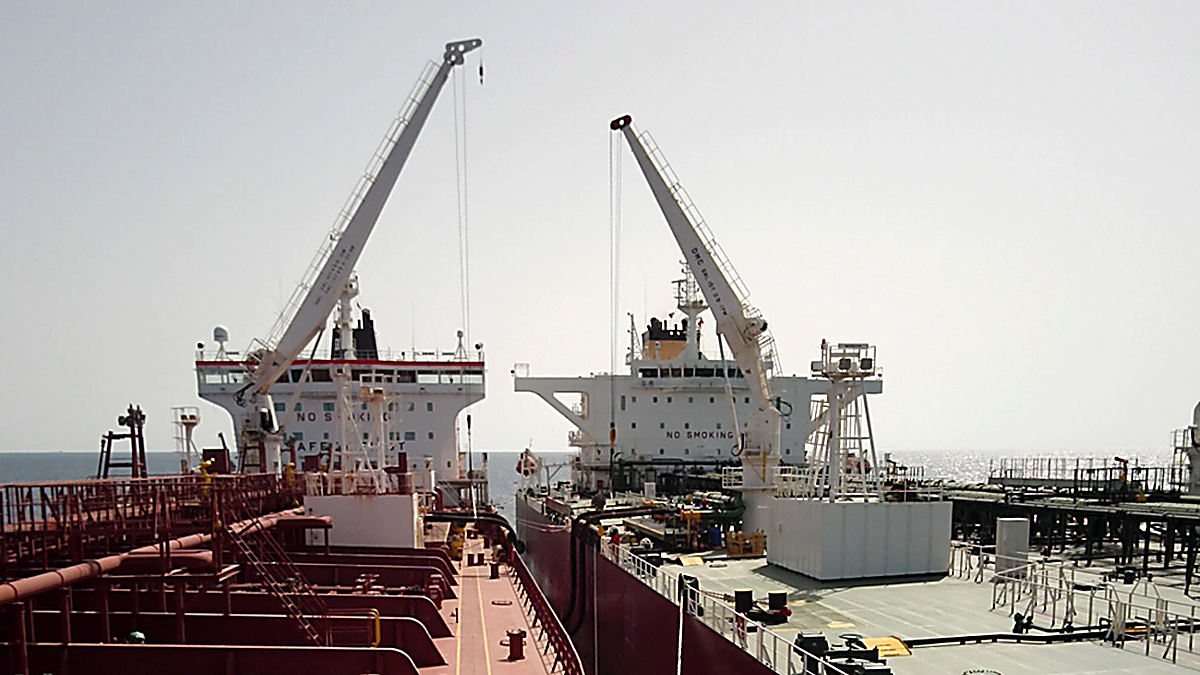
Lloyd’s Register (LR) has entered into a collaboration with DYNAMARINe to deliver an independent auditing scheme for ship‑to‑ship (STS) transfers, with a defined separation between the auditing task and the technical review. LR would conduct audits of STS service providers against recognised guidance, and DYNAMARINe would review the resulting reports and publish a scored assessment for registered users.
The arrangement is aimed at providing a consistent framework for verifying provider competence and reliability and as a way to reduce duplicate client audits. The collaboration means that an International Association of Classification Societies (IACS) member takes a direct role in auditing STS service providers, a point intended to give users confidence about independence and discipline.
The collaboration aligns with recent updates to OCIMF STS guidance, which called for independent verification of provider self‑assessments. The partners presented this alignment as the basis for a repeatable approach that could be recognised across companies and geographies, producing comparable outputs for commercial and risk decision‑making and for internal governance purposes.
DYNAMARINe managing director Dr Alexandros Glykas explained how the collaboration would work in practice. He said DYNAMARINe would use records from its database to set the scope of each audit by reference to performance history and any prior findings. LR auditors would be trained on STS provider assessments and scheduled to conduct the work.
“providing a consistent framework for verifying provider competence and reliability”
When fieldwork had been completed, the audit reports would be returned to DYNAMARINe for review, at which point a scored outcome would be applied. The reviewed material would then be uploaded to a system where energy companies, protection and indemnity (P&I) clubs and shipowners could view and download it for internal use.
Dr Glykas said the intention was to assemble a pool of providers that demonstrated a safety culture, appropriate systems, competent personnel and relevant experience, and to present that performance in a consistent form.
Addressing the starting point for participation, Dr Glykas said: “The service provider will be invited to be audited.” He added that assessors would be trained for the purpose and that the programme would proceed once providers had agreed to take part. He described the outcome for users as a single assurance resource and for providers as a route to replace overlapping client audits with a single structured programme. He said the approach aimed to distinguish providers that met the expected safety culture while supporting improvement where gaps were found.
Dr Glykas offered an assessment of market readiness derived from DYNAMARINe’s records. He said 88 STS service providers had been identified globally. In his judgement, only a smaller subset appeared ready to meet an assurance threshold expected in European operations, while the remainder would need to invest to reach that level.
He observed that larger providers were the subject of repeated client‑initiated audits, which imposed cost and administrative load without necessarily improving the quality of information available to decision‑makers. He argued that a common, independent audit reviewed against a stable methodology would address that problem by producing a portable record of competence and performance.
"a common, independent audit reviewed against a stable methodology”
The collaboration was presented as complementary to, rather than overlapping, existing processes. LR would execute the audits using trained personnel. DYNAMARINe would evaluate the findings against its risk records, apply a scored outcome and host the reviewed reports for users. The partners said this division was deliberate. The presence of an auditor with IACS standing was intended to address user expectations regarding independence, while the application of a technical review grounded in long‑running data would, in their view, give the resulting scores practical value for users. Dr Glykas said participating providers would be able to request access to their reports and present evidence of remedial action where reviews identified issues.
On the rationale for the initiative, Dr Glykas said provider self‑assessment alone did not meet user needs where operational risk and reputational exposure were material considerations. He referred to updated guidance for STS and said the collaboration aligned with the direction toward independent verification by combining an established auditor with a specialist technical review.
The arrangement draws on a common programme, rather than uncoordinated visits and reviews, which can consume resources without generating comparable outputs. He said the collaboration sought to provide a disciplined, transparent evidence base for operational decisions.
Dr Glykas reiterated the invitation to STS providers and said the collaboration would maintain a disciplined scope so that outputs retained value for users. He said the focus would remain on safety culture, systems, competence and experience, and that the defining feature of the model was the independent role of LR as auditor, combined with DYNAMARINe’s review and scoring. He reported interest from energy companies and P&I clubs during recent visits and said users had indicated a desire to access data and incident records through the system once the programme was under way.
Riviera’s Tankers 2030 Conference, Singapore will be held 19-20 November 2025. Use this link for more information and to register for the event.


Related to this Story

Events

Maritime Regulations Webinar Week
16 Dec 2025GMT - ONLINEFloating energy: successfully unlocking stranded gas using FLNGs and FSRUs
24 Feb 2026GMT - ONLINE
© 2024 Riviera Maritime Media Ltd.


