


Business Sectors
Business Sectors
Events
Contents
Register to read more articles.
Consider deteriorating tug performance when preparing pilotage plans
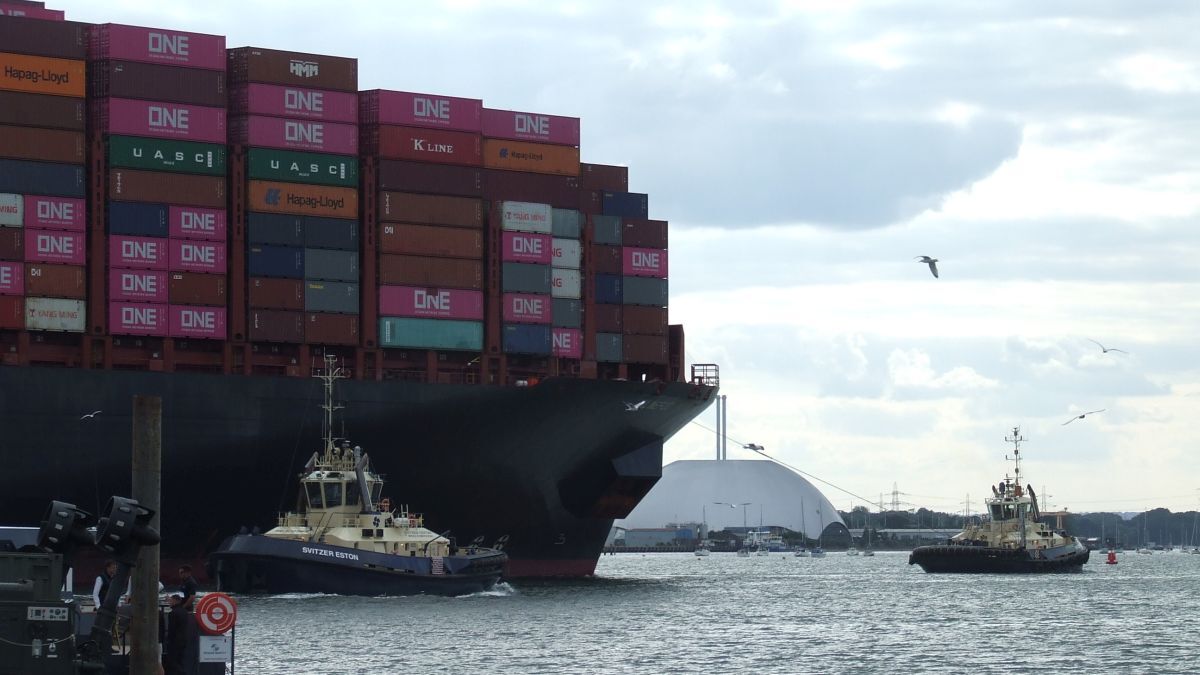
Plans for escorting, handling, towing and docking ships need to assess the assisted vessel’s speed and how this affects safe working loads


The Workboat Association chief executive Kerrie Forster uses his experience in post-incident proceedings to offer advice to marine pilots to improve ship handling safety and prevent further accidents occurring.
He highlights how the design and age of tugs, the propulsion systems and deck machinery will impact the safe performance of these vessels during ship towage. Mr Forster is calling for tug performance information, current sea and weather conditions and the ships’ speed to be included in more detail in pilotage plans.
“It is a fact that speed kills,” he says. “Taking suitable retrospective actions, we can together minimise dangerous and fatal incidents in port services.”
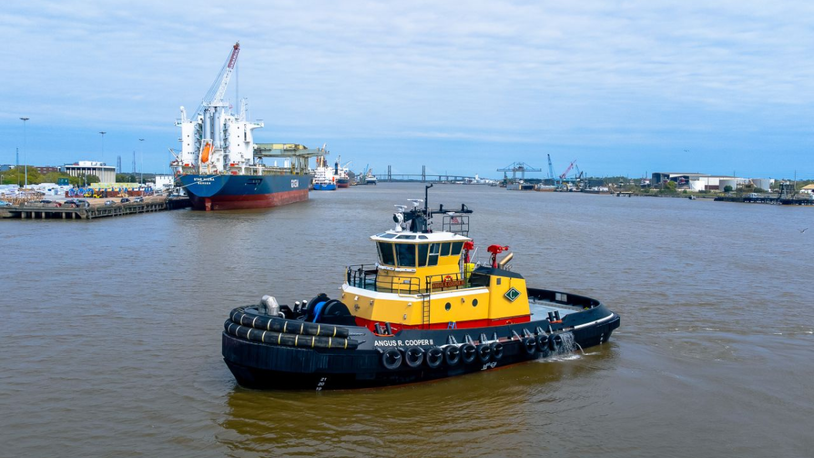
Its design and age will affect a tug’s ability to assist ships, especially the ultra-large vessels increasingly introduced in global maritime trade.
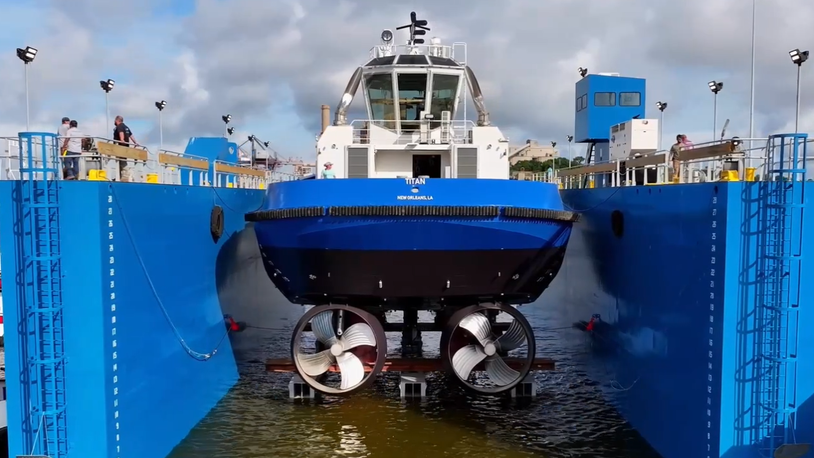
“Modern ship-assist tugs are designed to remain extremely stable and stiff in buoyancy,” he explains. “It they are tipped up, they return quickly to the upright position once the tipping forces are removed. The acting forces applied by tow ropes are positioned on board in the places that contribute the least tipping force and the most opposing force.”
However, older tugs are not necessarily designed directly for ship-assist work and have different buoyancy and self-righting properties.
“They are often built with a soft stability curve, inherent of a more traditional hull shape, mixed with the alternative, more traditional placement of the towing apparatus or forces,” says Mr Forster. “Often single or twin (similarly located) propeller driven, with a hull design focused on longitudinal efficiency and primarily in a forward direction.”
Therefore, it is recommended to use modern tugs, designed for self-righting, to assist large ship in ports. But the ship’s speed is just as important to consider.
“The greater the speed, the greater the energy mass, the greater the pressure and the more volatile and higher risk the process,” says Mr Forster.
“But pressure is relative to the construction and material of anything coming into force with that pressure. All apparatus containing or connected to pressurised systems are tested for their maximum working load.”
This applies to tugs, ropes and towing apparatus that can be tested for their maximum working load, bollard pull and safe working load (SWL) and these can change over time.
“Often this working load is used for the contrary purpose. For example, the bollard pull of a tug is often used to highlight a tug’s ability, not its weakness,” says Mr Forster. “A procurement team will look at the SWL of a tug and use that as a comparison index to judge it against another vessel.”
This data can be used to create a risk-assessed limit of safe working conditions. “To help us make dynamic operational decisions over the maximum safe limits of the towline’s working load that can be applied.”
But Mr Forster says safe working load and maximum load are not the same thing. “Also tugs and their equipment tire with age. The propulsion and engines will not be as powerful, the tow apparatus will need replacing and the SWL of the winch or the deck it is connected to will not be as strong.”
The overall tug performance does not remain the same throughout its lifetime.
“As a result, the safe and maximum load of the tug will change (positively and negatively), based on many variables related to the technical condition of the vessel and its equipment,” says Mr Forster.
Therefore, pilotage plans need to have the SWL of tugs, their age, design and actual performance. They should also have “the speed at which the ship will make the working load (pressure) of the tow rise above that SWL in the current conditions,” he concludes.
Riviera’s TUGTECHNOLOGY ‘25 will be held in Antwerp, 22-23 May 2025. Click here for more information on this industry-leading event.
Related to this Story
Events

Maritime Regulations Webinar Week
 16 Dec 2025
 GMT - ONLINE
Floating energy: successfully unlocking stranded gas using FLNGs and FSRUs
24 Feb 2026GMT - ONLINE
© 2026 Riviera Maritime Media Ltd.


