


Business Sectors
Events

Floating energy: successfully unlocking stranded gas using FLNGs and FSRUs
 24 Feb 2026
 GMT - ONLINE
Contents
Register to read more articles.
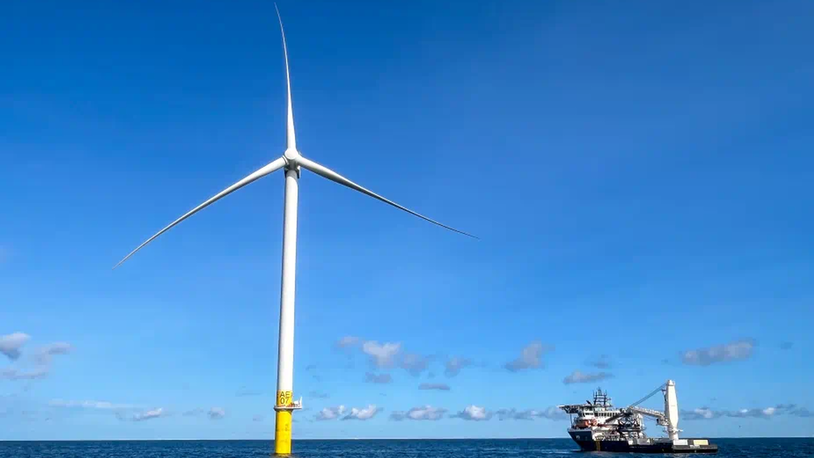
Construction of Revolution Wind to resume after federal court overrules Trump stop work order
The US District Court for the District of Columbia has granted a preliminary injunction sought by Revolution Wind regarding a stop work order for its offshore wind project off the US east coast


The 22 December 2025 suspension order was issued by the Department of the Interior’s Bureau of Ocean Energy Management (BOEM), and was one of a number that shut down offshore wind projects that were already under construction.
The Department of Interior shut down the project and others like it claiming there were ‘national security risks associated with it’ but Revolution Wind and all of the other projects affected by stop work orders had already undergone years of extensive national security and safety reviews prior to construction commencing.
The court’s action will allow the Revolution Wind offshore wind project – which is being developer by Revolution Wind, a 50/50 joint venture between Ørsted and Global Infrastructure Partners’ Skyborn Renewables – to restart while the underlying lawsuit challenging the 22 December 2025 and an earlier order of 22 August 2025, progresses.
In a statement, Revolution Wind said it will determine how best it may be possible to work with the US administration to achieve an expeditious and durable resolution. In the meantime, the project will resume construction work as soon as possible, with safety as the top priority, and to deliver affordable, reliable power to the northeast.
Responding to the announcement, Aegir Insights’ lead analyst Americas Signe Sørensen said, “Revolution Wind argued many of the same points as when fighting the first stop-work order, but now focused more on its ability to start delivering power to grid in January and thus begin the phase of testing individual turbines and the entire system – a phase that the project needs to begin soon in order to finish in time to deliver power under its PPAs.”
As she also noted, Revolution Wind’s argument also focussed on the availability of vessels was also still a main argument, now focused on wind turbine installation vessel Scylla, which it was said would be able to leave the project on 22 February, giving Revolution Wind 41 days to finish installing the last seven turbines.
She continued, “Memorably, Judge Lamberth remarked that last time he granted Revolution Wind a preliminary injunction – against the first stop-work order – he said that the order ‘was arbitrary and capricious’ and ‘lacked reasoning.’ This time, he said, the government did provide a reason, but could not convince him that the reason wasn’t purely pretextual. In other words, this time at least a reason was presented, but it just wasn’t very good.
“Importantly,” said Sorensen, “we now have the verdict from someone neutral who has actually laid eyes on what these new national security risks are, and the verdict is that they are not convincing. Presuming other judges will come to the same conclusion, the stop-work orders should all be defeatable in court, as they all build on the same argument about national security risks.
“This is a key victory not only for the likelihood that other projects will also successfully be able to fight their stop-work orders, but also because of the broader implication that the US courts still function as checks on politics. At a time when uncertainty is plaguing the offshore wind sector in the US to a unprecedented degree, the courts are really the only thing left that projects can turn to insulate them from the worst impacts of extreme politics. And this, again, shows that the courts will uphold the rights of very mature projects to act on permits already given.”


Related to this Story
Events

Maritime Regulations Webinar Week
16 Dec 2025GMT - ONLINEFloating energy: successfully unlocking stranded gas using FLNGs and FSRUs
24 Feb 2026GMT - ONLINE
© 2024 Riviera Maritime Media Ltd.


