


Business Sectors
Business Sectors
Events
Contents
Register to read more articles.
One month to go: ITS Tug of the Year 2026
There is just one month left to vote for the owner, designer and builder of the tugboat that has set industry benchmarks through innovative design and efficient operations


During a gala dinner at the 28th ITS Convention in Gothenburg, on 21 May, the winning ITS Tug of the Year 2026 will be announced, and the owner, designer and builder will receive their awards.
After receiving multiple nominations, an expert team created a shortlist for the award, and voting is open to the industry via the event website until 14 May 2026.
The shortlisted tugs were delivered in the last 12 months and set industry benchmarks through innovative design and efficient operations.
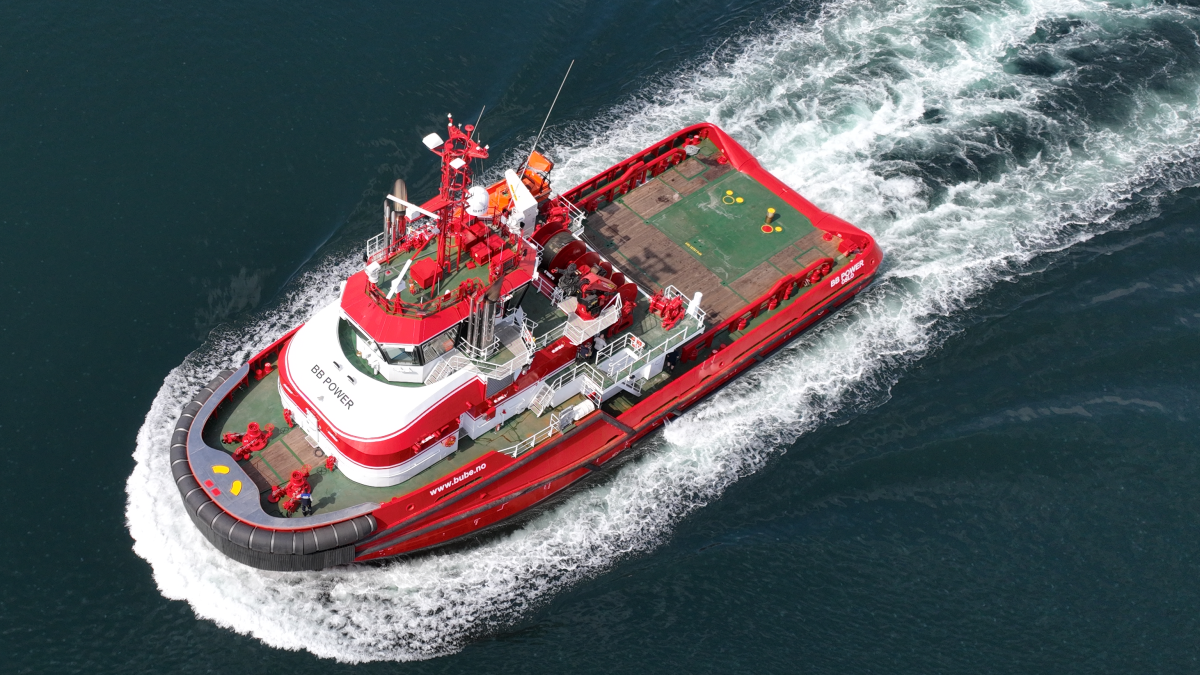
BB Power
A powerful hybrid-propulsion offshore tugboat, owned by Buksér og Berging, built by Uzmar Shipyard and designed by Robert Allan Ltd. BB Power set new standards for hybrid propulsion, delivering power to give this 41-m tug a bollard pull of 122 tonnes. This vessel is driven by twin 2,800- kW ABC 12V DZC main engines, Berg Propulsion MTA 834 Z drives with a 3.4 m controllable pitch propeller, 900- kW Ramme hybrid shaft motors, and 555-ekW Volvo D16 MG gensets, forming a propulsion plant tailored for demanding offshore towing and anchor handling. It has a unique towline tunnel that runs under the deckhouse, enabling towing operations over the bow via the aft winch and from the stern without the need for additional winches, increasing the vessel’s versatility.
Isla Popa
SD Aisemaht
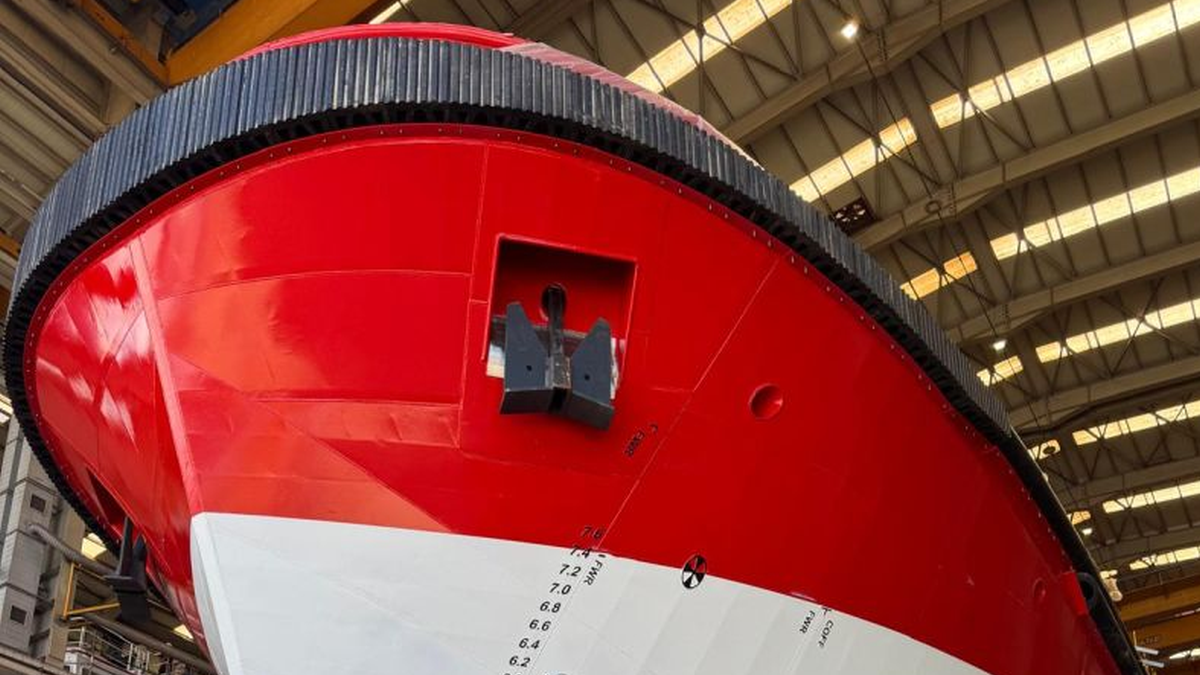
The world’s first purpose-built dual-fuel methanol escort tug, constructed by Sanmar Shipyards to a Robert Allan Ltd design for Kotug Canada’s fleet. SD Aisemaht sets a new benchmark for sustainable maritime operations without compromising on power or performance.
Designed by Robert Allan Ltd, the 44-m vessel is based on the advanced RASalvor 4400-DFM platform and delivers an impressive ~120 tonnes of bollard pull—placing it among the most powerful tugs in Canada.
Built for demanding operations along the coast of British Columbia, SD Aisemaht excels in long-range towing, escorting, anchor handling, and emergency response. Fully equipped with firefighting and oil spill response systems, it plays a critical role in supporting tanker operations for the Trans Mountain Expansion Project. At its core, SD Aisemaht combines innovation and reliability. Its propulsion system features two ABC 16 DZM dual-fuel methanol engines paired with Schottel’s Sydrive-M mechanical-hybrid solution—delivering both environmental performance and operational flexibility.
Svitzer Balder
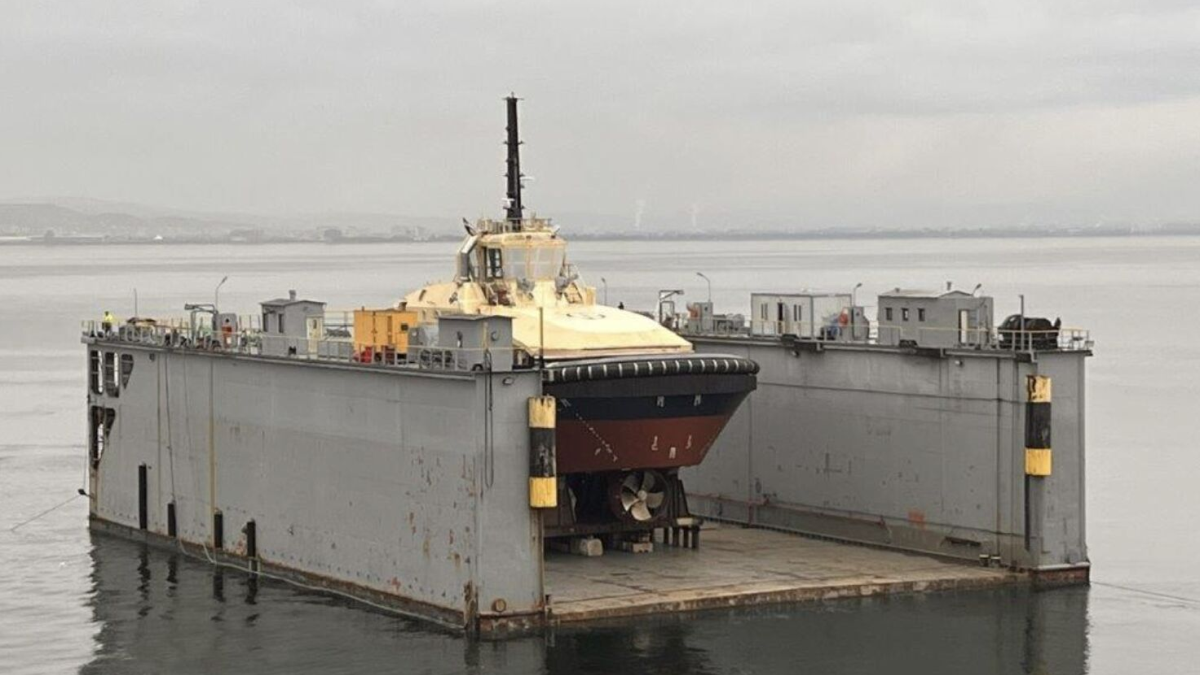
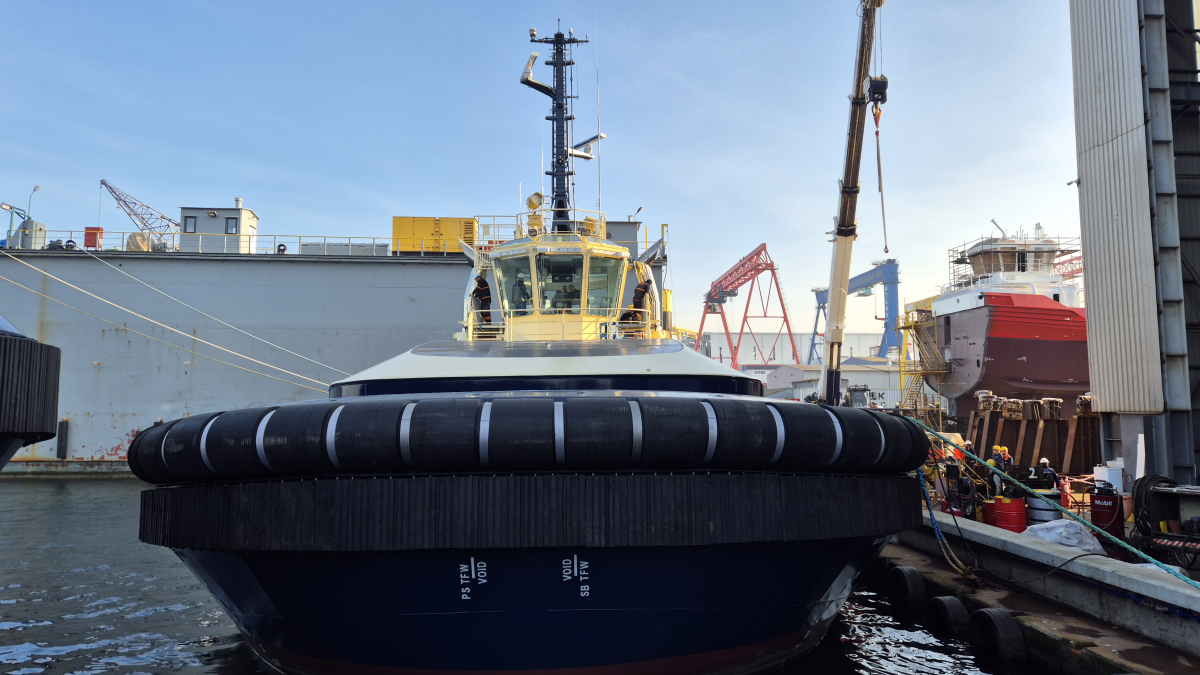
The world’s first battery-methanol tugboat, built by Uzmar for Svitzer to Robert Allan Ltd’s design to support ships in the Port of Gothenburg. Svitzer Balder was launched in January 2026 after its construction to a TRAnsverse 3500 design and is scheduled to arrive in the Port of Gothenburg in Q2 2026. It is one of the first tugs to demonstrate that battery-electric propulsion can deliver heavy-duty escort capabilities for large tanker handling. Svitzer has combined four advanced systems in a single, class-assessable operational platform: AYK’s 6,000 kWh energy storage system, a 2-MW Everllence diesel/HVO-compliant genset and two 350-kW Scandinaos methanol gensets, plus two Kongsberg ice-class IC 2,680-kW thrusters. These are aligned with ABS hybrid vessel rules, methanol fuel requirements, lithium-ion battery standards, and IMO low-flashpoint fuel guidelines.
Svitzer Barrington
Svitzer Australia’s first TRAnsverse port tug, built by Uzmar Shipyard and designed by Robert Allan Ltd, Svitzer Barrington has shown exceptional manoeuvrability and ship escort and handling since it arrived in the Port of Newcastle. Built to a TRAnsverse 3200 design, the 32-m tug is the first of its type rated for escort duties at speeds of up to 10 knots. Its design and propulsion, including Kongsberg thrusters with controllable pitch propellers, generate a 50% increase in the dynamic operating envelope compared with similar or larger azimuth stern drive tugs.
Trapananda
South America’s first all-electric harbour tug, Trapananda, was built by Sanmar Shipyards to a Robert Allan Ltd design for SAAM Towage’s operations in Chile. It has demonstrated extraordinary performance in harsh weather conditions while handling tankers at Enap’s terminal in Puerto Chacabuco in the Aysen region of Chile. Built to an ElectRA 2500SX design, the 25-m tug has Corvus Energy’s Orca lithium-ion battery system, powering two electric azimuth thrusters to deliver more than 70 tonnes of bollard pull while significantly reducing emissions, noise and vibration levels. Digital monitoring and energy-management systems enable optimised energy use and operational predictability.

VB Bolu
An efficient tractor tug with battery-hybrid propulsion, VB Bolu was built by Damen Shipyards to a Robert Allan Ltd TRAktor 3200-V design for Boluda Towage. This 32-m tractor tug has Voith Schneider propulsion and electric motors for efficient, low-emissions port operations. Its hybrid propulsion combines Caterpillar’s Cat 3516E IMO Tier III-compliant engines, rated at 3,000 kW at 1,800 rpm, with a Danfoss 300-kW electric motor in a Reintjes LAFH73 transmission. The integration of power take-in/power take-off generator systems enables a bidirectional energy flow between propulsion shafts and the onboard electrical DC grid. A battery system provides peak shaving and load smoothing, optimising engine load curves, reducing running hours and maintenance requirements, and hybrid operational modes support zero-emissions functionality during low-load operations.
Victoria
Port of Lulea’s ice-breaking azimuth stern drive (ASD) tug, built and designed by Damen Shipyards, has unrivalled operability in cold temperatures and low NOx emissions. Victoria was built to an ASD Tug 3413 ICE design to meet Bureau Veritas ice class and Finnish-Swedish 1A Super ice rules and has propulsion compliant with IMO Tier III requirements for low NOx emissions. Damen optimised the steel-strengthened hull, added extra heating and insulation and re‑engineered critical components for the 34-m harbour tug to operate in temperatures down to -40°C and to cut through 1.1 m of first-year floe ice. Its propulsion system consists of two contra-rotating stainless steel propellers, driven by two high-speed engines to generate more than 70 tonnes of bollard pull.

Related to this Story

Events

Maritime Regulations Webinar Week
 16 Dec 2025
 GMT - ONLINE
Floating energy: successfully unlocking stranded gas using FLNGs and FSRUs
24 Feb 2026GMT - ONLINE
© 2026 Riviera Maritime Media Ltd.


