


Business Sectors
Business Sectors
Events
Contents

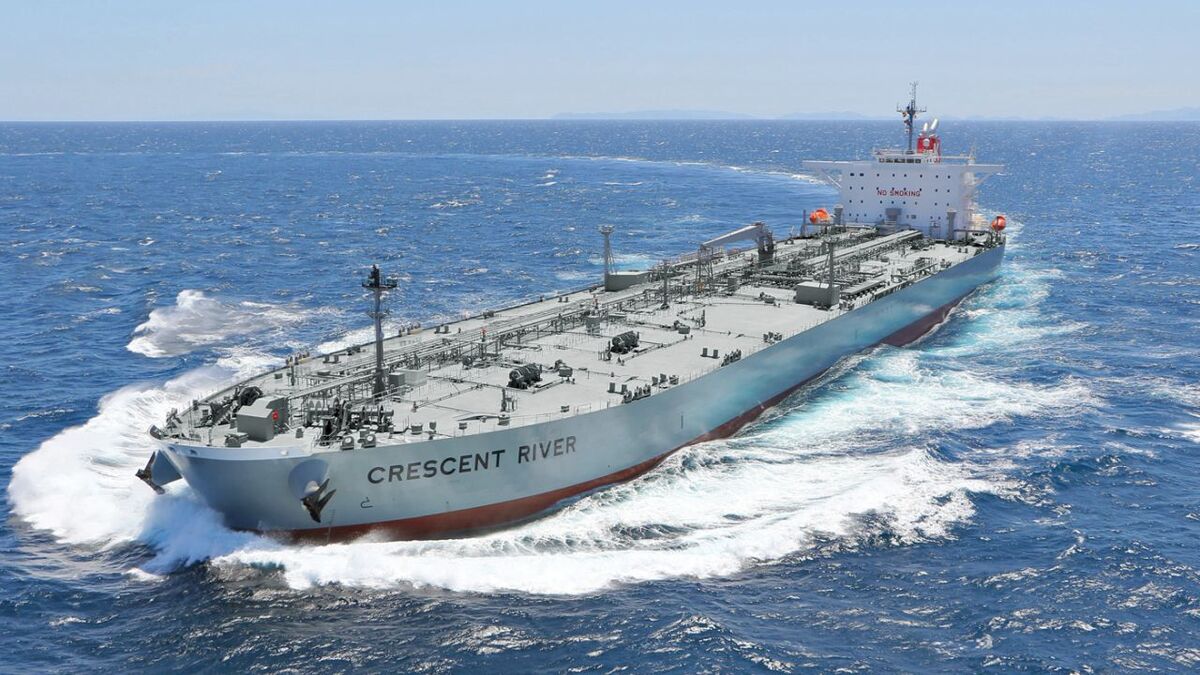
Digitalisation, decarbonisation are central to K Line’s medium-term management plan
Artificial intelligence and data analytics have provided insights into improving efficiency, reallocating capital, and lowering emissions for a major Japanese shipping group


Digitalisation and decarbonisation are at the core of Kawasaki Kisen Kaisha (K Line)’s medium-term strategy going forward to enhance its operational capabilities and to redefine the shipping industry.
The Japanese shipping group intends to use data analytics and artificial intelligence (AI) to support its drive to integrate its operations across the maritime and logistics sectors and deliver safe and reliable transportation for its clients.
K Line expects data and AI to provide insights and depth to its integrated operational capability and to “further enhance the core value it provides” in these services.
It has been undertaking a digital transformation strategy since December 2021 and since then been “laying the foundations for transforming business operations.”
K Line is using AI and digitalisation to anticipate “what the maritime shipping industry will look like in the future in view of the developments in data,” and it has set out priorities to address these outcomes in its medium-term management plan.
Also in these mid-term plans are strategies and targets to reduce the group’s environmental impact and greenhouse gas (GHG) emissions.
K Line has revised its environmental vision for the third time since its formulation in 2015 and now expects to reach net zero for GHG emissions across scope 1, 2 and 3 by 2050.
The shipping group also “set an interim target of improving scope 1 CO2 emissions efficiency by 40% from the 2024 level by 2035.”
K Line is working on initiatives, including voyage and vessel optimisation and using insights from data analysis and AI, to achieve the interim goal.
To reach net zero in 23 years, K Line will also need to implement carbon-zero fuels, electrification of operations and work with partners to minimise GHG emissions.
K Line’s new medium-term management plan covers the period of 2027 to 2031 and intends to “redefine shipping” while expanding its the core marine transportation business into adjacent fields such as maritime industry, logistics, offshore energy and various supply chains.
“K Line will combine businesses and functions to enhance the value and achieve improvement in competitiveness and profitability,” said the company.
It will work “to optimise capital allocation through growth investment and shareholder returns, while ensuring financial soundness.”
“K Line will pursue profit growth and capital efficiency improvement as two key pillars and aim to enhance corporate value,” the ship operator said.





Related to this Story



Events

Maritime Regulations Webinar Week
 16 Dec 2025
 GMT - ONLINE

Floating energy: successfully unlocking stranded gas using FLNGs and FSRUs
24 Feb 2026GMT - ONLINE
© 2026 Riviera Maritime Media Ltd.


