


Business Sectors
Business Sectors
Events
Contents
Register to read more articles.
Extreme escort tugs: the Costa Azul experience
Operating under harsh Pacific swells, SMBC’s LNG towage model hinges on custom-built tugs, prototype winches and a relentless focus on crew competence


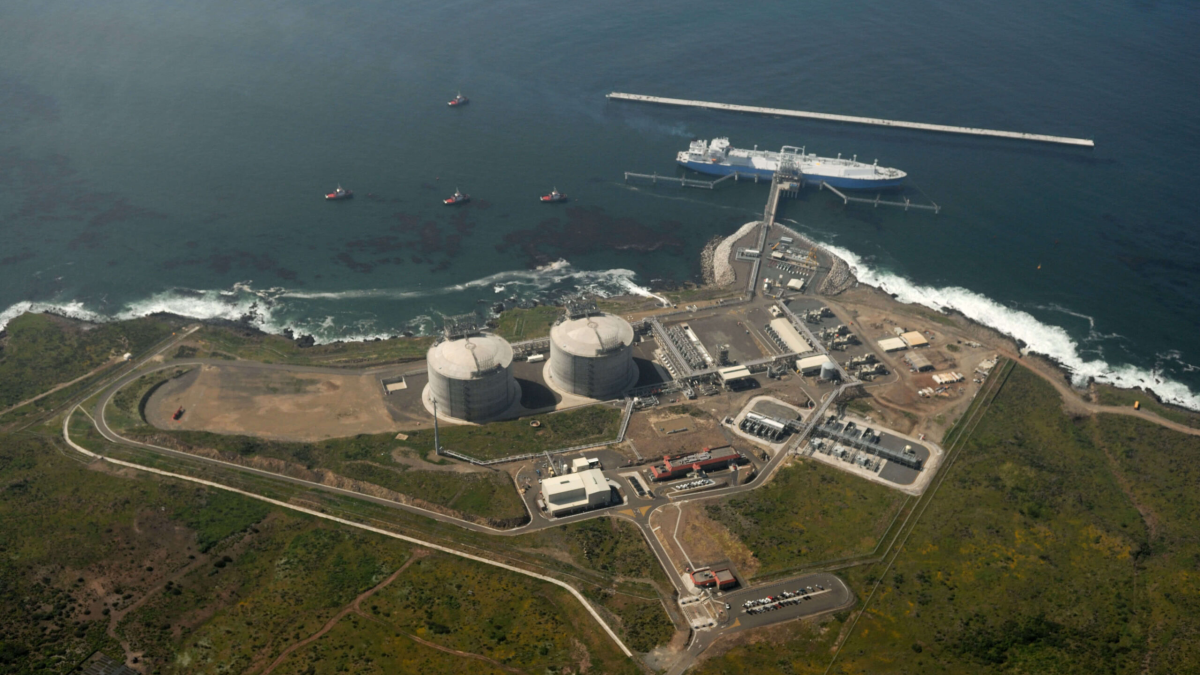
When LNG carriers call at the Sempra Infrastructure-developed Energía Costa Azul terminal (ECA LNG) on Mexico’s Pacific coast, they do so under some of the most challenging marine conditions faced by any such facility in North America. Exposed to deep-sea swell, Santa Ana winds and near-constant fog, the terminal near Ensenada demands not only precise manoeuvring, but also a marine service provision that is capable of real-time operational response and long-term systems resilience.
Servicios Marítimos de Baja California (SMBC), a joint venture between Boluda Towage and Moran Towing Corporation, was formed in 2006 with a clear mandate: to build a marine service tailored for LNG operations in high-exposure, open-sea conditions. Speaking at Riviera’s Tug Technology 2025 Conference, SMBC general manager, Capt Miguel Mockabee, described the journey as one of “choosing the right equipment, implementing robust training, and maintaining a preventive mindset.”
The first step was designing a tug fleet that could meet operational thresholds dictated by the terminal’s geography and weather patterns. “47% of the year, we face swell heights exceeding two metres,” said Capt Mockabee. “And when 1.5-metre swell is considered a good day, it puts into context just how narrow our margin for error really is.”
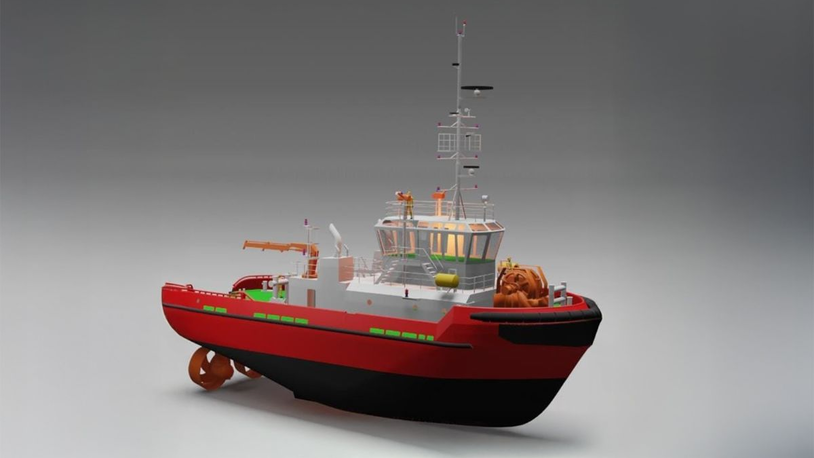
Simulations conducted at Pacific Maritime Institute in Seattle, the Boluda facility in Mexico City, and on site in Ensenada shaped SMBC’s decision to commission a modified variant of the Robert Allan RAstar 3200. The resulting tug incorporated numerous design refinements to enhance seakeeping, including 30 cm sponsons, a raised forecastle, and a reworked stem. “The changes reduce rolling and pitching, and eliminate green water on the bow — even while operating stern-first in three-metre swell,” Capt Mockabee explained.
A key aspect of the operational concept was winch integration. “You can have the best tug design in the world, but if the winch cannot match the motion and acceleration of the hull, the whole system breaks down,” he said. Working with Markey Machinery, SMBC commissioned the DESDF-48WF, a 700 hp prototype designed specifically to handle conditions at Costa Azul, including three-metre swells and wave periods of 15–20 seconds. “The main challenge wasn’t speed — it was acceleration and reaction time. The winch had instantly to adapt to vessel movement or risk catastrophic tension spikes.”
As a marine operator with decades of experience, Capt Mockabee stressed the significance of these dynamics from a seafarer’s point of view. “I’ve been on board for nearly every job,” he said. “The ability of the Markey winch to maintain steady line tension under active sea state is exceptional. There’s no spike. There’s no slack. It’s seamless.”
Each towage operation is recorded and analysed in detail. Tension monitoring systems log the full load profile of each towing line, and onboard cameras are used to trace any spike back to its source. “If we see an anomaly, we go to our BlueBox data system, cross-reference with footage and telemetry, and determine whether it was crew-related, environmental, or mechanical,” Capt Mockabee noted.
While equipment capability is foundational, the human element remains critical to SMBC’s operating philosophy. “Even the best machinery is only as good as the crew that operates it,” he said. SMBC mandates LNG terminal familiarisation, simulator time, FiFi system training, English language proficiency, and ISM auditing for all personnel. Additional modules include firefighting, first aid, survival techniques, and oil spill response. Importantly, training is not confined to classrooms: instructors accompany crews onboard during operations, and pilots routinely participate in joint simulations with tug masters. “In many ports, pilots and tug captains barely speak. We train together so that everyone understands each other’s capabilities and equipment response times.”
This integrated approach extends to maintenance. Preventive programmes, including the Moran-developed FleetCheck system, are central to SMBC’s strategy. “In 15 years, we’ve never had a winch failure during operations. That is not luck. That is maintenance discipline,” said Capt Mockabee. Redundancy is also engineered into the winch systems, which can be operated using auxiliary 24V power and compressed air in the event of generator failure. Remote access from Markey further enhances diagnostic capability.
The Cortland towing line used at Costa Azul is a 10-inch (25.4 cm) circumference synthetic line with a 470-tonne breaking load and only 2% elasticity. The final 20 metres are fitted with a stretcher to absorb shock loads. “It is a system built for resilience,” he said.
Asked about the decision to adopt ASD tugs rather than ATD tractors, Capt Mockabee said the project team relied on early expert input and simulation outcomes. “We began this process in 2006, and at that time, the advice from Capt Greg Brooks and the results from our simulations clearly supported the ASD approach. That decision has been fully validated in practice.”
Despite the winch’s 57-tonne weight, stability has not been compromised. Each tug is fitted with 40 tonnes of ballast in twin aft tanks to ensure even trim. “The winch is massive, yes — but the tugs respond quickly, smoothly, and maintain trim through all manoeuvres,” he explained. “Our seakeeping analysis confirmed significant improvements in motion behaviour compared to standard hull forms.”
Yet perhaps the most revealing insight came not from a technical specification, but from a real incident. During one particularly foggy manoeuvre, the LNG carrier experienced a blackout mid-berthing. “We had no propulsion on the LNG vessel and relied entirely on four tugs to maintain control,” Capt Mockabee recalled. “It was a textbook operation under non-textbook conditions. That’s what the training is for.”
The philosophy underpinning SMBC’s approach is rooted in day-to-day presence and accountability. “I’m not an office captain,” he said. “I still go aboard. I handle the winch. I talk to our crews, our pilots, and our clients. That’s how we detect issues early and refine performance continuously.”
This operational vigilance is increasingly relevant as North America’s LNG export footprint expands. Terminals from Port Arthur to Canada’s Pacific coast are being developed, many in locations where environmental conditions remain misunderstood or underestimated. The Costa Azul experience offers a counterpoint to the view that standard solutions can be applied.
“There is no one-size-fits-all,” said Capt Mockabee. “You need the right boat, the right winch, and — most importantly — the right people.”
Related to this Story

Events

Maritime Regulations Webinar Week
 16 Dec 2025
 GMT - ONLINE
Floating energy: successfully unlocking stranded gas using FLNGs and FSRUs
24 Feb 2026GMT - ONLINE
© 2026 Riviera Maritime Media Ltd.


