


Business Sectors
Business Sectors
Events
Contents
Register to read more articles.
First smart augmented tanker joins Wah Kwong fleet
Frontier Venture enters service as the first vessel in a Wah Kwong programme to carry Group 3 augmented ship capabilities


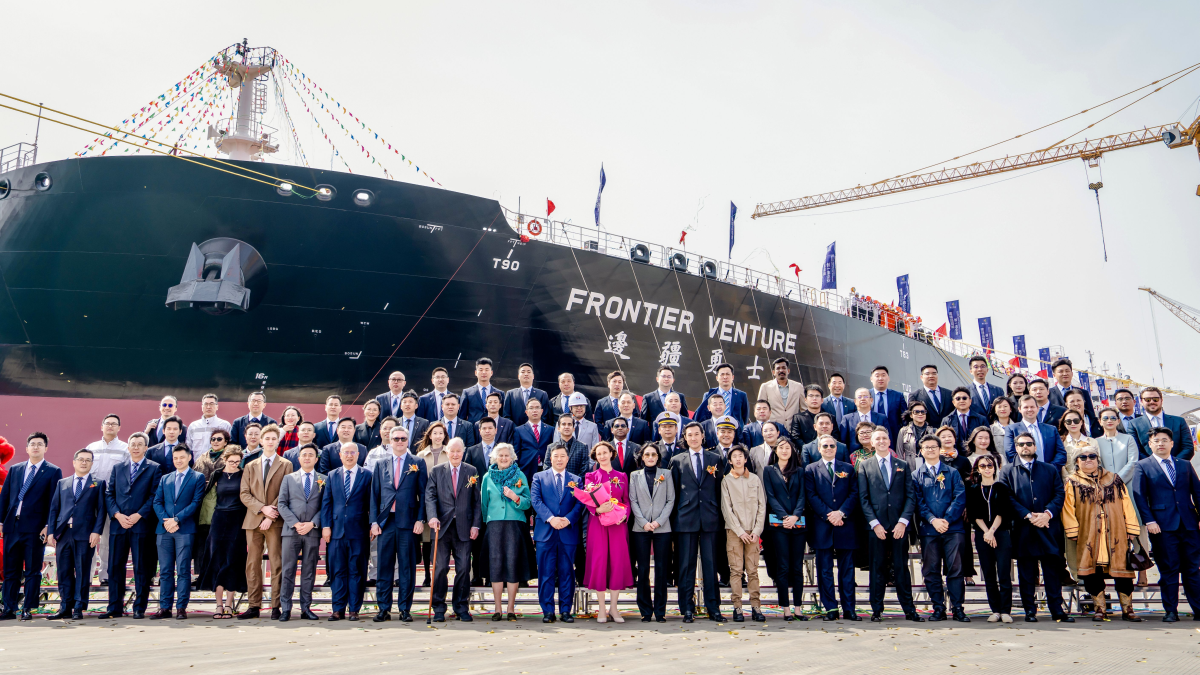
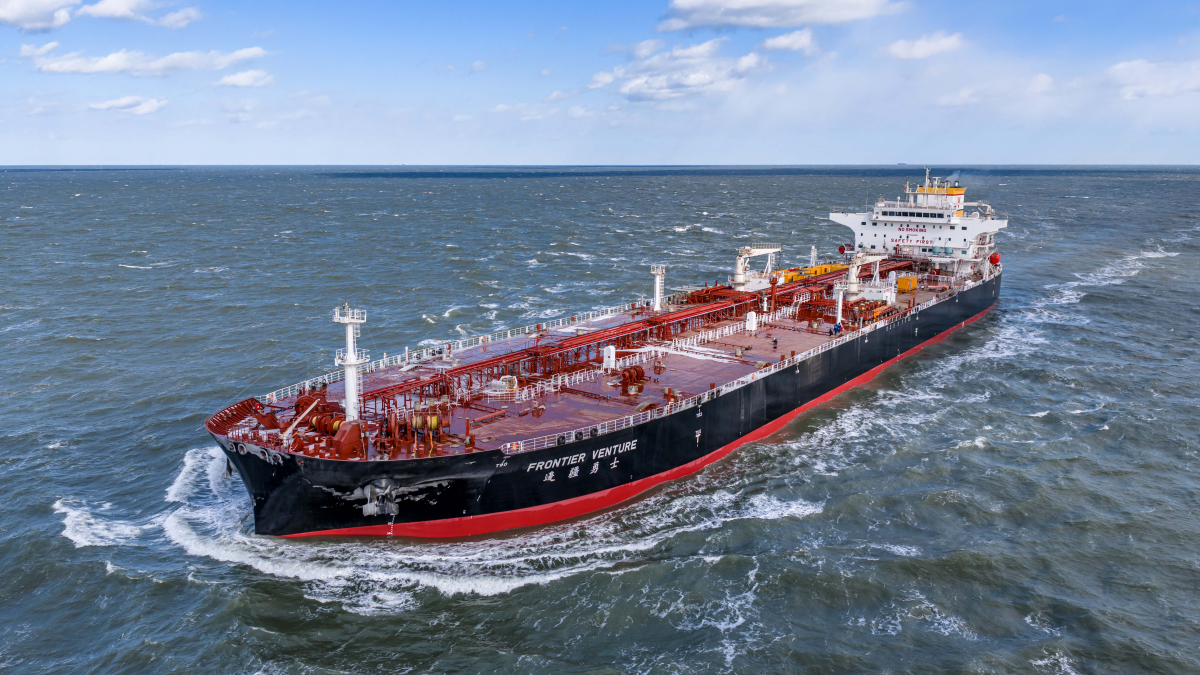
Wah Kwong Maritime Transport has taken delivery of Frontier Venture, an LR2 tanker, the first vessel in Wah Kwong’s SMART-enabled vessel series to demonstrate Group 3 augmented-ship capabilities.
The vessel was delivered on 30 March 2026 at Hengli Shipyard in Dalian.
Bureau Veritas Marine & Offshore has been assigned Frontier Venture SMART (H1, M1, EnE3, MH3) notations.
Bureau Veritas said the notations recognise capabilities in machinery health monitoring and energy-efficiency optimisation, while the Group 3 designation places the vessel in the ’augmented ship’ category rather than simply the ’connected ship’ tier.
Under Bureau Veritas’ SMART notation framework, Group 1 covers onboard computer-based smart functions. Group 2 adds the ship-shore data, communications and cyber layer. Group 3 is the augmented ship stage, in which onboard systems are supported by shore digital solutions that provide analysis, visualisation, reporting and decision support.
In the case of Frontier Venture, the augmented-ship functions include expert-in-the-loop services designed to give ship officers timely advice.
That support covers early detection of machinery anomalies and recommendations on more efficient operating profiles – a shipboard digital system linked to shore-based human and software support.
The newbuilding is the first vessel in a wider Wah Kwong programme, rather than a one-off installation. The company’s SMART-enabled ship programme covers seven vessels across several ship types, including LNG carriers under construction at Dalian Shipbuilding Industry Co and bulk carriers at New Dayang Shipyard, with deliveries scheduled from 2026 to 2027.
Frontier Venture is the first vessel in the Hengli-built LR2 tanker series, with a second LR2 tanker due for delivery in July 2026.
The vessel also sits within a longer digital sequence in Wah Kwong’s fleet. The CROWN+ Ultramax bulk carrier Eastern Venture became the first newbuilding worldwide to receive the BV SMART (EnE1) notation on delivery in 2023.
Wah Kwong said its fleet has since moved from what it calls Group 1 foundational onboard digital systems to Group 3 augmented-ship capabilities, adding monitoring and decision-support functions from shore.
Wah Kwong chairman Hing Chao linked the delivery to the company’s broader digital programme. He said, “The SMART notations awarded to our first LR2 mark a key milestone in our long-term partnership with Bureau Veritas and demonstrate how we translate innovation into fleetwide progress.”
He added that the companies had “advanced through the SMART framework in recent years, ensuring that data-driven insights are effectively embedded in operations on board and ashore.”
Bureau Veritas president, marine & offshore, Alex Gregg-Smith, emphasised trust in digital systems, “The maritime sector is undergoing profound transformation, in which digitalisation continues to play a central role. As with any major transition, building trust in new technologies is essential.”
He added that the collaboration is intended to support confidence in digital solutions and referred to “the integration of sophisticated smart systems across multiple vessel types”.
What are Groups 1, 2 and 3
Bureau Veritas’ SMART notation rules define three formal digital groups.
Group 1 covers onboard computer-based smart functions. These are shipboard systems for tasks such as machinery monitoring, navigation support or energy-efficiency tracking.
Group 2 adds the ’connected ship’ layer, meaning the ship has the data infrastructure, ship-shore communications and cyber arrangements needed to move and protect data beyond the vessel.
Group 3 is the ’augmented ship’ stage. Here, onboard systems are linked to shore digital solutions that provide analysis, reporting, visualisation and decision support.
The framework does not currently contain a formal Group 4 notation, but Bureau Veritas’ wider smartship model places autonomous ships above computer-based, connected and augmented ships as a separate fourth tier and aligns with the International Maritime Organization’s Maritime Autonomous Surface Ships framework, which distinguishes between ships with automated processes and decision support, remotely controlled ships and fully autonomous ships.
Sign up for Riviera’s April 2026 International Chemical and Product Tanker Conference:
- Register to attend here: The International Chemical and Product Tanker Conference 2026, London.
- View the latest issue of Tanker Shipping & Trade here: Tanker Shipping & Trade.
Related to this Story
Events

Maritime Regulations Webinar Week
 16 Dec 2025
 GMT - ONLINE
Floating energy: successfully unlocking stranded gas using FLNGs and FSRUs
24 Feb 2026GMT - ONLINE
© 2026 Riviera Maritime Media Ltd.


