


Business Sectors
Business Sectors
Events
Contents

Register to read more articles.
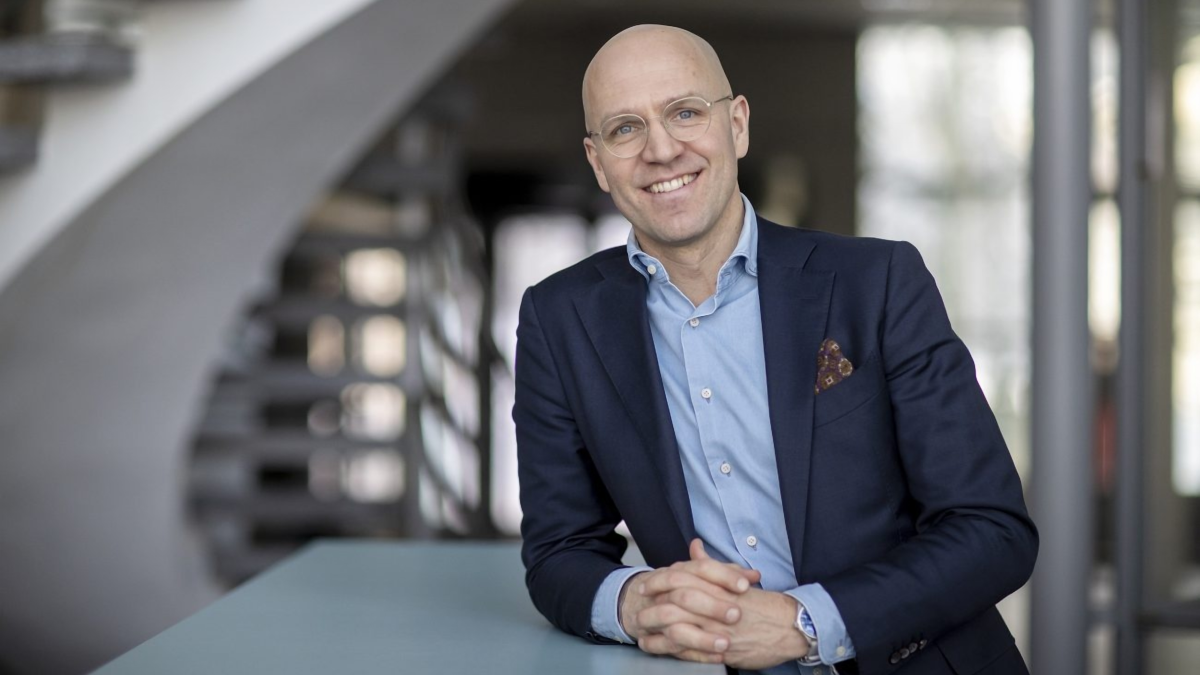
Fragmented procurement hides costs that never reach the equipment invoice
Evac Group chief executive, Björn Ullbro, wants shipowners to stop buying water, waste and treatment systems one tender at a time


His argument is that choosing the cheapest components, the most basic system configuration and the lowest bidder rarely adds up to the lowest cost of ownership over a 30-year hull.
It is a familiar supplier pitch. What gives it weight now is a company with new private equity backing, a fresh acquisition in freshwater treatment and an installed base it says it has not yet fully monetised. The argument also lands at a point when crewing shortages and lifecycle scrutiny are forcing owners to think harder about how onboard systems interact, rather than how each performs in isolation.
The hidden cost of the cheapest component
Mr Ullbro’s starting point is that the original specification for most newbuilds and retrofits is “based on just historical experience”. Design parameters get copied from the last vessel. If the operating profile has changed (new geography, a different passenger base, a different cargo), the system is “sub-optimised” from delivery.
He cited a recent cruise order in which Evac challenged the owner and yard on design parameters because it knew how the sister vessels were actually operated. The company reworked mass balances and flow rates against real operating data, and that offer was the one bought. He framed this as the practical value of a supplier that interfaces with the customer across the asset’s life, rather than at handover.
The costs of fragmentation, he said, do not show on the purchase order. His example is from Evac’s core vacuum toilet business. Sourcing the cheapest interface valves and control components might yield a five per cent saving in the year. “What you may not see is how many toilet-not-flushing increases you have had on your operation side, and how much that resulted in refunded day rates.”
That is of course a claim rather than a published finding, and the industry’s own practice complicates it. Owners’ procurement teams split packages precisely to keep competitive tension on price, and yards have every incentive to protect that model.
Integration as a claim that must be priced
Mr Ullbro conceded that “integrated” is easy to say. His test is whether the supplier can assign a value to it, in money or in risk. Does the relationship reduce inventory held on board? Does it free cash? Does it shorten lead times and cut spend on express shipments?
He described another conversation with a large cruise operator in which the equipment price was one line, and a logistics hub established at the operator’s port facility was another: guaranteed spares availability; lower onboard stock; less space given over to storage. The point, he said, is to turn a price-versus-price comparison into a discussion of total value.
The counter-view, which owners raise privately and which Mr Ullbro does not dismiss, is that consolidating mission-critical systems with one vendor concentrates dependency and weakens leverage at renewal. His answer is that the balance should be set by mission criticality and the owner’s own FMEA or risk matrix, not by the appeal of best-in-class components. Where failure stops the ship or breaches discharge limits, fewer and better-connected suppliers earn their place.
Crewing, lifecycle and the yard-owner gap
The crewing argument is the strongest independent support for his position. Owners and training bodies have long noted that a large cohort of experienced chief engineers is approaching retirement with too few replacements. Mr Ullbro put it plainly: technical competence on board is becoming a bottleneck, and every FMEA assumes a level of onboard capability that can no longer be taken for granted. Systems that share interfaces, spares and support reduce the skills burden on a thinner crew.
On lifecycle cost, he argued that the structural conflict between a yard that wants to build fast and cheap and an owner that must operate for decades is becoming “more of an open conversation”. He attributes part of that to publicly traded owners facing greater investor scrutiny: “Built by the lowest bidder usually doesn’t really result in the lowest total cost of ownership.”
He is wary of the industry’s reputation for slow technology adoption. Given assets that move, operate in harsh conditions and must remain self-sufficient, he said, the operating realities are different from many other industries. It just looks slower. Some owners and yards pioneer and some follow, and he said both have paid for that choice. Evac included.
He is similarly measured on digitalisation. He has seen many attempts at remote monitoring and virtual support fall short at sea, and expects vessel autonomy and self-sufficiency to be safeguarded even as connectivity improves. His preferred model is modest: simple sensors on cycle counts, vibration and temperature, feeding a plain interface that flags mean time to failure and prompts a spares order or service visit.
WatMan and the Altor phase
The company’s own direction tests the theory. Evac completed its ownership transition to Altor Equity Partners this year, following an agreement with Bridgepoint first announced in December 2025. Bloomberg reported the deal at about EUR600M (USD671.5M); neither party has disclosed terms. Under Bridgepoint, Evac made six acquisitions and built aftermarket and service revenues to more than two-thirds of the total, with EBITDA expected at around EUR47M (USD52.6M) for 2025.
Its latest purchase, WatMan Engineering, is a Lahti-based maker of customised water treatment and reverse osmosis systems with a cruise presence and a land-based power plant business. Mr Ullbro is candid that this is not a technology play. Evac already has reverse osmosis in its portfolio, and he said the value in RO “is not necessarily in the technology”. It lies in customer relationships, brand, qualification and the ability to specify the right unit for the right project. The logic is to put Evac’s service reach behind WatMan’s installed base, and WatMan’s large-plant capability into Evac’s bids.
He described three screens for acquisitions: technology and process expertise; a value element for the customer; and mission criticality. He said Evac scans around 50 companies at any time against those criteria, and that inorganic growth is a priority under Altor. Service businesses are harder to buy, he added, because the asset is people.
Internally, the plan is to reorganise from brands and technologies towards customer segments, on the admission that the average project today takes fewer Evac product lines than the portfolio offers. Service capacity will grow in Florida, the main European cruise ports and naval hubs, with local partners in Asia to stay cost-competitive.



Related to this Story
Events
Maritime Regulations Webinar Week
 16 Dec 2025
 GMT - ONLINE
Floating energy: successfully unlocking stranded gas using FLNGs and FSRUs
24 Feb 2026GMT - ONLINE
© 2026 Riviera Maritime Media Ltd.


