


Business Sectors
Business Sectors
Events
Contents

Register to read more articles.

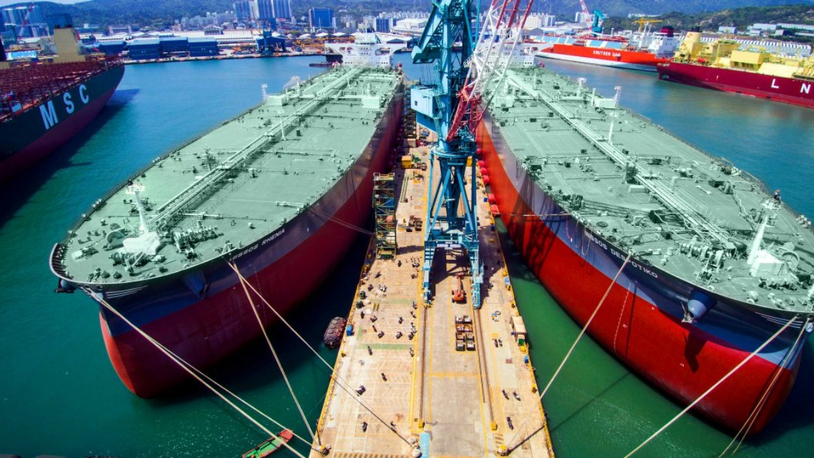
Greece's VLCC ordering spree could propel nation past China
Greece’s strong position in the VLCC orderbook could see the country overtake China as the world’s leading shipowning nation in the segment, as the two continue to dominate the global tanker market


BRS Shipbrokers said in a recent report that China currently ranks as the world’s largest VLCC-owning nation, controlling 206 active vessels, equivalent to 22% of the global fleet.
“This focus on VLCCs is a reflection of Beijing’s ‘Chinese ships for Chinese goods’ policy and the fact that China is by far the world’s largest crude importer, with most imports transported aboard VLCCs,” BRS said. The brokerage added that Beijing also views Chinese-controlled VLCCs as essential to safeguarding the country’s energy security.
By contrast, the Greek tanker fleet is more diversified, with the country ranking as the leading owner across every tanker segment from MR1s to Suezmaxes. According to BRS, this reflects the fact that the “Greek tanker fleet is commercially driven and centred on global third-party transportation and tramp shipping”.
In the VLCC segment alone, Greece ranks second globally, with a fleet of 144 ships, representing a 16% share.
However, the orderbook tells a different story. Greek owners have 72 VLCCs on order, compared with 47 for Chinese owners, according to BRS data.
“Bearing in mind that 77 VLCCs aged 20 years or older are linked to Chinese companies, while most elderly Greek-linked VLCCs have already been divested, often to Chinese interests, the size of the Greek-linked VLCC orderbook has the potential to see the Greek fleet surpass that of China,” the analysts said.
One factor that could alter the balance is that around one-third of the current Greek VLCC orderbook has been placed by companies with little or no track record of owning VLCCs. As a result, some of these vessels could still be resold before delivery, BRS noted.
Against the backdrop of consolidation and high barriers to entry, it is extremely difficult for new companies to establish a presence in the VLCC market, the analysts added.
Greece widens lead in tanker orderbook
Across the tanker market as a whole, BRS data shows that Greece accounts for 23% of the active tanker fleet (34,000 dwt and above) on a deadweight basis, compared with 16% for China.
Greek companies also account for 31% of tanker tonnage currently on order, while China represents 17%. Beyond the two market leaders, the orderbook becomes highly fragmented, with no other country accounting for more than 2%.
BRS observed that, unlike in the dry bulk sector, China is unlikely to overtake Greece in tanker ownership over the coming years, as its orderbook remains significantly smaller.
“This likely reflects the fact that, although China is the world’s largest crude importer and the second-largest consumer and refiner of oil, it does not have the same influence over the global oil market as it does in the dry bulk market,” the brokerage said.
The analysts added that Chinese refined product exports have remained capped, reflecting the country’s relatively smaller share of the clean tanker fleet.
“Greece’s commercially focused shipping model, although riskier than China’s state-backed ‘China-first’ model, allows Greek companies to remain nimble and respond quickly to changes in demand and oil trade flows,” BRS said.
The brokerage concluded that both models have their merits and are expected to remain viable well beyond the current tanker market cycle.
“This suggests that both will remain the top dogs for a considerable time to come, despite growing competition from other countries.”





Related to this Story

Events

Maritime Regulations Webinar Week
 16 Dec 2025
 GMT - ONLINE

Floating energy: successfully unlocking stranded gas using FLNGs and FSRUs
24 Feb 2026GMT - ONLINE
© 2026 Riviera Maritime Media Ltd.


