


Business Sectors
Business Sectors
Events
Contents
Register to read more articles.
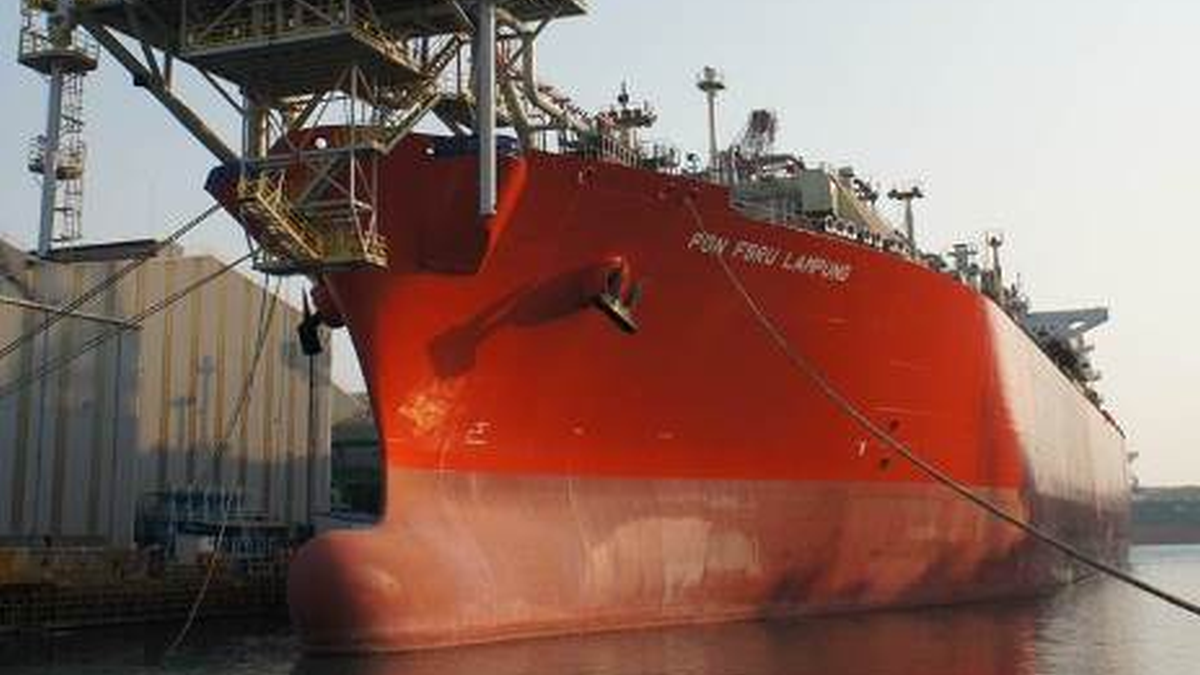
Höegh LNG and PGN reach arbitration settlement
A recent development in the saga of PGN FSRU Lampung highlights the intricacies of the dispute timeline, leading to a notable arbitration settlement


The settlement of the arbitration in the saga of PGN FSRU Lampung is a positive outcome of a story that commenced with promise and anticipation when the PGN FSRU Lampung naming ceremony took place on 7 April 2014. Constructed for Höegh LNG at Hyundai Heavy Industries, this FSRU was one of four cutting-edge vessels slated for service at the Lampung project in Indonesia. Scheduled for operation in June of the same year, the project boasted a Tower Yoke mooring already installed at the designated Lampung site.
Höegh LNG president and CEO of the time, Sveinung J.S. Støhle, hailed it as a pivotal moment for both the company and the nation — a fitting response to Indonesia’s growing energy demands.
The FSRU, designed to provide essential regasification services, embarked on its journey to fulfil its designated function in Indonesia, playing a crucial role in the nation’s LNG import capacity enhancement plans. This underscored the growing focus on innovative solutions like FSRUs to meet energy needs in an environmentally and socio-economically sustainable manner.
Highlighting the significance of the FSRU to the region, Mr Støhle emphasised at the time, its role as an “important element of Indonesia’s energy infrastructure”. The contractual agreement for PGN FSRU Lampung was pioneering — a 20-year tenure with possible extensions up to 30 years, reflecting the project’s significance and long-term investment.
Yet, the complexities inherent in large-scale projects often lead to hidden challenges. Disputes can arise from various technical and contractual divergences. Despite emerging obstacles, both parties remained committed to the Lampung FSRU project, which proceeded as planned.
Fast forward to the resolution of the dispute; Höegh LNG announced a settlement with the charterer, terminating all pending arbitrations. This seamless resolution allowed the charter contract to remain robust, enabling continued operation with each party bearing their respective costs.
Such settlements, though often overlooked, are crucial for sector stability. As natural gas gains prominence for environmental accountability, resolving conflicts within its supply framework becomes increasingly imperative.
Throughout the ordeal, open lines of communication and co-operation prevailed. The resolution epitomises the efficacy of arbitration in the commercial realm — a poised settlement respectful of both parties’ interests and ultimately beneficial to the broader energy provision sphere.
Höegh LNG emerges from arbitration confident in its provision of turnkey floating LNG services and its contribution to Indonesia’s energy mix. The company’s diverse fleet and commitment to various project financing models illustrates the multifaceted nature of today’s LNG industry — a blend of capital, innovation, and environmental stewardship.
Höegh LNG’s announcement in February 2024, noted the settlement, charts a stable course ahead for both Höegh LNG and energy provision in Indonesia.
Related to this Story
Events

Maritime Regulations Webinar Week
 16 Dec 2025
 GMT - ONLINE
Floating energy: successfully unlocking stranded gas using FLNGs and FSRUs
24 Feb 2026GMT - ONLINE
© 2026 Riviera Maritime Media Ltd.


