


Business Sectors
Business Sectors
Events
Contents

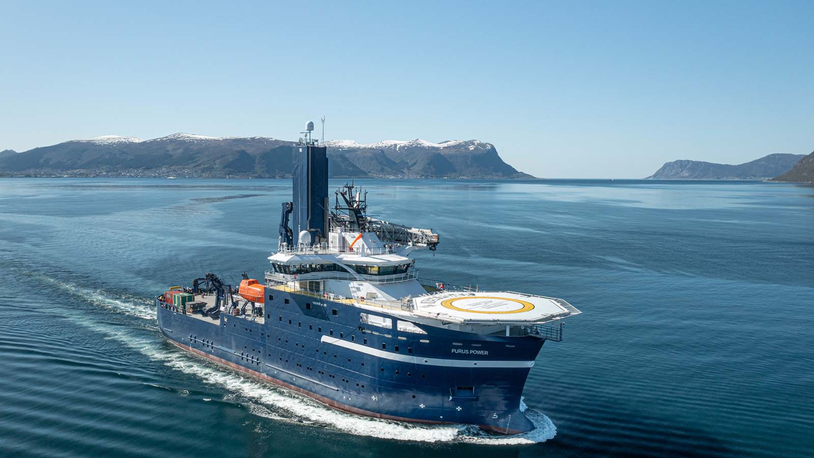
How 2027 emissions trading changes the economics of offshore electrification
Paul Cairns, chief executive of Charge Offshore, explains why the expansion of UK and EU emissions trading to large offshore vessels changes both the operational and capital investment case for fleet electrification and charging infrastructure


Offshore wind is designed to reduce our dependence on fossil fuels, yet much of the fleet that keeps the sector operating still relies on marine gas oil. From 1 January 2027, that reliance will carry a more direct financial cost through expanded emissions trading schemes (ETS) in the UK and Europe.
For much of the windfarm operations and maintenance (O&M) vessel fleet, from next year operators will effectively pay twice: once for increasingly expensive marine fuel, and again for the carbon released by burning it.
From 1 January 2027, offshore ships of 5,000 gross tonnage (gt) and above will enter the European Union (EU) ETS, with most service operation vessels (SOVs) now falling within that threshold.
In addition, exposure to the scheme will now be tied to the location of operations, rather than where vessels are based. For vessels servicing windfarms within a member state’s territorial sea, exclusive economic zone or the continental shelf, relevant emissions from voyages to and from EU ports and from related in-port activity would count towards emissions allowances.
The UK scheme, which began in July 2026, is at the same time being negotiated in alignment with the EU approach. Therefore, an SOV operating across British and European projects may soon have obligations under both regimes.
Under both UK and EU ETS, maritime does not receive the same free allocation of allowances as energy-intensive industries like steel, iron and cement. For every tonne of carbon dioxide equivalent (CO2e) emitted within scope, an operator must instead buy and surrender an allowance, meaning that every tonne avoided therefore has a direct financial value. Never before has the economic case for fleet decarbonisation been so clear cut.
With the expansion of UK and EU ETS, the cost of purchasing carbon allowances in 2027 is projected to be £230-250 per tonne of MGO burned in the EU, or £190-220 per tonne under the UK scheme, rising to an expected £300-410 per tonne for both geographies by 2030.
With the typical SOV burning 5 tonnes of MGO per day for around 300 operational days per year, these costs quickly ramp up over the typical 25-year lifespan of a single vessel, before even considering the rising purchase price of MGO.
A vessel that burns less fuel reports fewer emissions and surrenders fewer allowances, all automatically within the scheme. This is why fleet electrification has become so vital. Transitioning to electric allows operators to avoid the carbon allowance costs and purchase price of MGO, and instead couple opex to cheaper and more stable wholesale electricity prices.
Looking further ahead than 2027, the emissions cap is designed to tighten over time to further disincentivise carbon intensive operations. In conjunction, continued growth in renewable generation brings electricity prices down. This means that across the operating life of a windfarm, the cost gap between fossil fuel-powered and electrified operations will continue to widen for decades to come.
The same regulation that’s making high-carbon activities more expensive is also directing capital towards the technologies needed to lower it. The EU ETS includes a new mechanism to support clean propulsion, and at least half of auction revenues will go to priority areas including low-carbon transport, with a pool of allowances explicitly reserved for zero-emission propulsion through to 2040.
Alongside this, national funding programmes like Horizon Europe and Innovate UK are offering further financial support to develop clean propulsion and charging projects. These mechanisms could cover a significant proportion of the costs for fleet electrification and charging infrastructure which, alongside the rapidly falling prices of marine battery systems, drastically reduces the capex required to make the transition.
Long-term expenditure can be significantly reduced by adopting electric vessels into O&M fleets, which all require reliable access to power. Onshore charging at ports and quaysides is essential for turnaround and overnight charging, while high-power offshore charging provides the range and endurance needed for vessels working far from shore or remaining at sea for extended periods.
Drawing renewable electricity from a turbine, offshore substation or other fixed asset allows vessels to recharge in the field, reducing unnecessary returns to port. Charge Offshore’s Aquarius Plus system for electric SOVs is designed for modular integration with turbines, offshore substations and dedicated structures. Its automated, hands-free connection supports safe power transfer in challenging offshore conditions.
Where integration with an existing asset is impractical, Charge Offshore has also completed the concept design of a standalone charging system built around a dedicated monopile positioned away from the existing structures. Supplied through a protected subsea cable, it can serve hybrid and fully electric vessels without changes to standard transition piece or substation designs, offering a practical retrofit route while locating the interface away from active windfarm assets.
The expansion of emissions trading in the UK and EU makes decarbonised fleets far more commercially attractive to the offshore wind industry, and provisions should be made as soon as possible to enable a smoother transition to electrification.
For example, windfarm developers at the design or front-end engineering stage should consider making assets ‘charger ready,’ which can be achieved with relatively little additional complexity compared with retrofitting later; while those operating existing wind farms should begin assessing suitable charging locations and the modifications needed to install them.
Organisations that integrate vessels, ports and offshore power infrastructure now will be best placed to reduce their carbon exposure from 2027 and minimise long-term OPEX costs for the entire lifecycle of their offshore assets. The question is no longer whether offshore O&M electrification will happen, but how early windfarm operators can be ready to capture the long-term benefits that electrification provides.





Related to this Story


Events

Maritime Regulations Webinar Week
 16 Dec 2025
 GMT - ONLINE

Floating energy: successfully unlocking stranded gas using FLNGs and FSRUs
24 Feb 2026GMT - ONLINE
© 2026 Riviera Maritime Media Ltd.


