


Business Sectors
Events

Floating energy: successfully unlocking stranded gas using FLNGs and FSRUs
 24 Feb 2026
 GMT - ONLINE
Contents
Register to read more articles.
How AI optimises voyage planning through turbulent seas
AI-powered weather routeing and real-time geopolitical risk data are key to optimising vessel voyages and adapting to sudden route changes


Extreme weather and shifting geopolitics are changing the rules of voyage planning and bringing challenges for ship operators as the maritime industry strives to cut fuel use and reduce emissions.
Operators must navigate through turbulent seas and compensate for sudden route closures, economic and political sanctions and security threats. Increasingly, they are using artificial intelligence (AI), more accurate weather forecasts and real-time geopolitical risk data to optimise voyages and adapt to sudden route changes.
An expert panel on Riviera’s Mastering voyage planning in turbulent times webinar said AI-driven routeing platforms are enabling owners and operators to circumnavigate the world’s oceans via efficient routes while avoiding high risk areas.
This webinar was held on 24 November 2025 during Riveria’s Maritime Navigation Innovation Webinar Week.
On the panel were University of Plymouth lecturer in navigation and maritime science Adan Lopez-Santander, StormGeo chief operations officer Michael O’Brien, ABB Marine & Ports head of commercial vessel and voyage performance Michael Greavette and V Ships UK marine manager, Fikret Ekdi.
Shipping routes may need to be altered frequently due to changing geopolitics, weather, sea conditions and trade requirements.
Managers need real-time and AI-powered computer processing to calculate optimal voyage variations and to enable masters to make quick decisions, said Capt Ekdi.
“Unpredictable geopolitical shifts can impact ship routes, while sudden channel closures and interference of GPS navigation equipment means ships can get into risky situations,” he said.
One example would be the repeated attacks on shipping in the Red Sea over the past two years that have included GPS jamming and made the region so dangerous that the industry undertook a nearly wholesale rerouteing of the Indian Ocean to Europe trade away from the Suez Canal and around the Cape of Good Hope and the Atlantic Ocean, instead.
“Port closures can impact ship voyages and bunkering. They can result in off-hire periods, supply chain disruption and issues for all parties,” said Capt Ekdi.
These challenges can also impact seafarer safety and wellbeing, increase fuel consumption and emissions from voyages, and cause contractual issues. But this can be offset by using real-time monitoring, learning algorithms and using human judgement to better plan and implement shipping routes.
“AI-based systems have transformed our approach,” said Capt Ekdi. “We get 24/7 threat assessments, global monitoring, proximity alerts and optimised route changes. These are mission-critical, enabling faster decisions, but do not replace good seamanship.”
He said seafarers and shore staff should be trained to use AI-powered software applications to improve their response to issues.
“We need and are using human judgement, as AI is only as good as the humans that use it,” said Capt Ekdi.
University of Plymouth is using AI to support ferry owner DFDS on its cross-channel routes between Dover, UK, and the French ports of Dunkirk and Calais to ensure vessels arrive on time without incident, while optimising fuel consumption.
Several variables go into this AI-powered software including weather, sea conditions, vehicle flow, vessel capacity and required departure and arrival times, said Dr Lopez-Santander. “We are using digital twins and leverage AI algorithms for optimisation,” he said.
“We are running models enabling ferries to be loaded so they can leave as early as possible, avoid shipping congestion and arrive on time.”
The software uses information on other ships sailing through the English Channel from the automatic identification system (AIS), monitors the status of ferries in port and any changes in departure times.
“Once the ship departs, we go into the navigational phase to support operations, identify potential areas of congestion and advise mariners on routes to maximise fuel efficiency,” said Dr Lopez-Santander.
Mr O’Brien from StormGeo said AI is influencing weather forecasting and ocean modelling, enabling more effective voyage optimisation. “Weather forecasts are becoming more accurate,” he said. “AI modelling is outperforming all others in accuracy, but it is not perfect.”
This is why it is important to involve experts in weather forecasting to decipher the resulting information for ship routeing and optimisation, supported by vessel digital models.
“AI can sift through huge amounts of data and identify how vessels will react or perform in different weather and sea conditions, including speed and fuel consumption,” said Mr O’Brien. “These are important components in voyage optimisation.”
AI can also support owners and operators with decisions to avoid high-risk areas, while also using high-end weather and ocean current data.
“AI is only as good as the humans that use it”
AI can help operators and owners to “understand marine warnings and geopolitical instability” and identify areas of dynamic risks. AI then “gathers the right ENCs and digital publications, weather information and other permutations to create the optimised voyage,” said Mr O’Brien.
This route would then be checked by navigation experts and the ship’s master before the voyage is undertaken to ensure it remains safe.
“Human in the loop remains critically important as it ensures decisions are sound,” said Mr O’Brien.
AI should be seen as one of the many tools available to vessel operators, owners and bridge teams to navigate ships safely on routes optimised to lower fuel consumption and emissions, such as using weather routeing to avoid extreme weather, ocean conditions and high-risk areas, said ABB’s Mr Greavette.
“Operating fleets requires more real-time weather and sea data to have strategic control,” he said. “People are moving from being reactive to being proactive to avoid extreme weather, optimise voyages to reduce fuel and emissions, create efficiencies across value chains, and for greater resilience and competitiveness.”
Route optimisation requires information on weather, the vessel and geopolitics. These datasets can then be processed by AI to generate optimum sea routes.
In addition, Mr Greavette said voyage intelligence needs to be embedded into onboard systems, but bridge teams need to check optimised voyage plans.
“Keeping humans in the loop has advantages” and must be the “foundation for successful hybrid operations,” he said.
Combining AI processing and human intelligence means owners and operators can “improve efficiency with predictive routeing using stronger risk management and data-driven planning to reduce exposure to adverse weather, lower emissions and outperform competitors,” said Mr Greavette.
Webinar poll results
Attendees were asked to vote on a series of poll questions during the webinar. Here is a summary of the results.
Our organisation has a formal digital strategy and executive plan in place
Agree: 67%
Disagree: 33%
Most of our organisation’s data is generated in, or has been converted to, a digital format
We are fully digital: 25%
We still use and generate a significant amount of paper-based data (such as ship logs): 67%
Very little of our data is digital: 8%
What is the main barrier preventing wider use of AI-powered routeing in your fleet today?
Crew adoption and training: 27%
Integration with existing systems: 38%
Trust in model outputs: 23%
Budget or uncertainty about return on investment: 12%
How comfortable are you with AI influencing key voyage routeing decisions?
Very comfortable – already using it: 7%
Somewhat comfortable with human validation: 73%
Curious but cautious: 20%
How much extra transit time justifies avoiding high-risk areas?
Less than 24 hours: 7%
1-3 days: 9%
Any amount for safety: 84%
(source: Riviera Maritime Media)
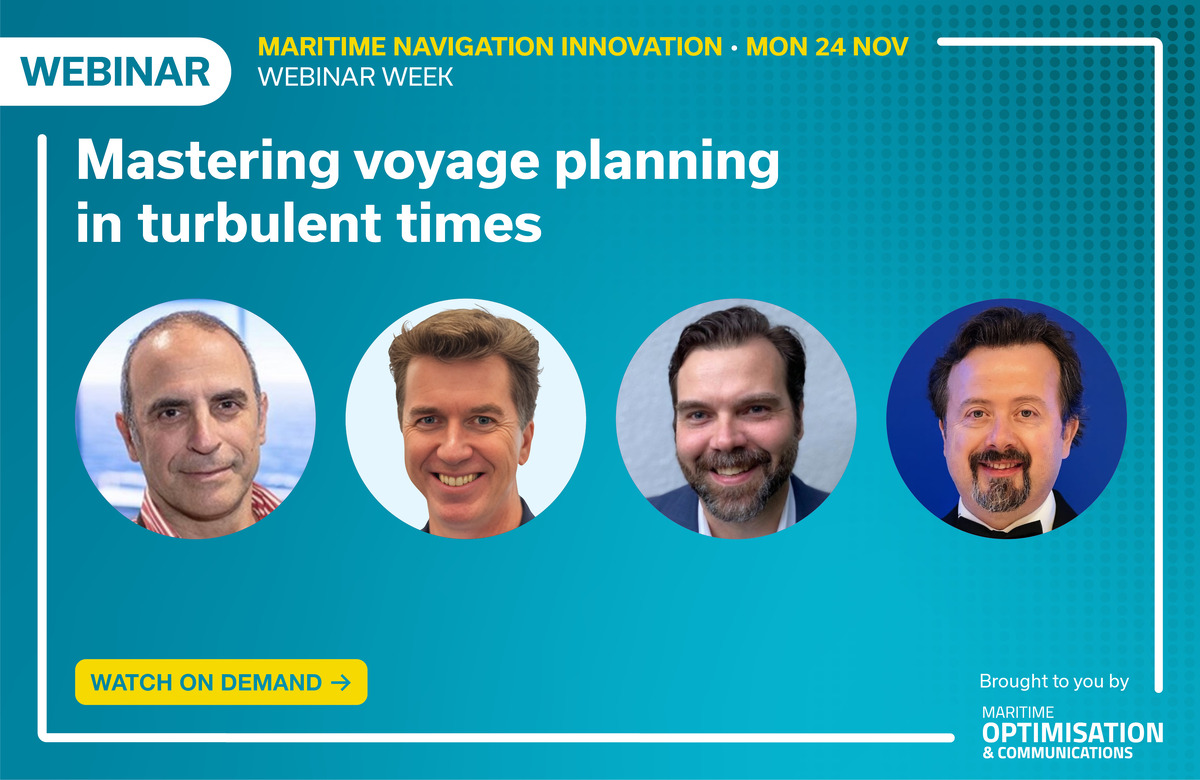
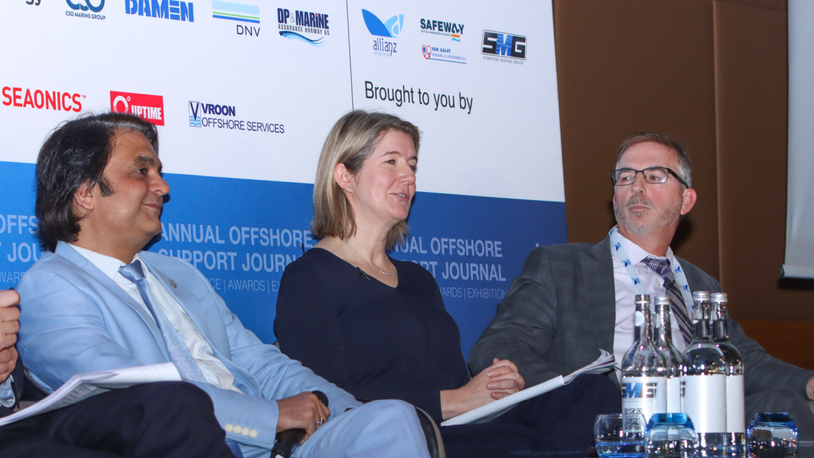
On the panel of Riviera’s Mastering voyage planning in turbulent times webinar were (left to right): University of Plymouth lecturer in navigation and maritime science Adan Lopez-Santander, StormGeo chief operations officer Michael O’Brien, ABB Marine & Ports head of commercial vessel and voyage performance Michael Greavette and V Ships UK marine manager, Fikret Ekdi.
Riviera’s Maritime Decarbonization Americas Conference will be held in Houston, Texas, 22-23 January 2026. Click here for more information on this industry-leading event.
Related to this Story
Events

Maritime Regulations Webinar Week
16 Dec 2025GMT - ONLINEFloating energy: successfully unlocking stranded gas using FLNGs and FSRUs
24 Feb 2026GMT - ONLINE
© 2024 Riviera Maritime Media Ltd.


