


Business Sectors
Business Sectors
Events
Contents

Register to read more articles.
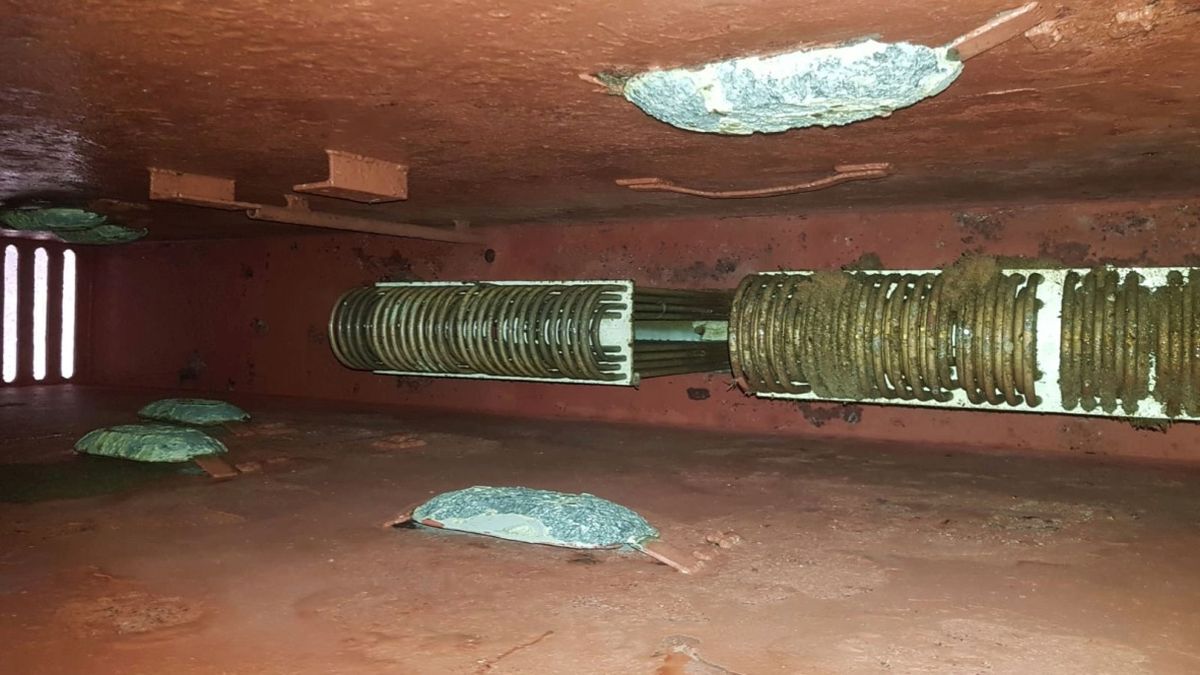
IMO to develop global biofouling convention
Industry leaders assess the shift from voluntary guidelines to a global convention on marine biofouling at MEPC 83 and beyond


The transition from voluntary guidance to a legally binding instrument to manage marine biofouling took a decisive step forward at MEPC 83.
A Riviera webinar, Controlling Biofouling: Insights from MEPC 83 and industry stakeholders, held 13 May 2025, convened key figures from BIMCO, Litehauz and Simplify Ballast to explore the implications for compliance, technology development and the shipping industry’s broader environmental obligations.
Simplify Ballast founder Mark Riggio summarised the headline outcomes. “Two key developments emerged from MEPC 83,” he said. “The release of MEPC.1/Circ.918 on in-water cleaning, and the approval of a new work item to develop a mandatory instrument focused on biofouling.”
That instrument will be structured to prevent the spread of aquatic invasive species, with secondary considerations around microplastics, air emissions and underwater noise.
“What form this will take – standalone convention, Marpol annex, or part of the AFS Convention – remains open,” Mr Riggio noted.
The current timeline envisions draft text by 2029.
There is already broad support for a balanced approach. In a poll conducted during the webinar, half of respondents said the mandatory instrument should prioritise balancing the need to prevent aquatic invasive species with other shipping impacts.
Just 4% supported routine cleaning without capture, and 27% supported cleaning only with capture systems in place.
BIMCO head of intergovernmental engagement Bev Mackenzie highlighted existing industry practice. “Biofouling management is already expanding across our membership,” she said. “The preferred method is the selection of antifouling systems based on ship profile and operational demands – outweighing cost as a consideration.”
Dr Mackenzie noted encouraging uptake of management plans and record books, with up to three-quarters of fleets preparing documentation in line with IMO recommendations. “This paperwork backbone is vital for any future convention,” she added.
Dr Mackenzie cautioned in-water cleaning remains constrained by technological maturity and regulatory variability. “Cleaning is mostly diver-based with mechanical brushes, rather than advanced robotic systems. Proactive cleaning – removing slime before macrofouling forms – is emerging, but many ports still prohibit cleaning,” she explained.
This echoed the views of webinar participants, who identified port access to cleaning services as the single biggest barrier to implementation (28%), followed by port state perceptions of environmental risk (20%).
Litehauz founder Frank Stuer-Lauridsen urged greater attention to niche areas such as sea chests and rudder interiors. “Most invasive species originate from niche zones, which are often overlooked by current technologies,” he said. “Applying an 80:20 principle, 80% of invasives can be found in just 20% of the hull area.”
He warned fuel cost savings currently drive most hull cleaning investment, while the biological risk posed by niche areas attracts less commercial interest. “Unless regulation explicitly targets these regions, we will not see meaningful innovation,” he said.
The panellists were aligned on the value of experience-building now, rather than waiting for the convention to take shape.
“Industry should be implementing the 2023 biofouling guidelines and 2025 in-water cleaning guidance now,” said Mr Riggio. “This is the best way to generate the data needed to shape practical, enforceable rules.”
There was also discussion of hybrid systems combining new coatings with robotic cleaning. A poll showed 58% of the audience expect such systems to cover over 10% of global tonnage within a decade.
However, the panel was more cautious about automation displacing divers: 83% of participants believed the commercial diving sector will remain active in ports beyond 2035.
As to the eventual adoption of the new convention, the audience was realistic, with the majority (38%) anticipating a five to ten-year window post-adoption before it enters into force. Only 24% believed this could be achieved in under three years.
Encouragingly, there was a strong willingness to engage with current guidelines and no respondents said the guidelines would be ignored; 60% expect shipowners to apply them selectively, and 40% anticipate widespread use as preparation for future requirements.
Dr Mackenzie concluded with a reminder that most ships do not require frequent cleaning. “We must not give the impression that every vessel is sailing around needing treatment,” she said. “In most cases, antifouling coatings are effective for years, and cleaning takes place during drydock or planned maintenance cycles.”
While the pathway to a global convention is long, the direction is now set.
With existing guidance in place and stakeholder engagement under way, the groundwork for a coherent, harmonised biofouling management framework is already being laid.
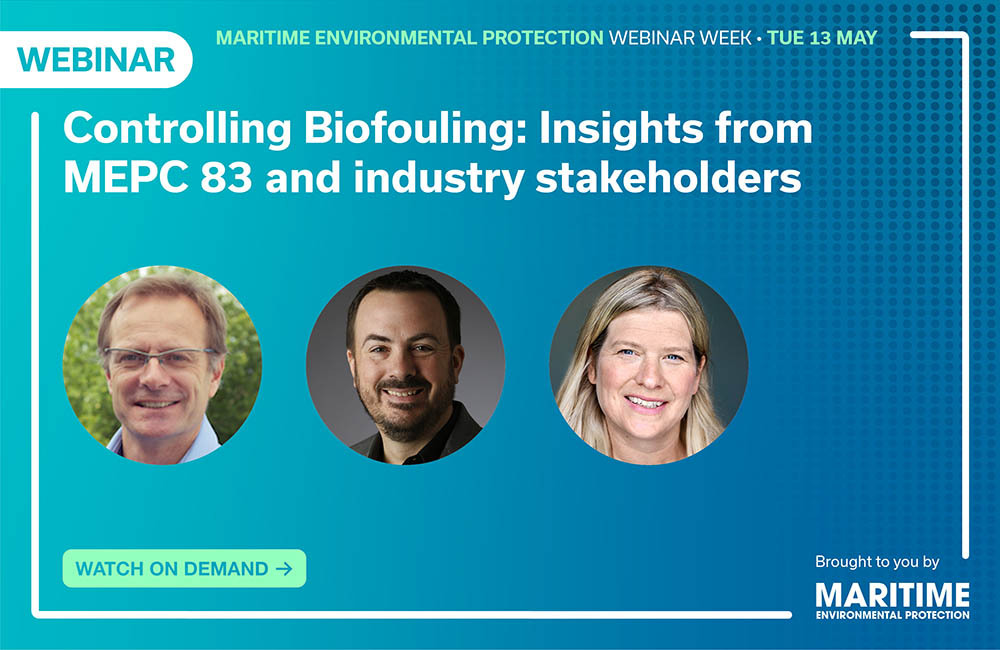
From left to right: Frank Stuer-Lauridsen (LITEHAUZ), Mark Riggio (Simplify Ballast), Bev Mackenzie (BIMCO)




Related to this Story
Events

Maritime Regulations Webinar Week
 16 Dec 2025
 GMT - ONLINE

Floating energy: successfully unlocking stranded gas using FLNGs and FSRUs
24 Feb 2026GMT - ONLINE
© 2026 Riviera Maritime Media Ltd.


