


Business Sectors
Business Sectors
Events
Contents

Register to read more articles.
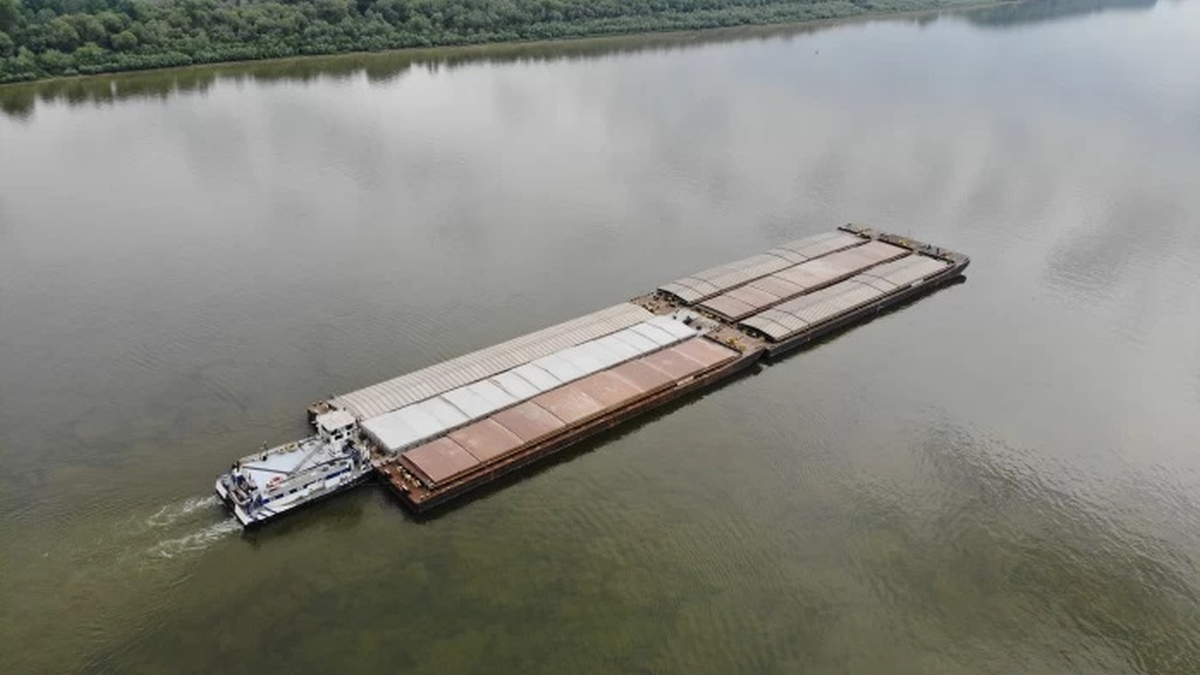
Inland waterways transportation under chronic climate risk
Cargo owners need to factor into their risk calculations that increasing periods of draught are putting greater strain on tug-barge operations and supply chains on the world’s main rivers


Global and regional inland waterway transportation and logistics are increasingly being impacted by regular low-water restrictions, due to lengthy droughts across continents.
Vessel and barge operations have been affected on major corridors such as the Rhine, Danube, Mississippi, Yangtze and Paraná rivers.
Recurrent droughts and low rainfall periods are increasing operational pressure through vessel loading restrictions, reduced draughts, navigation bottlenecks, delays, grounding incidents and rising freight costs.
Logistics insurer TT Club has warned that the frequency of these restrictions means they are becoming “a business continuity risk, rather than an occasional environmental disruption.”
Such restrictions impact tugboat, towboat and barge operations, reducing carrying capacity, disrupting port throughputs, creating inventory imbalances at warehouses and generating sudden demand for alternative transportation capacity, with disruptions cascading through interconnected supply chains.
Low water levels can be exacerbated by national and regional authorities having to allocate resources and balance the requirements of navigation with those of critical infrastructure, including energy generation.
“As climate pressures intensify, governments may increasingly need to balance water use between drinking supplies, agriculture, energy production and transportation,” said the TT Club.
Businesses dependent on inland waterway transport could be affected long-term by low water levels and by broader societal decisions when water becomes scarce.
“Inland waterways remain an essential component of efficient, lower-emission freight transport,” said TT Club risk assessment manager, Neil Dalus.
“However, the assumption that these corridors will always provide a dependable alternative to road and rail must now be challenged,” he said.
Operators should ensure they have the visibility, flexibility and contingency arrangements required to manage challenges from restricted inland transportation.
“Drought should no longer be considered a rare environmental issue. It is a business continuity risk with the potential to affect vessel capacity, route availability, port operations and the wider transport network,” said Mr Dalus.
These challenges are particularly significant as supply-chain strategies increasingly seek to shift cargo towards inland waterways from road and rail to support decarbonisation objectives, as barges can transport more cargo in convoys pushed by just one vessel.

TT Club said sustainable transport selections must also be resilient transport choices; decisions should incorporate climate information, water-level data, identified vulnerable transport corridors and drought forecasts.
Supply chains should be stress-tested against prolonged periods of reduced vessel carrying capacity and alternatives established in risk planning.
Real-time data, remote sensing, predictive analytics and operational intelligence should support companies’ decisions to prevent business losses.
“The most resilient organisations will be those that understand their dependencies, can activate alternative transport options quickly and have already considered how their supply chains will perform under persistently constrained conditions,” said Mr Dalus.
TT Club, operating under the stewardship of Thomas Miller, supports more than 1,400 member organisations, including ports, terminals, shipping lines and logistics companies worldwide.
“Drought should no longer be considered a rare environmental issue”
Europe’s busiest waterways, the Rhine and Danube, saw water levels fall to record lows in 2026, as prolonged heatwaves swept across the continent.
Drought conditions remained stable and critical in most of Europe and worsened in central-western Europe in Q3 2026, according to the EU’s Drought Observatories.
Decreasing water levels sparked concerns about the economic fallout of having to limit inland waterway navigation and shipping.
The Rhine Waterways and Shipping Authority took precautions, including spreading out cargo among more vessels to make them lighter, to meet draught restrictions.
Water levels on the Danube were at a 30-year low in several countries, causing disruption to vessel and barge transportation and to power station supplies.
Water levels of the Paraná river, which runs through Brazil, Paraguay and Argentina for some 4,880 km, have been below 3 m this year and lower than 3.5 m since mid-2024 in several places.
But levels have not been as low as below 2.5 m, which occurred for most of 2020 to 2022 due to multi-year droughts which dropped levels to historic lows not seen since 1944. On the Paraguay river, there were draught restrictions during August and September this year and before that, from October 2025 to May 2026 due to water levels being below 3 m.

US market
In North America, low water levels on parts of the Mississippi river system led to concerns over barge transportation of agricultural and bulk products in Q3 and Q4 2026. Tug and barge operators are preparing for draught limitations and lower cargo transportation.
However, the inland marine market in the US remains positive due to strong refinery utilisation, rising demand for bulk cargoes and improving prices for goods and barge hire.
According to the chief executive of one of the largest barge and towboat owners, Kirby Corp’s David Grzebinski, pricing improvements across term contract renewals and spot market activity have out-paced rising fuel costs during 2026.
“Customer demand remains healthy and overall marine transportation conditions are constructive,” said Mr Grzebinski.
Kirby’s barge utilisation in Q2 2026 was in the low-90% range and term contract renewals were higher than in 2025.
“Inland operating margins were in the high-teens range, reflecting the impact of fuel costs,” said Mr Grzebinski.
“However, cost escalators and rate recovery mechanisms are expected to reverse this margin headwind in Q3 2026,” he said.
“Market fundamentals remain constructive, supported by strong refinery utilisation and healthy petrochemical activity. Spot pricing and term contract renewal rates are expected to improve further during H2 2026. Operating margins are expected to be in the high-10% to low-20% range for the full year.”




Related to this Story

Events

Maritime Regulations Webinar Week
 16 Dec 2025
 GMT - ONLINE

Floating energy: successfully unlocking stranded gas using FLNGs and FSRUs
24 Feb 2026GMT - ONLINE
© 2026 Riviera Maritime Media Ltd.


