


Business Sectors
Business Sectors
Events
Contents
Register to read more articles.
Integrated bridge systems ordered for quadruple hybrid-electric ferries
New passenger ships being built in China for sailings in British Columbia, Canada, will have fully redundant bridge systems at both fore and aft ends for safe and efficient navigation


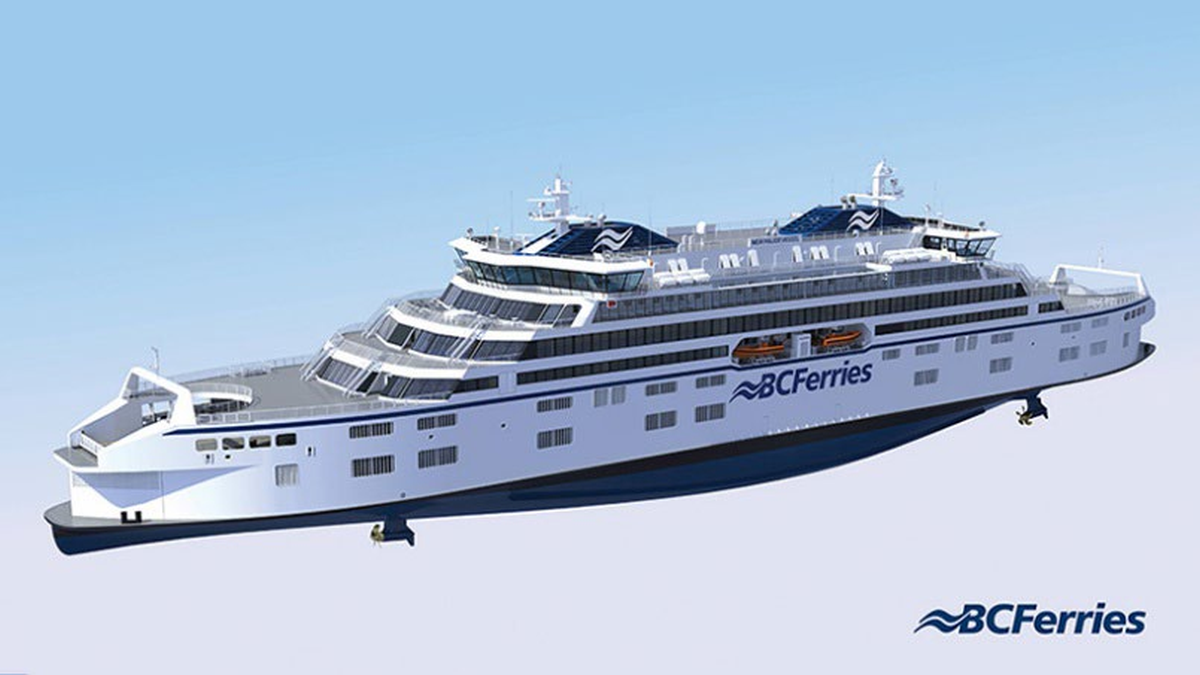
BC Ferries has selected the supplier of integrated bridge systems for four new hybrid-electric ferries being built for the owner in China for regular sailings in British Columbia, Canada.
China Merchants Shipbuilding Industry Group Co will construct these ferries, ready for running on energy storage systems alone, with the first expected to begin service in Q2 2029 and all four vessels delivered by 2031.
Each ferry will have one bridge on its forward end and one aft, enabling it to dock at terminals more efficiently and safely than with one wheelhouse.
BC Ferries chose Furuno to supply integrated navigation and communications suites for four new ferries.
Each vessel will be equipped with around 20 multifunction workstations with MU270W monitors for shared radar, ECDIS, conning and alert management across both bridges.
Furuno will supply for each vessel two PS100 stations for voyage planning and six radar transceivers, two S-band and four X-band, for all-weather hazard detection and tracking.
Navigation sensors will include dual SC130 satellite compasses, DS60 speed logs, and FE800 echo sounders, with redundancy provided by GPS and automatic identification units.
Communications equipment will include two consoles for the Global Maritime Distress and Safety System and four VHF radios.
Additional systems Furuno will supply include remote displays, dual VR7000 voyage data recorders, bridge navigational watch alarms, and HermAce for remote monitoring and cyber protection.
These newbuild ferries are designed for future full-electric operations and a 52% increase in passenger capacity and a 24% increase in vehicle capacity compared with the ships they will replace.
“BC Ferries is looking forward to working with Furuno, and to the delivery of its bridge systems for these new vessels,” said BC Ferries head of fleet renewal Ed Hooper.
“These systems are designed to support our crews with strong situational awareness and built-in redundancy, which is critical for operating safely and reliably in a complex coastal environment,” he said.
“When the first vessel enters service in 2029, our bridge crews will be well supported with the tools they need to operate these new vessels.”
Riviera and Metis will host the AI in Fleet Performance Management: From Data to Decisions webinar at 09:30 – 10:30 GMT+1 on 12 May 2026. Use this link to join the webinar and for more details.



Related to this Story


Events

Maritime Regulations Webinar Week
 16 Dec 2025
 GMT - ONLINE
Floating energy: successfully unlocking stranded gas using FLNGs and FSRUs
24 Feb 2026GMT - ONLINE
© 2026 Riviera Maritime Media Ltd.


