


Business Sectors
Business Sectors
Events
Contents
Iran says safe transit of Strait of Hormuz 'will be ensured' as Trump pauses operations, teases deal
Hours after its latest suspected attack on a commercial vessel, and US officials announcing suspensions of operations, the IRGC has said the Strait of Hormuz could reopen


American and Iranian officials are continuing to claim that safe transit of the Strait of Hormuz may be on the way in a war that has shuttered or locked in large volumes of oil and gas production in the Middle East for two months.
As confirmed by official and semi-official Iranian news outlets, posts on social media site X (formerly Twitter) by the Islamic Revolutionary Guard Corps (IRGC) Command said that "with new protocols in place, safe, stable passage through the Strait of Hormuz will be ensured".
The IRGC Naval Command account also thanked "captains [and] shipowners in Persian Gulf [and] Gulf of Oman for complying with Iran’s Strait of Hormuz regulations".
Iranian state media outlets reported on 5 May the creation of a new, and currently empty, government website called the Persian Gulf Strait Authority (PGSA). The reports claimed that all vessels transiting the Strait of Hormuz would receive an email from the email address info@PGSA.ir with rules and regulations that allow passage.
"Ships are required to adjust their operations according to this framework and obtain a transit permit before crossing the Strait of Hormuz," an ISNA report said.
State news agency FARS repeated an IRGC claim that some 1,500 vessels are awaiting "permission from the IRGC Navy behind the Strait of Hormuz".
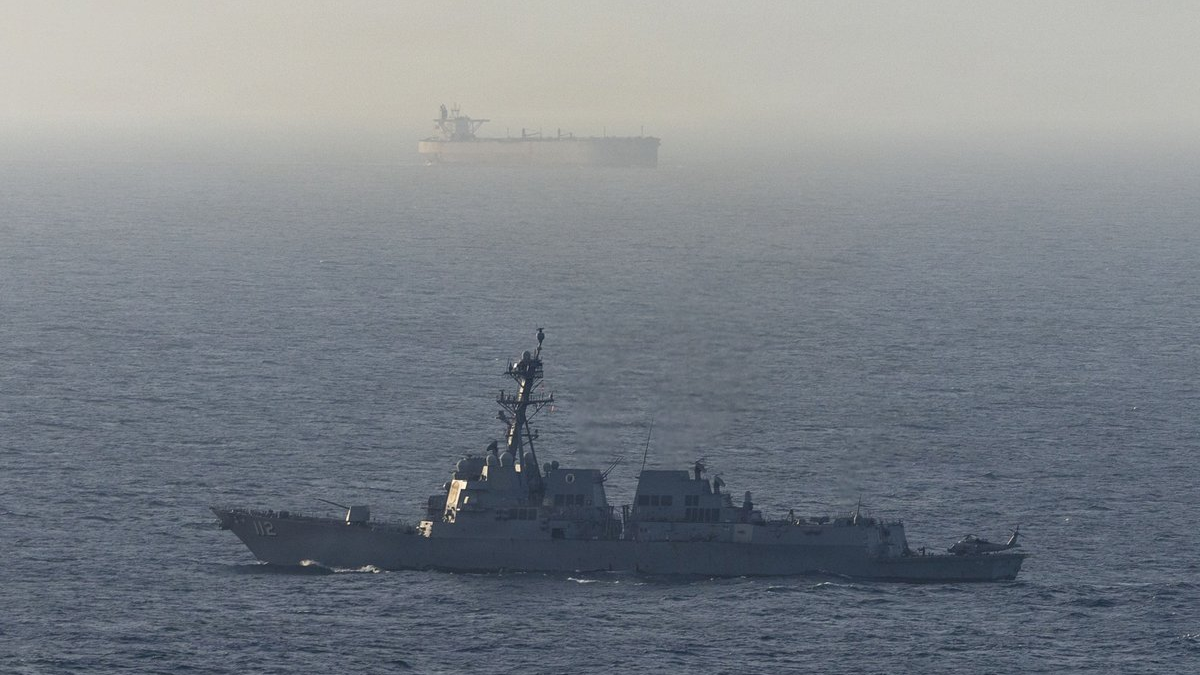
US Secretary of War Pete Hegseth had claimed during a 5 May press conference that "hundreds of ships are lining up to transit" the strait under a naval operation announced by US President Trump called Project Freedom, while US Joint Chiefs of Staff General Dan Caine said 22,500 commercial mariners remain trapped by military operations in and around the Strait of Hormuz.
It remains unclear whether Iran’s claims of a state-backed transit system through the strait are true, and messaging from US officials has struggled to match the pace of changing rhetoric from Iran and US President Trump, with the latter announcing early on 6 May a potential agreement that could lead to a truce.
Mr Trump claimed on his own social media platform that the US blockade of Iranian ports and vessels visiting those ports "will allow the Hormuz Strait [sic] to be OPEN TO ALL, including Iran," noting that the opening of the strait depends on Iran’s response to a reported US-proposed truce deal.
Mr Trump admitted that "assuming Iran agrees to what has been agreed to" is, "perhaps, a big assumption" and threatened continued bombing "at a much higher level and intensity" if Iran does not agree.
Iranian officials had, at time of publication, disavowed reports that a peace deal was nearing agreement.
Late on 5 May, Mr Trump said he had "paused for a short period of time" the day-old Project Freedom initiative to move ships through the Strait of Hormuz under US military escort. The US president claimed that the pause was "based on the request of Pakistan and other countries", which remained unnamed. Pakistan has played the role of intermediary in negotiations between the US and Iran.
Global shipping organisation BIMCO’s Chief Safety Officer Jakob Larsen called the suspension of Project Freedom "a surprise" and said, despite a few ships exiting the strait safely," it was clear that transits without coordination with Iran entailed significant risk."
US Secretary of State Marco Rubio had earlier claimed that US offensive operations under the moniker Epic Fury have ceased, and both Mr Rubio and Mr Hegseth have, in recent days, highlighted the ’defensive’ nature of ongoing US military operations against Iran. As commentators observed, military operations enacted by the US President, such as Operation Epic Fury, are limited to 60 days without explicit approval to continue by the US Congress.
France’s Armed Forces Ministry released a statement on 6 May saying it was deploying an aircraft carrier strike group to the Red Sea and Gulf of Aden, citing the "situation in the Strait of Hormuz" and its "global impact". The French ministry maintained that it is "not a party to the conflict" and "remains committed to respecting international law". France said it was acting in a "defensive posture" and working with the UK and other partners on an initiative that involved "over forty nations", aiming to restore navigation in the Strait of Hormuz.
As recently as the evening of 5 May, the Royal Navy-operated United Kingdom Maritime Trade Operations (UKMTO) Centre reported a verified strike on an unnamed cargo vessel in the Strait of Hormuz.
Sign up for Riviera’s series of technical and operational webinars and conferences:
- Register to attend by visiting our events page.
- Watch recordings from all of our webinars in the webinar library.



Related to this Story

Events

Maritime Regulations Webinar Week
 16 Dec 2025
 GMT - ONLINE
Floating energy: successfully unlocking stranded gas using FLNGs and FSRUs
24 Feb 2026GMT - ONLINE
© 2026 Riviera Maritime Media Ltd.


