


Business Sectors
Business Sectors
Events
Contents
Register to read more articles.
Trump proposes 'Project Freedom' to guide trapped ships through the Strait of Hormuz
An initiative by Trump Administration seeks to free hundreds of trapped commercial ships and thousands of seafarers, but the effort would require the cooperation of Islamic Revolutionary Guard Corps


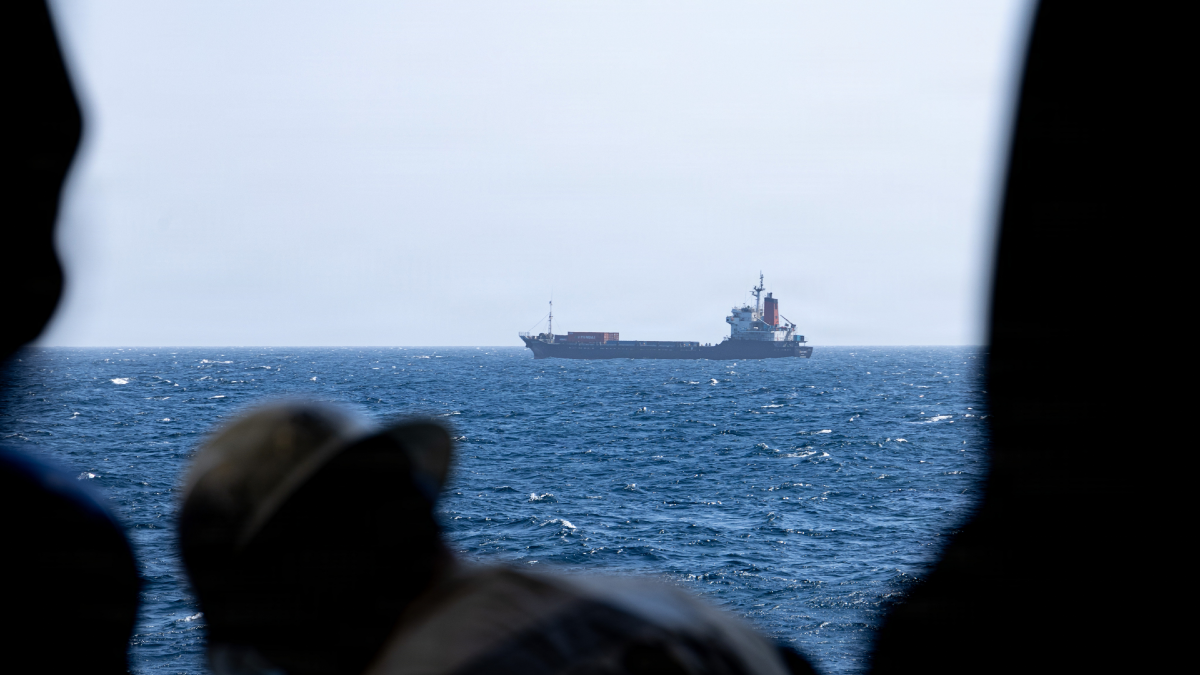
President Trump took to his social media platform to announce “Project Freedom”, an initiative he said would help guide commercial ships that have been trapped since the start of the war safely through the Strait of Hormuz. The effort, which he said would begin “Monday morning, Middle East time,” and was requested by “countries from all over the world,” would “use best efforts to get their ships and crews safely out of the Strait,” wrote Mr Trump on Truth Social.
“For the good of Iran, the Middle East, and the United States, we have told these countries that we will guide their ships safely out of these restricted waterways, so they can freely and ably get on with their business.”
In a post on X.com, US Central Command (CENTCOM) commander, Admiral Brad Cooper, said, “Our support for this defensive mission is essential to regional security and the global economy as we also maintain the naval blockade.”
Iran contends the US naval blockade is a violation of the ceasefire agreement between the two nations, and maintains any ships passing out of the Strait must first obtain permission from the Islamic Revolutionary Guard Corps (IRGC).
The Trump Administration last week announced the Maritime Freedom Construct, a plan “to enhance coordination and information sharing among international partners in support of maritime security” in the Strait of Hormuz.
CENTCOM said, US military support to Project Freedom “will include guided-missile destroyers, over 100 land and sea-based aircraft, multi-domain unmanned platforms, and 15,000 service members.”
But any such effort would require the cooperation of IRGC, and the Iranian leaders, which doesn’t appear to be likely.
“Any American interference in the new maritime regime of the Strait of Hormuz will be considered a violation of the ceasefire. The Strait of Hormuz and the Persian Gulf would not be managed by Trump’s delusional posts!” wrote Ebrahim Azizi, head of Iran’s parliamentary National Security and Foreign Policy Committee, on X.com, the social media platform formerly known as Twitter.
BIMCO chief safety and security officer, Jakob Larsen, said there have been no formalised details or guidance to the shipping industry regarding Project Freedom. Members of BIMCO, the Baltic International Maritime Council, represent about two-thirds of the global merchant shipping fleet tonnage.
“Without consent from Iran to let commercial ships transit safely through the Strait of Hormuz, it is currently not clear whether the Iranian threat to ships can be degraded or suppressed,” said Mr Larsen in a released statement.
“In view of the Iranian threats against any ship attempting to transit the Strait of Hormuz without coordination with Iran’s military, there is a risk of hostilities breaking out again if ’Project Freedom’ goes ahead,” he added.
Meanwhile, the United Kingdom Maritime Trade Operations (UKMTO) Centre reported on 4 May an incident 14 nm west of Mina Saqr, United Arab Emirates. UKMTO said it received information “from a third party that a vessel was on fire and requesting vessels in the vicinity to keep a safe distance.” The cause of the fire has not been verified, and no environmental impact has been reported. Authorities are investigating the incident.
Iranian state media reported that the IRGC had hit a US Navy warship with two missiles. But CENTCOM denied the claim. Rather, it reported two US-flagged merchant vessels “successfully transited through the Strait of Hormuz and are safely headed on their journey” as part of a first step in Project Freedom.



Related to this Story


Events

Maritime Regulations Webinar Week
 16 Dec 2025
 GMT - ONLINE
Floating energy: successfully unlocking stranded gas using FLNGs and FSRUs
24 Feb 2026GMT - ONLINE
© 2026 Riviera Maritime Media Ltd.


