


Business Sectors
Events

Floating energy: successfully unlocking stranded gas using FLNGs and FSRUs
 24 Feb 2026
 GMT - ONLINE
Contents
K Line president: maritime technology drives competitiveness
The head of the Japanese shipping group said the business will expand its development and use of environmental and digital technologies in 2026


Kawasaki Kisen Kaisha (K Line) president and chief executive Takenori Igarashi said the company enters 2026 with plans to increase its use of digital and mechanical technologies to build its business, raise its revenues and reduce its emissions.
In a new year address, he said the Japanese shipping group will use its maritime expertise and technology capabilities to grow its businesses, build new supply chains and reduce its environmental footprint.
The promise is part of K Line’s five-year, medium-term business strategy that began in 2022. Mr Igarashi said 2026 will be a “crucial year for advancing to the next stage" of the company’s growth in his new year message to the Tokyo-headquartered company.
“We believe that the source of our competitiveness lies in our maritime technology expertise, backed by extensive experience and advanced know-how cultivated through the operation and management of diverse types of vessels,” he said.
Mr Igarashi said K Line will also use its technological capabilities in the shipbuilding, environmental, and marine fields.
“We have honed our engineering capabilities to maximise these strengths and provide customers with optimal solutions in areas such as fuel conversion and supply chain decarbonisation,” he added.
“Looking ahead, we will actively leverage these engineering capabilities, centred on our core shipping business, to contribute to building new supply chains, fulfil our responsibility to society as a logistics infrastructure company and to further enhance our corporate value by strengthening profitability.”
Digital technology is one of three foundational pillars of K Line, along with management control and human resources.
“In digital, we will advance data development for decision-making, business process execution, and value creation,” said Mr Igarashi. “We will aim to achieve data-driven management and engage in external collaboration and partnerships.”
He added that the Japanese group will “increase the sophistication of our business operations and investment decisions to maximise returns.”
In addition, K Line will “secure and develop talent dedicated to solving issues both at sea and on land” and “redesign our structure to strengthen access to growth markets by developing our global network.”
Environmental technologies will be important for K Line’s long-term growth, including carbon capture and storage (CCS) and wind sails on ships.
K Line is participating in the world’s first full-scale CCS project, Northern Lights, by providing shipmanagement services.
“This initiative represents an integrated achievement combining the robust relationships built with customers through our years of accumulated experience in the liquefied gas transport business, our maritime expertise and technology capabilities, and our environmental technology capabilities,” said Mr Igarashi. “It is a symbolic model demonstrating how our strengths can contribute to solving societal challenges.”
He also said using Seawing shipboard kite systems, which use wind power to reduce fuel consumption and CO2 emissions, “represents another effort leveraging our technological capabilities and serves as a new solution-based model for contributing to decarbonisation.”
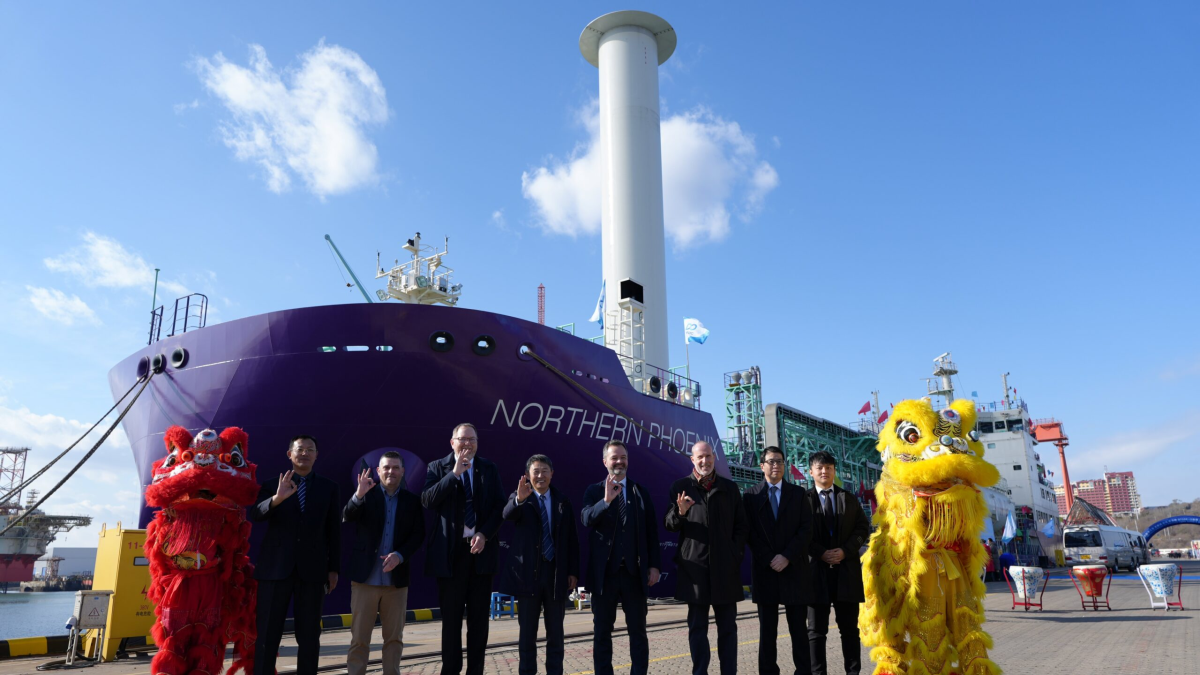
A prime example of working together is the newly built liquefied CO2 carrier Northern Phoenix, which was delivered to Northern Lights at Dalian Shipbuilding Offshore Co in China in December 2025.
There is a global trend to reduce greenhouse gas emissions, and K Line remains "committed to steadily implementing various measures to reduce its environmental impact,” said Mr Igarashi.
Sign up for Riviera’s series of technical and operational webinars and conferences in 2026:
- Register to attend by visiting our events page.
- Watch recordings from all of our webinars in the webinar library.
Related to this Story
Events

Maritime Regulations Webinar Week
16 Dec 2025GMT - ONLINEFloating energy: successfully unlocking stranded gas using FLNGs and FSRUs
24 Feb 2026GMT - ONLINE
© 2024 Riviera Maritime Media Ltd.


