


Business Sectors
Events

Floating energy: successfully unlocking stranded gas using FLNGs and FSRUs
 24 Feb 2026
 GMT - ONLINE
Contents
Cook Strait ropax ferry project back on track after stormy start
Inheriting runaway port development costs, the New Zealand Government has switched its order from Hyundai to Guangzhou, with a ‘no-nonsense ferry replacement programme’


Two new ropax ferries have been ordered by the New Zealand Government for the Cook Strait passage. The order was switched from South Korea’s HD Hyundai Mipo to China’s Guangzhou International following a debacle that has already incurred NZ$670M (US$385M) in costs, years of delays and the establishment of an entirely new authority to oversee the project.
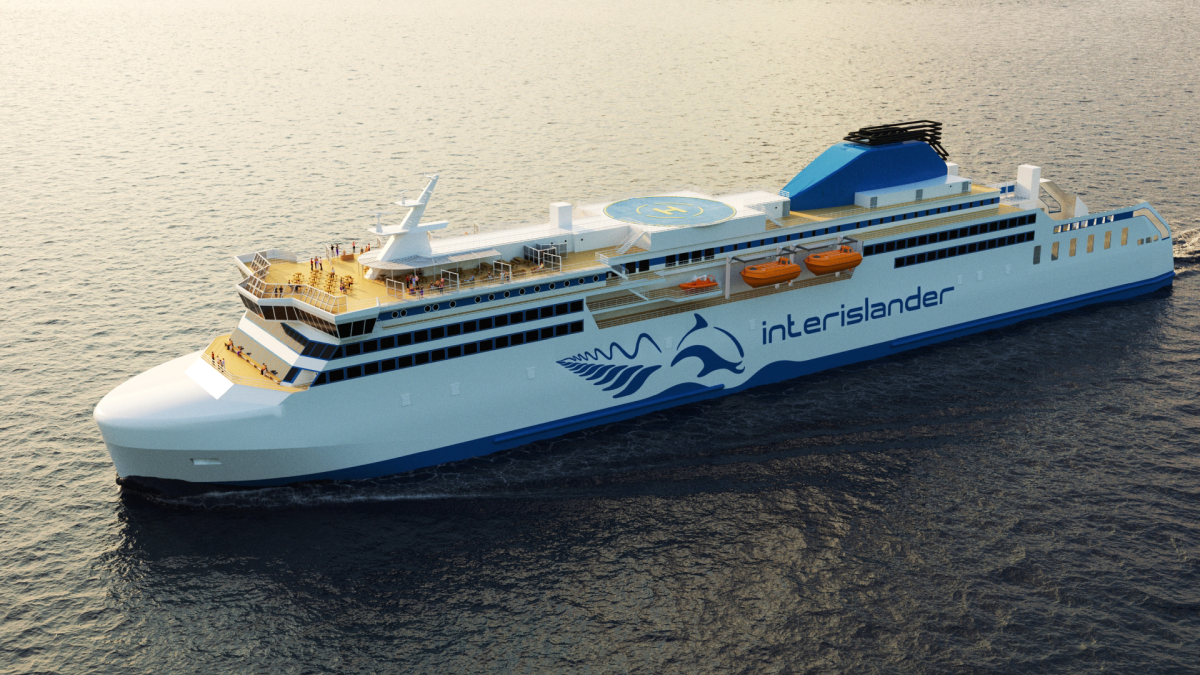
In late November, a contract was signed with Guangzhou International for two smaller 200-m-long, 28-m-wide ferries at a fixed price of NZ$596M for the stormy Cook Strait passage between the North and South Islands. Each will have a capacity for 1,500 passengers, 2.4 kms of lanes for cars, trucks and 40 rail wagons. Delivery is scheduled for 2029, five years later than under the original contract with Hyundai Mipo.
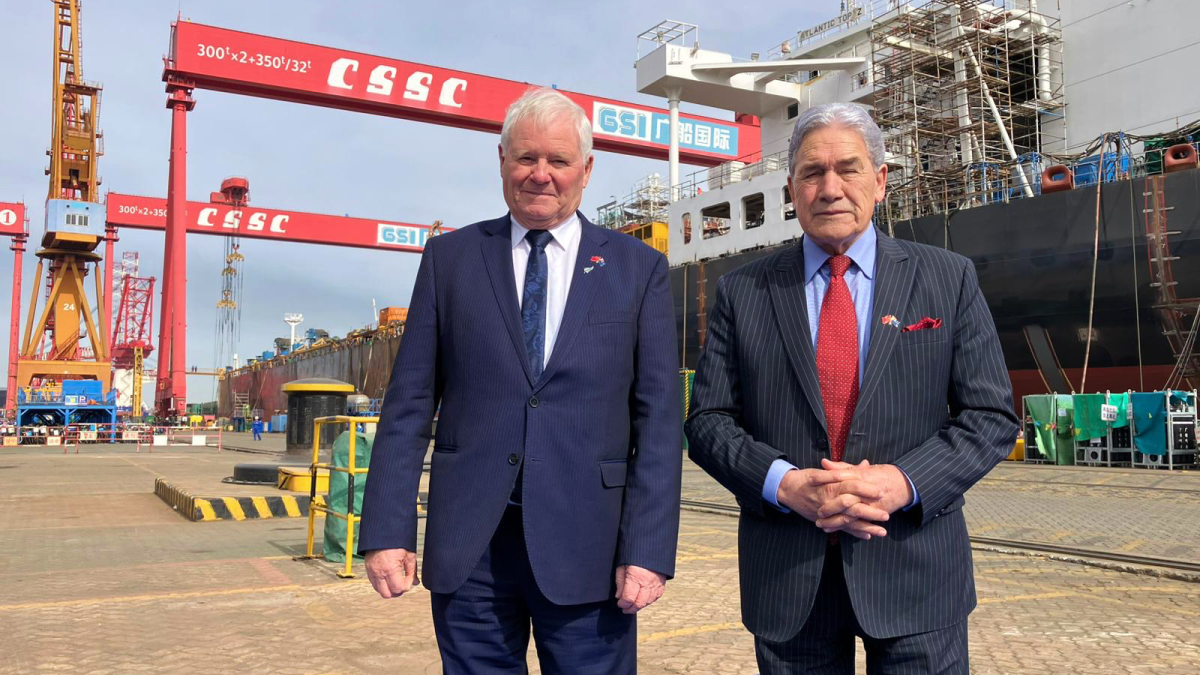
The government’s relevant minister, Winston Peters, said Guangzhou had been selected because it was “the largest modern integrated shipbuilding enterprise in Southern China” and provided the best deal possible for the construction of what he called “the no-nonsense ferry replacement programme”. That is a reference to runaway port development costs incurred for the now discarded project, as well as for the bigger original designs.
“We are building what’s required, not a gold-plated solution”
“The only difference between the iReX [original project] and these new ferries is in size,” Chris Mackenzie, chairman of Ferry Holdings, the new authority, said. “The Hyundai designs had a capacity for 1,800 passengers, compared with 1,500. Otherwise, these ferries do exactly the same thing.”
The government said it does not blame Hyundai for the cancellation. "The penalties [paid to the South Korean shipyard] are only fair as the decision to cancel iReX was never a reflection on Hyundai," said Minister Peters.
Getting control of costs
The saga began in late 2023 when the national government took office and inherited a project running out of control. The previous Labour government had signed in 2021 with the South Korea shipyard, but the total costs for replacing the ferries and upgrading the ports had hit NZ$3.1Bn and government advisers warned they could go as high NZ$4Bn. "Kiwi Rail [the original managers of the project] signed up to purchase two big new ferries without giving sufficient consideration to the port infrastructure needed to support ships of a much bigger size," explained finance minister Nicola Willis.
“Suspension of US sanctions offered Chinese shipyards a window to rebuild momentum”
An alarmed government promptly cancelled all arrangements, including the contract with Hyundai Mipo, and in early 2025 the new organisation, Ferry Holdings, drew up a shortlist of six shipyards to bid for the replacement vessels. Simultaneously, protracted negotiations with the South Korean shipyard were settled with payments of NZ$144M in penalties, a sum that recognised costs already incurred by Hyundai Mipo including, for its global suppliers. This was on top of a NZ$78M down payment to the shipyard. If the original project had gone ahead as planned, the ferries were due to cost NZ$551M and be delivered in 2025 and 2026, replacing the current breakdown-prone vessels. The plan also included major upgrades to port infrastructure at Wellington and Picton.
Future-proofed design
As the Ferry Holdings chairman explained, the new vessels are future-proofed. Hybrid-powered with diesel-electric and battery propulsion, they will be equipped with azipod bow-thrusters (unlike the current ferries). They will also be ready for alternative fuels.
“At this stage we just don’t know [whether it will be] methanol, hydrogen or biodiesel,” Mr Mackenzie said. “Right now, we’re making sure we get the best engines in a worldwide search.” Electric power will be used at shore-charging ports, while also being able to return the ferries to port within one and a half hours in the event of an emergency under the SOLAS regulations.
The smaller ferries were chosen after long-term projections failed to justify the ambitious original project. “The projected growth over the next 30 years showed their capacity was quite big enough,” said Mr MacKenzie. “It means we can use the existing port infrastructure – railyards, terminal and berths. These ferries will go into the same pockets at the ports. We are building what’s required, not a gold-plated solution.”
The iReX project called for a much bigger passenger terminal, new portside infrastructure for rail and a much bigger new berth. As the Ferry Holdings chairman pointed out, most passengers drive straight onto the ferry, rather than using the terminal.
Asked why Guangzhou was selected (out of four other shipyards in Asia, including Hyundai Mipo and one in the Mediterranean), he said the decision was made on the basis of technology and the Guangzhou yard’s track record with ropax ships. A specialist in ropax vessels, the Southern China shipbuilder delivered the first of four LNG-fuelled ropax ships for GNV, a subsidiary of Mediterranean Shipping, in October.
“Cost was not the predetermining factor,” explained Mr Mackenzie. “The quality of ships Guangzhou had built earlier was the decisive factor. The shipyard’s technological progress over the last five years has been phenomenal.”
The decision could not be delayed for too long though. “Newbuild slots were filling up as we looked,” said Mr Mackenzie. BRS Shipbrokers was also hired to speed things up – “they were extremely helpful,” added the chairman.
The Guangzhou yard’s latest orders are part of a recent flurry for Chinese shipbuilders following the suspension of American tariffs and sanctions. According to BRS, “the one-year suspension of US sanctions has offered Chinese shipyards a needed window to rebuild momentum after early-year slowdowns caused by looming tariffs on Chinese-built ships.” However, China still managed to grab 67% of global newbuild orders between January and October 2025, before Beijing and Washington agreed a ceasefire.
Rough transit
The rigorous crossing of the Cook Strait route was also an important factor in the decision. Although it takes only about three and a half hours, the strait is notorious for strong winds and tides and for rapid changes in weather.
However, the passage is an important economic artery for New Zealand. “This project is not just about two ships and two ports,” added Mr Mackenzie, pointing out that the crossing is part of the country’s main highway and a major element in national logistics. The ferries have to transport trucks and wagons between the two islands, while also accommodating tourist traffic.
For the transport industry, the new ferries cannot come soon enough. By the time the current vessels are replaced in 2029, they will have a combined age of 65 years.
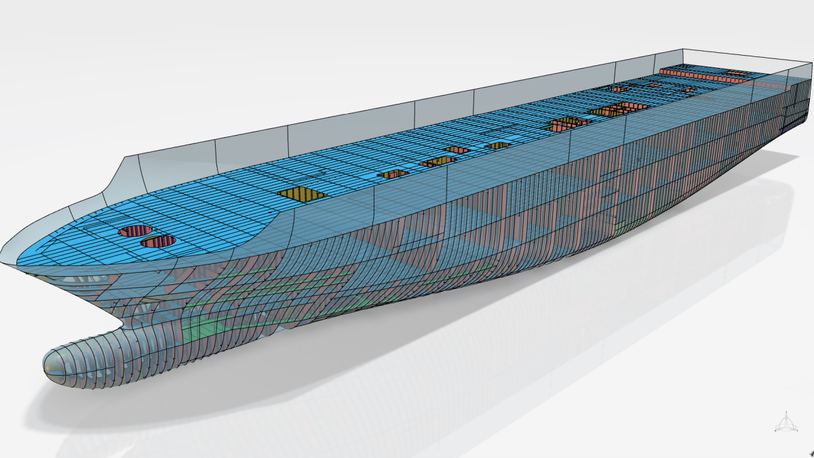
Ferry Holdings is working with naval architect Knud E. Hansen, who developed the initial concept design for the ferries. The Danish ship designer prepared detailed contract specifications, assessed the shipyard capabilities, and provided technical and commercial support during the contract negotiations. Denmark’s OSK Design is heading up the vessels’ interior outfitting.
Related to this Story

Retrofit fund ties lease payments to performance

Events

Maritime Regulations Webinar Week
16 Dec 2025GMT - ONLINEFloating energy: successfully unlocking stranded gas using FLNGs and FSRUs
24 Feb 2026GMT - ONLINE
© 2024 Riviera Maritime Media Ltd.


