


Business Sectors
Business Sectors
Events
Contents

Register to read more articles.
Latest development in graphene-based coating
A new version of a graphene hull coating enters service, extending earlier propeller and hull applications, and sharpening the industry debate around cleanable, biocide-free surfaces


A graphene-based hard foul-release hull coating has entered service, extending a development path that began with propeller applications and then moved to full-hull use on chemical tankers.
In its latest update, GIT Coatings announced it had launched XGIT-FORCE, describing it as a “next-generation graphene-base hard foul-release coating” and positioning it as a move away from “traditional biocide-based antifouling protection” towards “hull performance management”.
The company said the first applications are underway across a global fleet and that further work would follow over the coming months on more than 10 vessels” including LPG tankers, dry bulk vessels, roro vessels, container ships and cruise ships.
GIT Coatings chief executive Mo AlGermozi said, “XGIT-FORCE represents the natural evolution of our graphene-based solutions and a definitive step toward a new era of proactive hull performance management.”
He added, “By listening closely to our customers and integrating years of real-world learning, we have refined a technology that is mature, reliable, and biocide-free.”
The company said the coating works because of its inhouse technology, which it calls dynamic phase engineered technology.
In simple terms, it said it has tuned both the coating’s chemistry (what the surface is made of and how it behaves in seawater) and its physical properties (how hard, smooth and wear-resistant it is), using graphene as a reinforcing material.
The aim, it said, is to create a surface that does not readily allow the first thin layer of marine growth to take hold, and that makes any fouling that does develop easier to wash off.
The company claims XGIT-FORCE delivers “one of the smoothest surface profiles in the industry” and provides “a guaranteed 6% out-of-dock power gain compared to premium biocidal antifouling coatings”, alongside mechanical robustness intended to tolerate “ice friction, fender impacts, and frequent cleanings”.
A central element of the proposition is a cleaning-led operation: XGIT-FORCE is cleanable by design and aligns with the industry shift toward proactive hull cleaning as the most effective method for maintaining long-term vessel efficiency.
To support that operating model, the company said it had established an advisory services department to provide an end-to-end hull performance management solution, including support on vessel-specific grooming plans, fouling risk alerts and managing the process of cleaning approvals.
It has been a relatively short commercial journey, as it was only in April 2023 that Stolt Tankers and Graphite Innovations and Technologies signed a two-year agreement to apply a graphene-based propeller coating to the propellers of 25 ships, following an earlier trial on Stolt Acer in April 2022 and a subsequent wider application.
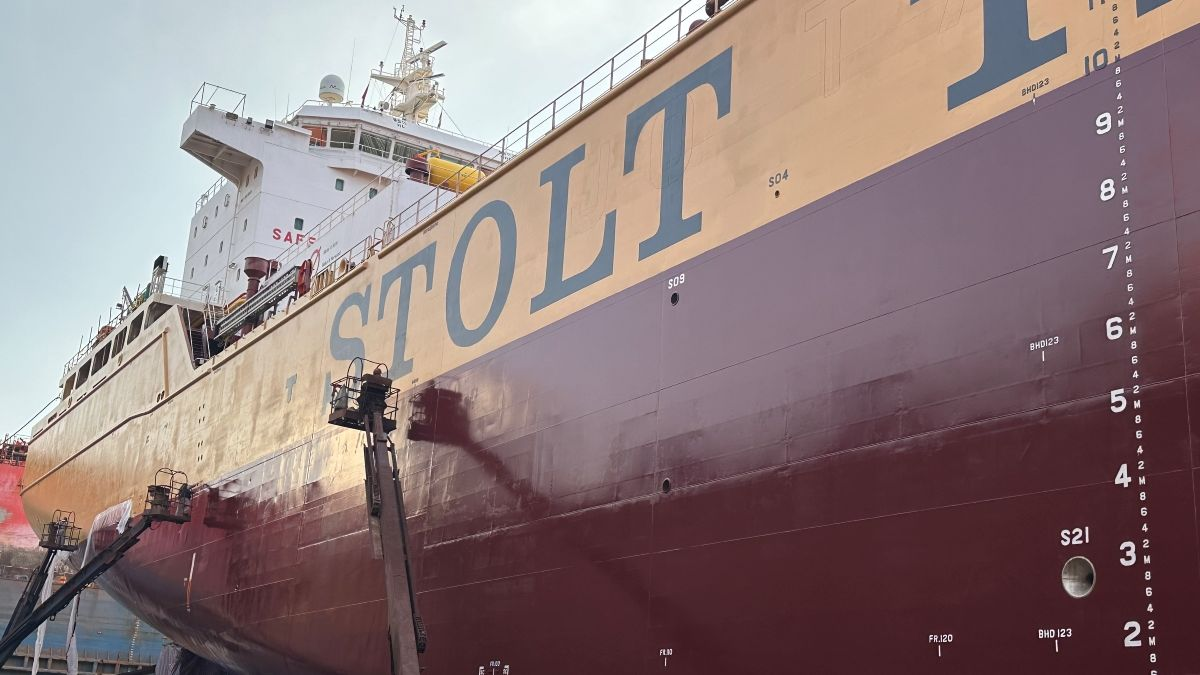
By late 2023, it was reported that Stolt Tankers had moved beyond propellers to a full hull application, stating that 30,000-dwt chemical tanker Stolt Lotus received a graphene hull coating during a five-day drydocking in China.
Sign up for Riviera’s April 2026 International Chemical and Product Tanker Conference:
- Register to attend here: The International Chemical and Product Tanker Conference 2026, London.
- View the latest issue of Tanker Shipping & Trade here: Tanker Shipping & Trade.





Related to this Story




Events

Maritime Regulations Webinar Week
 16 Dec 2025
 GMT - ONLINE

Floating energy: successfully unlocking stranded gas using FLNGs and FSRUs
24 Feb 2026GMT - ONLINE
© 2026 Riviera Maritime Media Ltd.


