


Business Sectors
Business Sectors
Events
Contents

Malaysian OSV fleet ageing, but newbuilds now less unlikely
As the largest producer in the Southeast Asian market, producing around 2M barrels of oil equivalent a day, Malaysia is a highly consequential market, but production is stagnant and the country has moved from being an exporter to being a net importer


Malaysia has around 400 offshore platforms and subsea structures in its waters, and at any time 200-300 offshore vessels are employed servicing this infrastructure. This includes vessels contracted by Malaysia’s state oil company Petronas and other users. With more oil needed, Petronas can only exploit a proportion of reserves, so international oil companies are expected to play a growing role in the Malaysian market, helping to stabilise production.
Boosting production will require more anchor-handling tug/supply (AHTS) vessels, platform supply vessels (PSVs) and a range of other vessels to support offshore assets, but although the Malaysian OSV fleet is ageing – with only 25% of vessels now below 10 years of age and a quarter of the vessels in the Malaysian fleet more than 20 years of age by 2030 – demand drivers are affected by uncertainty. The result is the continued use of older, less fuel-efficient vessels.
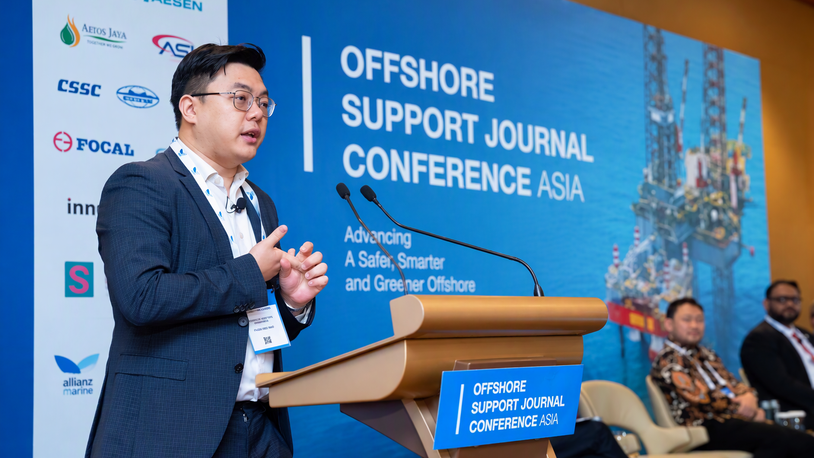
But as Nam Cheong executive director, Jonathan Leong, told the 2026 Offshore Support Vessel Asia conference in September, it’s not just the age profile of vessels that is of concern. According to Mr Leong, despite the fact that key drivers are adversely affecting demand, there is a growing shortage of Malaysian-flagged anchor-handlers and PSVs, and other vessels such as fast crewboats. “We have around 85 Malaysian-flagged anchor-handlers,” he told delegates, “and around 10 Malaysian-flagged PSVs. There is also a shortage of other vessels, particularly fast crewboats. Anything that is related to production, we are doing quite well; anything related to drilling is also doing quite well; but there is a shortage of project-related assets.”
A long-running dispute between Petronas and Petroleum Sarawak Bhd (Petros) – which centres on the extent of Sarawak’s control over oil and gas resources – is likely to continue to affect demand in the short term, he suggested. “While this dispute continues, it is very unlikely for us to see a resumption of activity at the same level that we used to see,” he told delegates, “particularly in Sarawak, which drives around 50% of all gas production.
“Along with delays in field development projects, cost cutting by the oil companies is also likely to influence the market,” Mr Leong concluded. “If big projects that have been in the pipeline for a long time, such as floating production storage and offloading projects, finally start, these will be big drivers in the OSV market, but plans that Petronas was working on that were supposed to help modernise the OSV sector have been abandoned and instead, the company has actually decided to abolish the age limit on vessels, which means that vessels of any age can now seek work in Malaysia. As a result, we expect the drive for new vessels to be muted.”




Related to this Story

Events

Maritime Regulations Webinar Week
 16 Dec 2025
 GMT - ONLINE

Floating energy: successfully unlocking stranded gas using FLNGs and FSRUs
24 Feb 2026GMT - ONLINE
© 2026 Riviera Maritime Media Ltd.


