


Business Sectors
Business Sectors
Events
Contents

Register to read more articles.
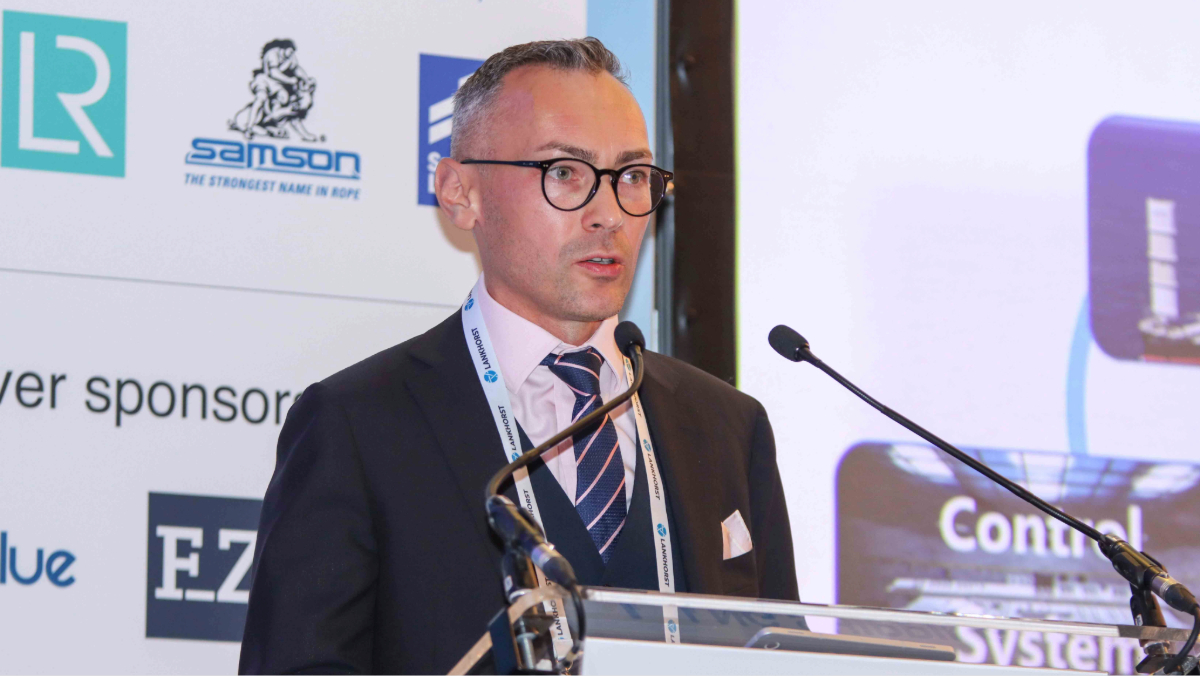
MOL details 'flagship' LNG carrier design with four sails
Wind propulsion has gained ground in commercial shipping in recent years and is increasingly emerging as a viable business case for LNG carriers, with Japanese shipping giant Mitsui OSK Lines (MOL) among the pioneers in the field


Last month, MOL took delivery of Fujin Sailor, the world’s first LNG carrier equipped with two Wind Challenger hard sails, a wind-assisted propulsion system. It is the fourth vessel in a total of 11 MOL Group vessels that have been or are scheduled to be equipped with the technology.
However, the project’s flagship is a new LNG carrier featuring four sails. MOL received approval in principle (AiP) from Lloyd’s Register (LR) for the project last year.
“It demonstrates our strong commitment to environmental and low-carbon energy transportation,” MOL Technical Manager Mihails Solovjovs told the LNG Shipping & Terminals Conference last week.
According to the company’s estimates, the four-sail configuration could deliver average annual fuel savings of 15% to 20%, with savings potentially exceeding 30% in favourable weather conditions, he said.
East-west routes, including transatlantic voyages, are considered particularly promising, although actual savings will depend on factors such as wind conditions, currents and vessel loading, he explained.
How the sails work
Explaining the project’s technical details, Mr Solovjovs said the sails have a profile similar to that of an aircraft wing and differ from conventional sails. They are made from the same type of material used in wind turbine blades for offshore wind power.
The system is designed to convert wind from up to 310 degrees into forward thrust, he added.
The sails can be raised when weather conditions are favourable and lowered in heavy weather to reduce wind resistance and unwanted thrust. Lowering them also reduces the system’s centre of gravity, helping to maintain vessel stability.
This flexibility is particularly important during manoeuvring, anchoring and berthing, when sudden wind gusts could affect the vessel’s movement, Mr Solovjovs noted.
The system uses an electric telescopic mechanism to raise and lower the sails, replacing the hydraulic system used in the first-generation installation. Four electric motors provide redundancy, allowing the system to continue operating if one or even two motors fail.
MOL has also developed automated controls, monitoring and weather-routing systems to minimise the additional workload for the crew. Weather-routing guidance is updated every six hours, helping the captain assess conditions and make navigational decisions.
Compatibility with existing LNG terminals has also been a key consideration, Mr Solovjovs stressed. MOL has worked with port authorities and terminal operators to assess the requirements.
Waiting for first movers
Asked about the prospects for wider adoption of wind propulsion in the LNG carrier sector, Mr Solovjovs said shipowners and charterers were waiting to see who would take the first step, as they assessed the investment and the potential operational challenges.
These include how terminals, pilots and port authorities would respond to vessels equipped with the technology, as well as how they would perform in day-to-day operations.
“It might be a good idea, but people will just sit, look to each other, and wait until someone made the first step,” he added.
According to figures from DNV presented at the conference, 134 vessels equipped with wind propulsion or wind-assisted propulsion systems (WAPS) have been delivered to date, while a further 87 are on order.





Related to this Story

Events

Maritime Regulations Webinar Week
 16 Dec 2025
 GMT - ONLINE

Floating energy: successfully unlocking stranded gas using FLNGs and FSRUs
24 Feb 2026GMT - ONLINE
© 2026 Riviera Maritime Media Ltd.


