


Business Sectors
Business Sectors
Events
Contents

Register to read more articles.
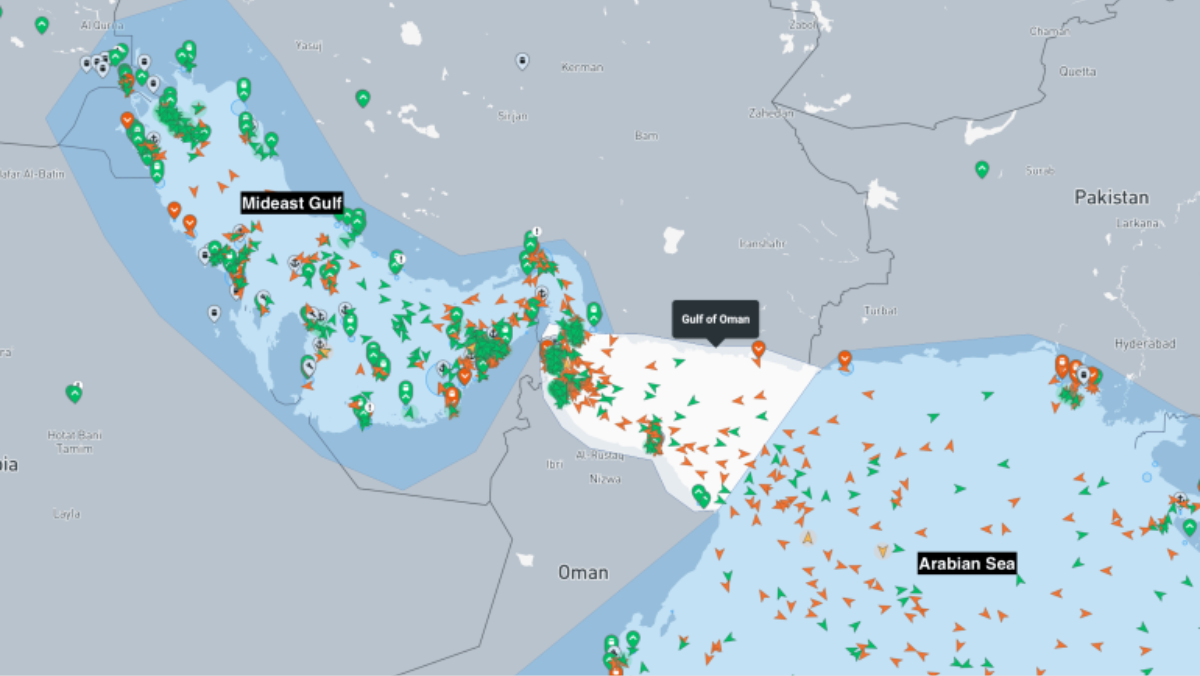
'Big game-changer' Iran conflict sends tanker rates skyrocketing, signals short‑term bullish market
The dramatic escalation in the Middle East is being seen as a game-changer for the tanker market, as freight rates skyrocket and attention focuses on the critical Strait of Hormuz crossing


A Greek shipowner, speaking on condition of anonymity to Riviera, noted that a Suezmax tanker transporting cargo within the Persian Gulf could earn up to US$200,000–$250,000 per day. The owner added that these rates are subject to two-day terms, with the charterer retaining the right to cancel the fixture if the situation de-escalates after this period.
“The numbers in the freight market are already moving dramatically,” Optima Shipping Services head of market analysis and decarbonisation strategies, Angelica Kemene, told Riviera.
She provided a concrete example: on 26 February, two days before the strikes, an Aframax fixture for a very shorthaul journey just outside the Strait concluded at US$1.2M. “That figure would be unrecognisable today. We are in price discovery mode, and rates are moving in real time, but the direction is unambiguous,” Ms Kemene explained.
With the Persian Gulf accounting for over one-third of global crude oil exports, any disruption has a significant impact on tanker shipping. According to Clarksons, around 20% of global oil supply and 38% of seaborne crude oil trade passes through the Strait of Hormuz.
Hormuz scenarios
“This is clearly a game-changer for tankers,” Banchero Costa head of research Ralph Leszczynski told Riviera. “Everything depends on whether this is a short-term situation or if it drags on for weeks or even months.”
AXSMarine shipping analyst Nikolas Zannikos noted that even the possibility of restricting or closing the Strait of Hormuz immediately tightens vessel supply in the Middle East.
“Even without a physical disruption of flows, higher war risk premiums and avoidance of transit reduce available capacity and increase voyage times, boosting tonne-miles and supporting spot rates in the short term, particularly for VLCCs,” he added.
While the Strait is not formally closed, it is effectively a war zone, with the vast majority of ships unable to enter or exit due to safety concerns and insurance restrictions.
The disruption has left many vessels stranded. Between 40 and 80 VLCCs are reportedly stuck in or just outside the Persian Gulf, unable to load cargo or continue their voyages, which squeezes tonnage supply and is bullish for rates, Mr Leszczynski said.
“Delays to crude and product liftings are likely to generate stronger rate volatility and upward pressure on earnings,” Intermodal head of research Yiannis Parganas told Riviera. He also noted potential gains for the dry bulk market, stemming from reduced vessel availability and congestion-related inefficiencies, despite the region’s relatively limited cargo exposure.
Mr Zannikos added that the tanker market is more influenced by changes in tonne-miles than by absolute oil volumes. “As long as the situation involves rerouteing flows rather than a prolonged and deep production cut, the net effect tends to be short-term supportive for tankers, albeit with increased volatility,” he said.
Long-term implications and changing trade flows
Discussing trade flows, Heidmar chief executive Pankaj Khanna said that Saudi Arabia can divert around 5M barrels per day (b/d) of oil through pipelines for export via the Red Sea.
“Freight rates are rising, and importers will try to source as much crude from the Atlantic as possible, but Gulf exports cannot be fully replaced by Atlantic producers – only marginally,” Mr Khanna added.
“There are relatively few alternatives, as Saudi Arabia and Iran hold the largest spare production capacity, while you cannot instantly boost production from the North Sea or US Gulf,” Mr Leszczynski highlighted.
In the long term, the analyst noted that if Persian Gulf exports are disrupted with no viable alternatives, this would be bearish for tankers, as lower demand would reduce utilisation.
“Less Gulf oil would also mean that Russian barrels currently stuck in floating storage could more easily find buyers, reducing storage volumes and freeing up tonnage – again bearish, as this increases supply,” he explained.
In the US, Mr Zannikos pointed out that despite political concerns over fuel prices, short-term geopolitical developments leave little scope for restricting exports. “During periods of lower refinery activity, crude exports may even rise if domestic demand falls,” he added.
Impact on Aramco’s facilities
On 2 March, the Saudi Press Agency reported that Aramco’s Ras Tanura refinery sustained limited damage as a result of debris from the interception of two drones in its vicinity. The Ras Tanura refinery is a major supplier of transport fuels, such as diesel, for European buyers and also produces smaller volumes of gasoline.
“Some operational units were shut down as a precaution, without any impact on the supply of petroleum products to local markets,” the agency said.
Mr Zannikos noted that if strikes cause significant damage, the impact depends on the disruption’s scale. A substantial production loss would negatively affect the market, while limited damage could be offset by replacement barrels from the US, Brazil, or West Africa, with longer voyage distances boosting tonne-miles.
A Greek owner operating in the area told Riviera that one of its vessels loaded at Ras Tanura, with local agents confirming that damage from the drone strike on the port was limited.
LNG market implications
Despite short-term bullish signals for tankers, the LNG shipping outlook appears more cautious, Mr Parganas said. “Uncertainty around Gulf exports and potential cargo deferrals could reduce near-term shipping demand despite the strategic importance of Hormuz transit,” he noted.
Meanwhile, QatarEnergy has halted production of LNG and associated products due to “military attacks” on its facilities in Ras Laffan and Mesaieed Industrial Cities.
ICIS senior LNG analyst Alex Froley told Riviera that Europe’s TTF gas prices, the main benchmark indicator for European natural gas, rose roughly 50% on Monday, with front-month TTF reaching €48/MWh, up from €32/MWh last Friday.
The key question is how long LNG carriers will avoid the Strait. Mr Froley estimates that a few days of disruption would have a limited global impact, as schedules can be rearranged and companies can draw from storage. However, longer interruptions could ripple into 2027, affecting current supply and storage refilling for winter.
Riviera’s Tankers 2030 Conference will be held in Singapore, 19-20 November 2026. Use this link for more information and to register for the event.



Related to this Story


Events

Maritime Regulations Webinar Week
 16 Dec 2025
 GMT - ONLINE
Floating energy: successfully unlocking stranded gas using FLNGs and FSRUs
24 Feb 2026GMT - ONLINE
© 2026 Riviera Maritime Media Ltd.


