


Business Sectors
Business Sectors
Events
Contents

Register to read more articles.
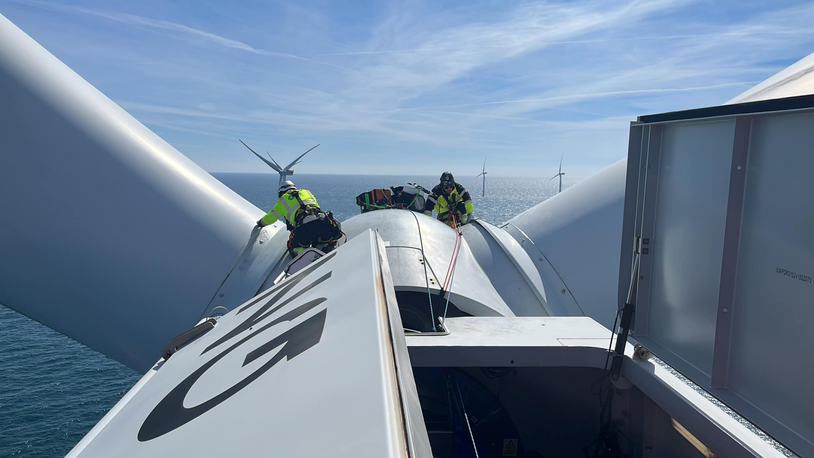
DNV says revised risk management framework for offshore wind required
Classification and certification body DNV says a study it recently completed shows a revised approach to managing major accident hazards in the offshore renewables market is required


The study undertaken by DNV, Offshore renewables risk management – a pragmatic safety case, compared major accident risks and risk management practices in the offshore oil and gas and the offshore renewables industries.
It revealed that while the offshore renewables industry has not yet experienced a defining major accident, incident rates are on the rise. The classification and certification body says this trend underscores the need for improved risk management strategies, particularly as historical oil and gas accidents provide valuable insights and lessons that have not been fully integrated into the renewables sector.
“As incidents become more frequent and their potential severity increases, the offshore renewables sector must adopt a more proactive and structured approach to safety,” said DNV. It says offshore renewables risks mirror many of those in oil and gas but are managed differently. The proposed framework offers a pragmatic path for the sector to strengthen its safety culture and better prevent future major accidents.
DNV’s study highlights the regulatory framework for offshore oil and gas is defined by stringent safety case regulations, developed in response to catastrophic events such as Piper Alpha and Deepwater Horizon. In contrast, offshore renewables is currently governed by broader legislation, the Construction (Design and Management) Regulations, which do not specifically address major accident hazards.
The study also reveals that existing guidance in the renewables industry tends to focus on occupational safety, often without addressing the risks associated with major accidents. Nonetheless, established risk management practices from the oil and gas industry offer a strong foundation that can be adapted to suit the unique challenges of offshore renewables. Finally, to address these gaps, DNV has proposed a tailored safety case approach for offshore renewables. This framework incorporates hazard identification, risk assessment, and risk management, aiming to provide a clear and comprehensive method to communicate risk strategies to both the workforce and stakeholders.
DNV senior vice president and regional director UK and Ireland Energy Systems, Hari Vamadevan, emphasised the importance of the initiative and says accident and injury rates are increasing and the interaction of complex systems is another source of potential new risks. “Regulation in the oil and gas industry requires identification and management of major accident risk, but there is no mandated need for this in offshore renewables,” he noted.
DNV principal engineer and lead author David Dimelow said, “This study compares, and differentiates between, offshore renewables and offshore oil and gas in terms of the major accident potential, guiding legislation, and risk management guidance available in each industry. Our proposal is the adoption of a fit-for-purpose safety case approach for offshore renewables, so that operators can better understand and manage their major accident risk. While currently focused on the UK, a robust risk management approach can readily be applied across different industries and globally.”



Related to this Story
Events

Maritime Regulations Webinar Week
 16 Dec 2025
 GMT - ONLINE
Floating energy: successfully unlocking stranded gas using FLNGs and FSRUs
24 Feb 2026GMT - ONLINE
© 2026 Riviera Maritime Media Ltd.


