


Business Sectors
Business Sectors
Events
Contents
Register to read more articles.
Harland & Wolff aims for the cruise market; boosts ferry work
Harland & Wolff’s chief executive explains why he believes the shipyard is the ‘future’ for cruise ship repairs in the UK


UK shipyard Harland & Wolff is hoping to capitalise on the cruise ship sector and has upped the ante on its ferry work.
In 2019, the iconic and historical Harland & Wolff shipyard in Belfast was pulled out of bankruptcy and administration by London-based AIM-listed group, InfraStrata plc. Following the acquisition of assets, John Wood found himself the shipyard’s new Group CEO.
After serving as an engineer and officer cadet with P&O Cruises, passenger vessels are something Mr Wood is accustomed to. An all-rounder, Mr Wood came ashore to work within the oil and gas markets before going back to the shipping sector.
This year has marked an important milestone for Harland & Wolff as it celebrated its 160th anniversary in April.
Founded 11 April 1861 by Sir Edward James Harland and Gustav Wilhelm Wolff, its heritage includes work on some of the most iconic ships, including the RMS Titanic, RMS Olympic and HMHS Britannic, right through to the SS Canberra for P&O and the Myrina tanker – the first supertanker built in the UK.
With the shipyard back in business, Harland & Wolff has boosted its passenger ship strategy to take advantage of the increased demand for cruise ship upgrades and refits within the UK.
Mr Wood explained, “there is a lot more demand, and the whole dynamic has changed with several vessels out there now homeporting in the UK. The number of transatlantic vessels has risen and there is a lack of capacity in the shipyard market. At Harland & Wolff, we looked at the overall market and thought ‘let’s do something a bit different here’. The strategy is to capitalise on the cruise sector and offer a one-stop-shop in Belfast.”
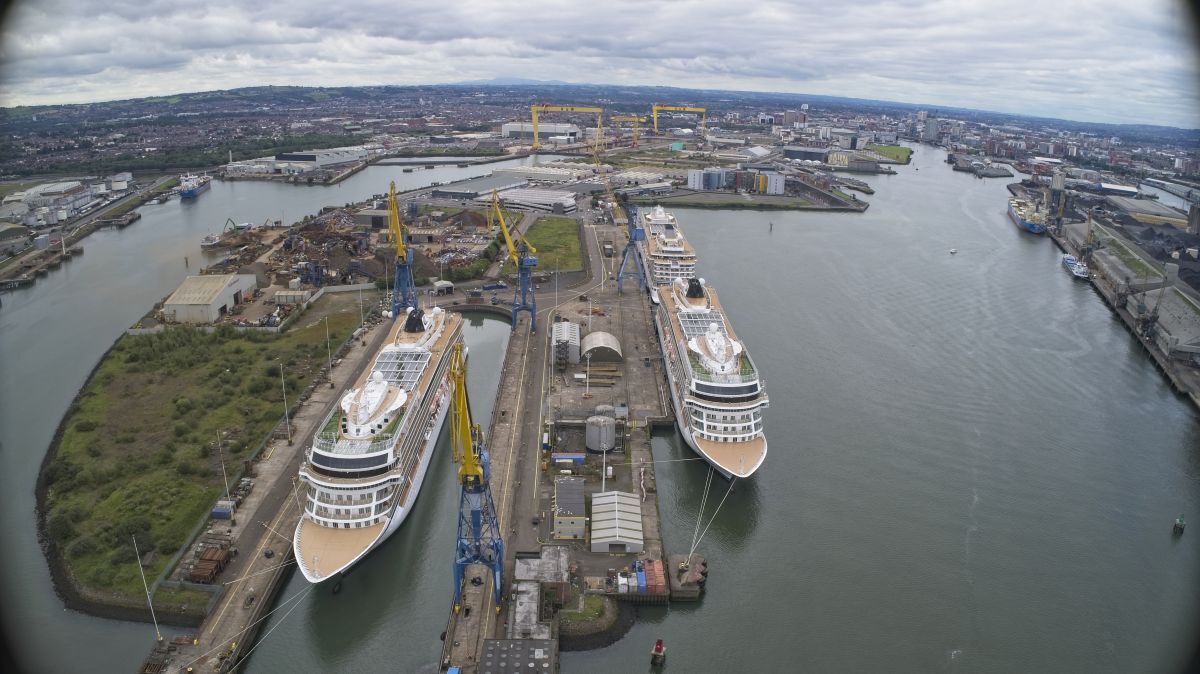
Harland & Wolff’s flagship Belfast yard boasts two of the largest drydocks in Europe (at 556 m and 335 m long with a 93 m beam and 52 m beam respectively) alongside the iconic Samson and Goliath gantry cranes. Perfectly positioned for servicing the needs of the cruise industry, says Mr Wood.
The company has been investing in equipment for the yard. In March this year, Harland & Wolff announced the installation of a state-of-the-art welding robot from Danish company Inrotech in its Belfast shipyard. The Inrotech-MicroTwin is a compact and lightweight gantry featuring two small robots, welding machines and a scanning system for identifying stiffeners on panels. Specifically developed for the automated welding of sub-assemblies, T-beams and small-parts, the robot is also designed for welding micro panels.
Prior to its buyout, Mr Wood discloses, “Harland & Wolff had never chased the cruise market. It has always sat back and if a cruise ship happened to come along then it would dock it. Ten years before InfraStrata acquired the yard, it had only serviced two cruise ships, with one of these being an emergency drydocking.”
“For us, it was important to create a sustainable and state-of-the art UK base for the cruise industry. The UK’s main cruise ship drydock, Southampton’s King George V dock was closed back in the 1990s, and in doing so cruise ship work has gone overseas. Despite this, a lot of sub-contractors used for the electrics, mechanics and interiors of these vessels are still UK-based, meaning workers are either being sent abroad or not being given the work at all. To have a UK-based drydock can give substantial cost-saving benefits.”
However, continuous improvement is always at the forefront of Harland & Wolff’s mind with the organisation looking to progress with upgrades to deepen the draft of the dock.
“When you look at the opportunities for our Belfast docks, one of the weaknesses is the large dock. While it is great for the new generation of cruise vessels, it is not as deep as it could be.” The draft is currently 8.4 m but Harland & Wolff want to increase it to 13 m, which will take the next generation of cruise ships.
At present, there is a civil engineering study underway which should finish by the end of this year. The company then hopes to start the deepening project next year, which is scheduled to take 36 months.
This, says Mr Wood, will allow it to “take the next generation of vessels and become a cruise ship centre of excellence in the UK for drydockings, revitalisation, conversions and upgrades.” He adds, “we believe that once the market gets back to normal again after Covid 19, there will be a lot of upgrades on the way, as more onboard revenue is required to claw back some of the losses through the pandemic.”
Indeed, the shipyard has had 17 cruise ship docking inquiries and tenders for the next one to two years.
“There has been an upsurge in the activity and number of inquiries. For us, it’s about bringing in the right project management and programme to get the project delivered on time and on budget.”
Now spanning over four distinct sites throughout England (Harland & Wolff Appledore), Scotland (Harland & Wolff Methil and Harland & Wolff Arnish) and Northern Ireland (Harland & Wolff Belfast), the organisation is keen to spread its capability and capacity within the sector.
Indeed, the company’s 130-m dock in Harland & Wolff Appledore, Devon, which it acquired in August 2020, is set to play an important role in the company’s cruise ship market ambitions.
“When you look at the cruise sector, there has been a change in the size of vessels. Mid-sized vessels have pretty much disappeared, so the trend is to go for either the smaller expedition cruise vessels or for the ultra-sized vessels. Harland & Wolff Appledore has an opportunity for the smaller expedition vessels that no yards are currently catering for. These vessels have a bespoke set of needs we can service.”
“This slightly smaller yard is fully undercover and perfect for the expedition cruise sector,” says Mr Wood. “This is a great thing to bring to the table as it means work can resume without being exposed to the weather. When these ships dock it tends to be the middle of winter (as they are operating over the summer) so by utilising our undercover facility we can ensure a timely return to work.”
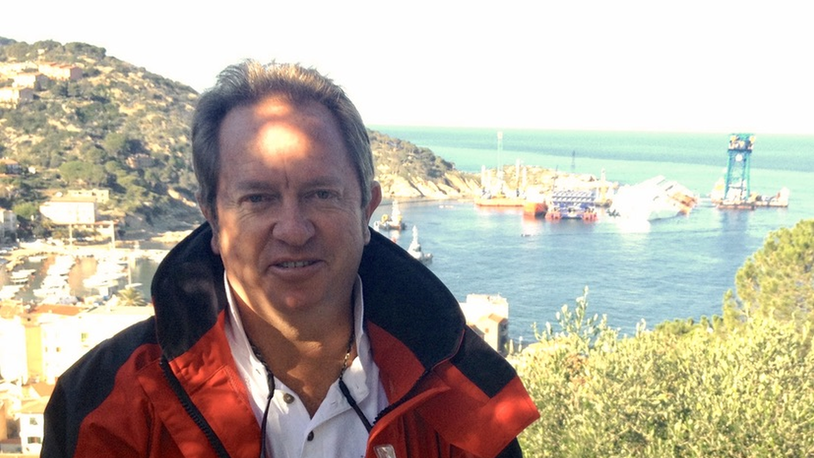
Not only are the company’s sights set throughout Europe, but equally stretch throughout the US. To this end, it has employed Miami-based Graham Couser as head of business development for cruise. Prior to joining Harland & Wolff, Mr Couser served as senior vice president at Grand Bahama Shipyard.
“Mos of the cruise sector is controlled from the US, and we want to get our message out there by bringing in Mr Couser. Highly experienced and knowledgeable in the industry, he began his career at Harland & Wolff as an apprentice many years ago. This appointment shows the different level of service we want to provide. Rather than communicating with a US-based client from our Belfast yard, we have someone in Miami who is willing to attend meetings in person. Ultimately, this enables us to offer a better level of customer service.”
As well as cruise, Harland & Wolff focuses on the ferry market. An important market for the yard, this industry was a focus before it was acquired by InfraStrata. However, under the new ownership, the plan is to ramp up its work considerably.
Mr Wood explained, “in the past, the yard has done quite a bit of work in the ferry sector but has focused on work in the Irish Sea. We’re looking to broaden so we’re not just looking at the Irish Sea but looking at ferries in Scotland, on the south coast, and on larger conversion projects coming to the UK from overseas.”
Since Harland & Wolff was acquired, 50 vessels have come through the yard with 85% being ferries, underlining the importance of this sector to the business.
“We see ferries as our bread and butter, and we currently have a 100% return rate from customers. It is all about keeping the customer satisfaction going, keeping the relationship going and delivering on everything we say we will.”
One area the yard is keen to bolster is to develop fleetwide deals with its ferry clients. “This will make the process more cost-effective and by getting work in advance, we can be more prepared and more efficient,” says Mr Wood.
Mr Wood sums up, “when we acquired the yard, we saw the passion, the belief of the workforce and their commitment to deliver. Not only do we believe we have a bright future ahead of us in the cruise and ferry sector, but I believe we are the future for cruising repairs and conversions in the UK.”
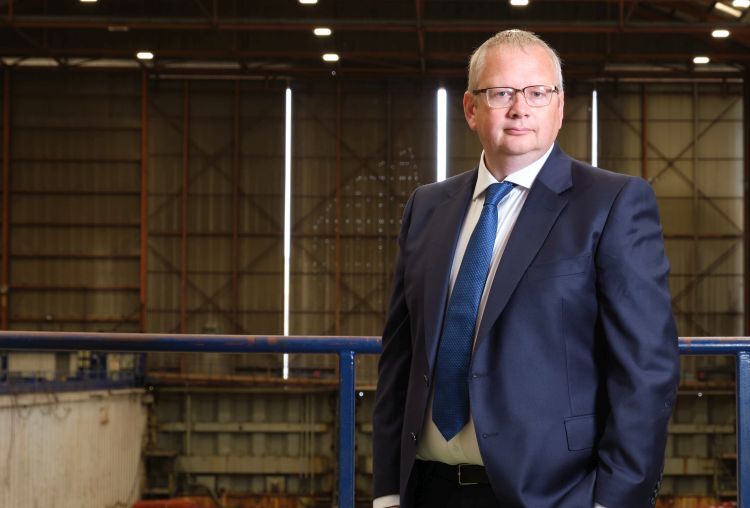
Harland & Wolff group CEO John Wood
Mr Wood has enjoyed a distinguished career within the oil and gas sector, holding senior posts with BAE Systems, and was more recently global head of oil and gas with Aurecon, a global engineering and advisory firm.
He has successfully undertaken projects in Australia, the US, Africa, Europe and the UK, building up extensive experience delivering pre-FEED and FEED, FID and EPC contracts involving storage and infrastructure developments.
Prior to his appointment as chief executive at InfraStrata plc, Mr Wood worked as a consultant for the company, and was closely involved in negotiating and agreeing FEED contracts for the Island Magee gas storage facility with Costain, DEEP KBB and WSP, as well as the appointment of Evan Passaris (Atkins) as a specialist in salt cavern gas storage.
Related to this Story
Events

Maritime Regulations Webinar Week
 16 Dec 2025
 GMT - ONLINE
Floating energy: successfully unlocking stranded gas using FLNGs and FSRUs
24 Feb 2026GMT - ONLINE
© 2026 Riviera Maritime Media Ltd.


