


Business Sectors
Business Sectors
Events
Contents
Register to read more articles.
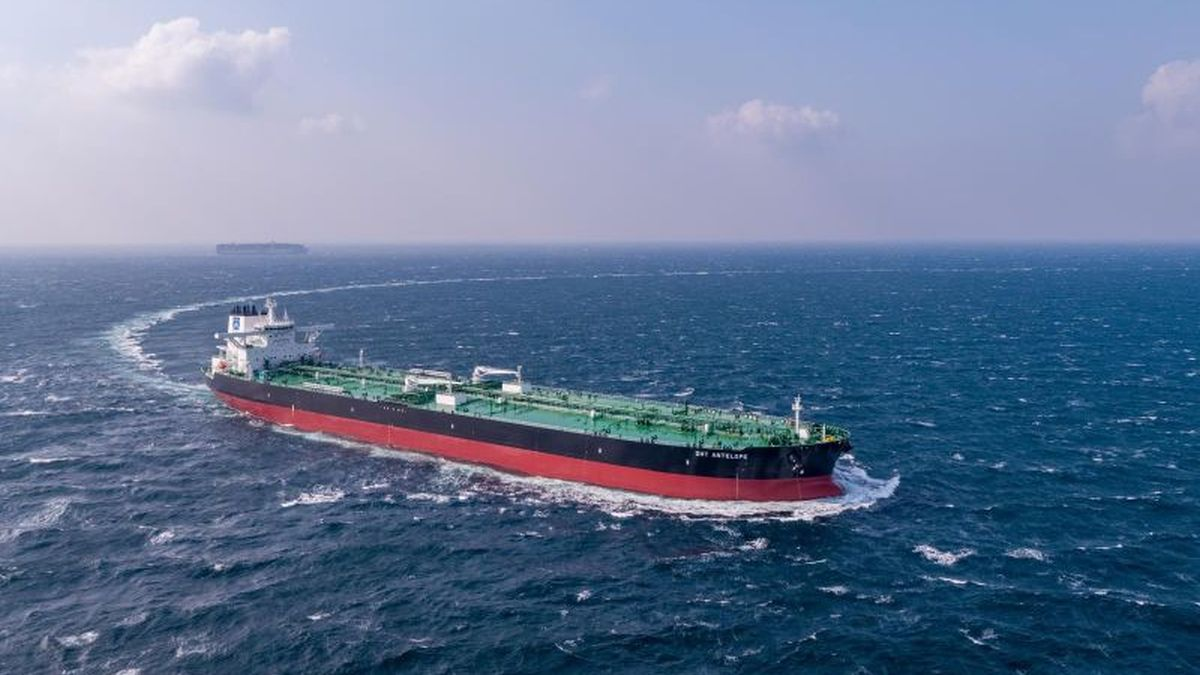
Newbuild VLCC payback period dramatically shortens as 'theoretical' rates hit US$480,000 per day
Record tanker earnings cut theoretical payback period for a VLCC to months, not years, as Hormuz disruption reshapes freight economics


The effective closure of the Strait of Hormuz has pushed tanker earnings to levels that changed the economics of asset recovery almost overnight.
Using Clarksons’ benchmark newbuilding price of US$128M for a 320,000-dwt VLCC and its 6 March assessment of ’theoretical’ AG-East spot earnings at US$480,000 per day, the gross freight equivalent of a new VLCC’s contract price is now about 267 trading days.
In theory, that could make the payback period for a vessel less than nine months, before operating costs, finance, insurance, bunker consumption and off-hire are taken into account. And, crucially, the hypothetical scenario is predicated upon the ability for a VLCC to load cargo when a war-ravaged Middle East has seen tanker traffic slow to a virtual halt.
The comparison of payback figures before and after the US and Israel launched a joint war on Iran illustrates the pace of the rate shock that is impacting shipping markets.
Clarksons said shipping had again been at the “frontline” of geopolitical events, with a “>90% drop in vessels transiting the Strait of Hormuz, attacks on vessels and ports, damage to energy infrastructure and highly volatile charter markets.”
It added that “already ‘hot’ VLCC markets jumped to all-time highs”, with theoretical AG-East spot earnings at US$480,000 per day and strength spreading to other tanker routes.
Clarksons’ weekly tanker rates show the wider move beneath the headline numbers.
Average weighted VLCC earnings reached a record US$386,685 per day in the week to 6 March, while Suezmax tanker average earnings rose to US$307,823 per day and Aframax tanker average earnings to US$147,577 per day.
In clean products, LR2 tankers on the MEG-Japan route were assessed at US$154,669 per day and LR1 tankers at US$114,904 per day.
Even on the lower of Clarksons’ two VLCC benchmarks, the capital recovery picture remains extraordinary.
At the record weighted average of US$386,685 per day, a US$128M VLCC newbuilding price equates to about 331 trading days of gross earnings.
Measured against Clarksons’ resale benchmark of US$175M for a 300,000 dwt VLCC, the same rate implies about 453 trading days to cover the asset price, while the US$480,000 per day AG-East figure reduces that to about 365 days.
The contrast with more normal recent earnings is stark.
DHT Holdings, which has just taken delivery of DHT Addax from Hanwa (the second of four VLCCs it is due to receive this year) said its fleet averaged US$60,300 per day on a TCE basis in Q4 2025, with spot exposure averaging US$69,500 per day in that quarter.
For Q1 2026, it said spot days booked to date are averaging US$78,900 per day, while one-year VLCC time charter rates in Clarksons’ 6 March data stood at US$130,000 per day for a non-scrubber 310,000-dwt ship and US$133,500 per day for a scrubber-fitted equivalent.
Set against a US$128M benchmark newbuilding price, those figures imply gross payback periods of about 2,123 days at DHT’s Q4 fleet average, 1,622 days at DHT’s booked Q1 spot rate and 985 days at the one-year time charter rate.
Will the rate run last?
Signal Research’s reading of the disruption suggests this is not yet a normal freight market response but a security-led dislocation.
It said recent AIS data indicated “that commercial tanker traffic has effectively reached a near-standstill, with most vessels remaining anchored in the Gulf while operators assess security and insurance risks.”
It added that “floating storage is becoming part of this adjustment,” with some loaded tankers remaining offshore while operators review routeing options and freight economics.
That, Signal said, helps explain why earnings have moved so far, so fast.
Signal also noted that the current phase appeared to be “a near-standstill in commercial tanker movements rather than a complete halt in traffic,” and that “some departures are being delayed until freight economics justify the voyage.”
In other words, the market is not just pricing tonnage scarcity: it is pricing danger, delay, insurance friction and the commercial cost of waiting.
Sign up for Riviera’s April 2026 International Chemical and Product Tanker Conference:
- Register to attend here: The International Chemical and Product Tanker Conference 2026, London.
- View the latest issue of Tanker Shipping & Trade here: Tanker Shipping & Trade.



Related to this Story

Events
Maritime Regulations Webinar Week
 16 Dec 2025
 GMT - ONLINE
Floating energy: successfully unlocking stranded gas using FLNGs and FSRUs
24 Feb 2026GMT - ONLINE
© 2026 Riviera Maritime Media Ltd.


