


Business Sectors
Business Sectors
Events
Contents
Rapid response prevented blowout becoming an explosion on Equinor drilling rig
Lessons learned from a well blowout in Norway on a semi-submersible drilling rig will be implemented by Equinor to prevent further dangerous incidents


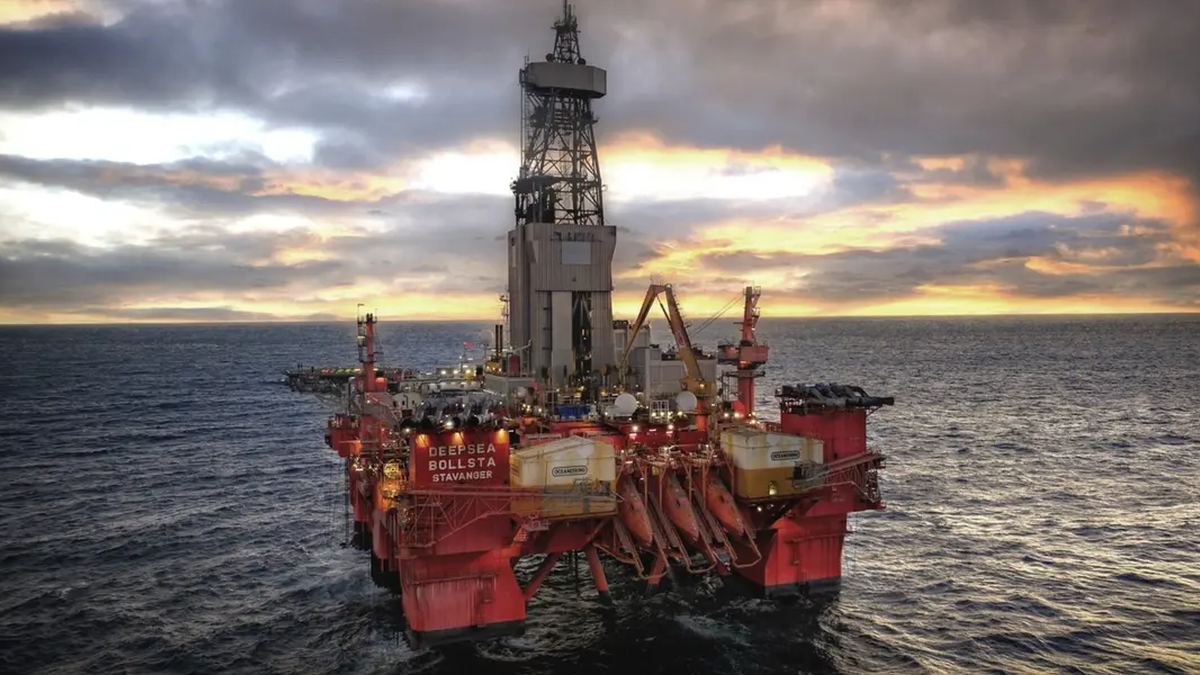
Equinor has completed its investigation into a well control incident on semi-submersible drilling rig Deepsea Bollsta on 23 September 2025 that saw combustible natural gas leak onto the drill floor.
The Norwegian state-run energy group classified the accident as a red-1 incident, the most serious category in its management system.
Fast reactions on the 2019-built, harsh-environment Moss CS60E design rig prevented the gas from being ignited, which could have caused an explosion and fire. One crew member suffered minor injuries and received first aid treatment after having trouble evacuating from the drilling area, and gas from the leak damaged the ventilation system.
“We are taking the well control incident that led to a gas emission on Deepsea Bollsta very seriously,” said Equinor senior vice president for drilling and wells, Rune Nedregaard. “There were considerable forces at play, and gas came aboard. This was a dramatic event for those who were at work.”
The incident occurred while Deepsea Bollsta was plugging a well on the huge Troll gas field in the Norwegian sector of the North Sea, while cutting a 13-3/8-inch casing at a depth of about 510 m.
Gas and fluid leaked onto the drill floor and the shaker room, where rock cuttings are removed from the drilling mud before the fluid is returned to the well.
Automatic gas detection triggered the rig’s safety systems, and potential ignition sources were disconnected, preventing the gas from combusting.
Crew on Deepsea Bollsta activated the rig’s blow-out preventer (BOP) and diverter system in line with relevant procedures. The diverter system routed gas, fluid and pressure from the well, and away from the rig, before the blow-out preventer closed.
“All safety barriers functioned as intended, and the crew handled the situation well, thus preventing any escalation," said Mr Nedregaard.
The blow-out preventer closed after 71 seconds, stopping the flow of gas and the situation was normalised in 30 minutes.
Equinor said it has since initiated multiple measures following the incident, including a new requirement to close the BOP in the event of shallow cuts and pulling the casing, regardless of activation time. Its investigation calculated that about 930 kg of gas briefly leaked out on the drill floor and in the shaker room, but potential ignition sources were disconnected.
“The investigation has determined that the circumstances would have to be different for the gas to ignite,” said Equinor. “The cause of the incident was that the BOP was in the open position when the casing was cut, while at the same time, confined gas was present behind the casing.
“The annulus behind the casing was logged before the cutting, but the equipment was not calibrated correctly. This meant that the gas was not identified in advance.”
Equinor discovered that the incident did not have the potential for an uncontrolled blowout, as gas volumes were limited to those confined behind the casing and were not in contact with the reservoir, as the barriers against the reservoir remained intact.
“We have received a thorough investigation report that will form the basis for lessons learned,” said Mr Nedregaard. “Among other things, the investigation points to technical factors that can prevent such incidents,” he said.
“Several measures were initiated immediately following the incident. Equinor will share the investigation findings and implemented measures with our suppliers.”
Other investigations are underway by the Norwegian Ocean Industry Authority.
Riviera’s Offshore Support Journal Conference, Asia will be held in Singapore on 8-9 September 2026. Use this link for more information and to register for the event.


Related to this Story

Events

Maritime Regulations Webinar Week
 16 Dec 2025
 GMT - ONLINE
Floating energy: successfully unlocking stranded gas using FLNGs and FSRUs
24 Feb 2026GMT - ONLINE
© 2026 Riviera Maritime Media Ltd.


